Not every bowl of chicken and dumplings looks the same. Some have big, fluffy dumplings sitting on top of the broth, almost like soft biscuits. Others have thin, flat dumplings that slip between pieces of chicken and take on the flavor of the broth. That second style is what makes chicken and slick dumplings so distinctive.
This old-fashioned dish has a wonderfully comforting character. The chicken and broth provide the savory foundation, while the flat dumplings make the meal hearty without needing a separate starch.
The texture is what people remember most. Slick dumplings should be tender and substantial, not fluffy like drop dumplings and not tough like undercooked pasta. Getting that balance right is the key to a satisfying bowl.
What Are Chicken and Slick Dumplings?
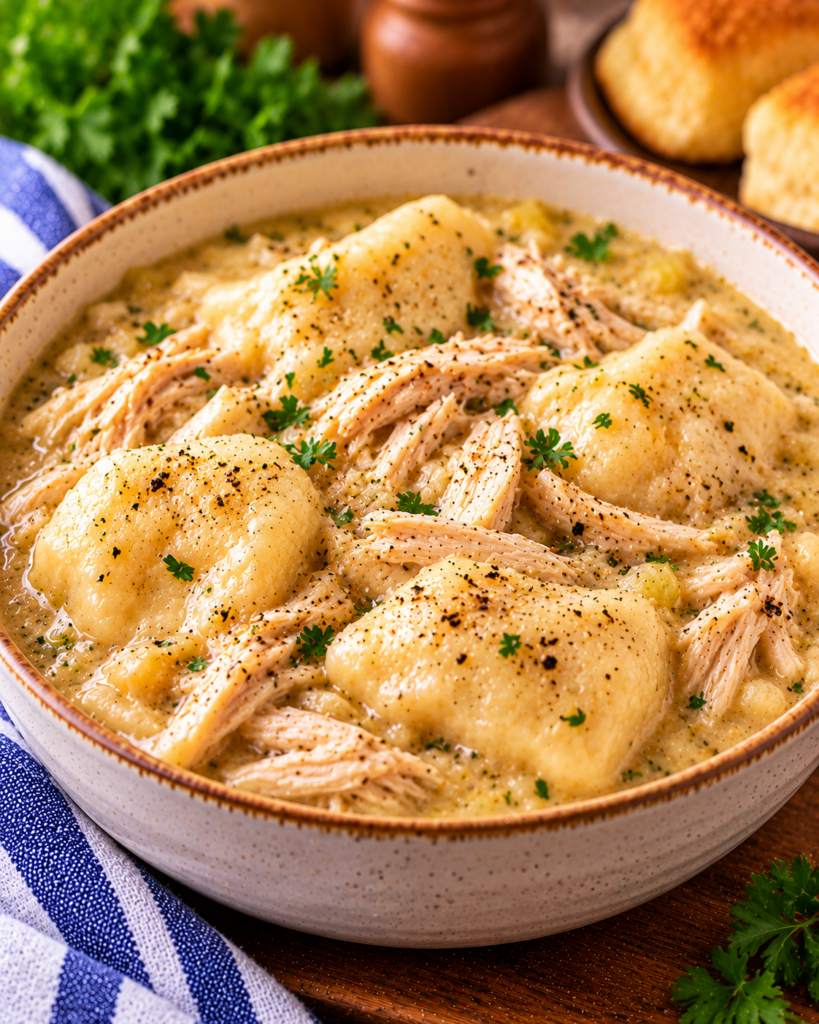
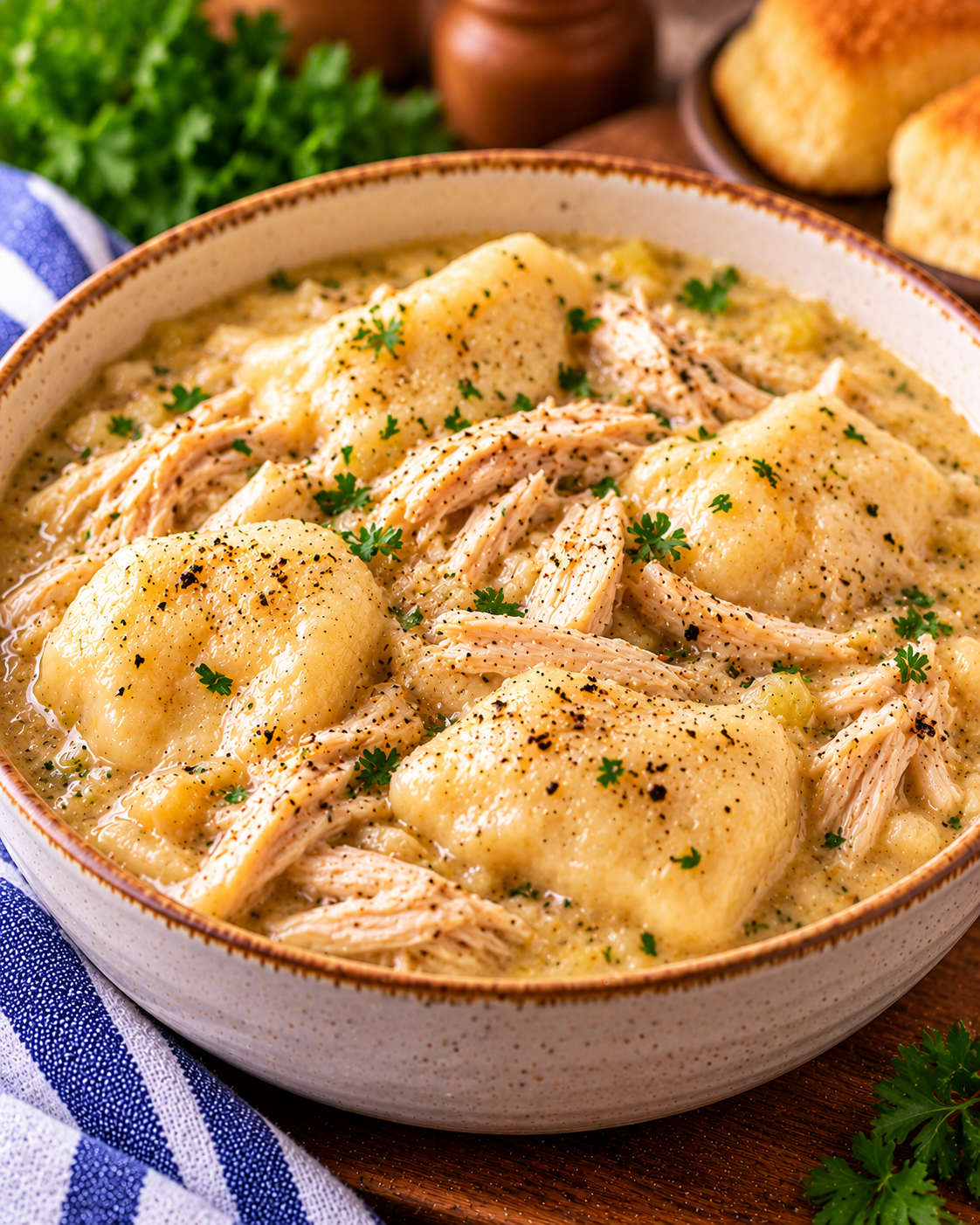
Chicken and slick dumplings is a style of chicken and dumplings made with flat, rolled dumplings rather than spoonfuls of fluffy dough. The dumplings cook in a savory chicken broth, taking on flavor as they soften.
They’re sometimes called flat dumplings, rolled dumplings, or slick dumplings, depending on regional and family traditions.
The finished dish can be quite different from a soup with fluffy dumplings. The flat pieces create a more substantial texture and may contribute starch that changes the broth’s consistency.
Chicken and slick dumplings is associated with Southern and Appalachian-style comfort cooking, although variations exist across families and communities.
A good bowl should have tender chicken, flavorful broth, and dumplings that remain distinct without feeling hard or gummy.
Slick Dumplings vs. Fluffy Dumplings
The biggest difference is texture. Fluffy dumplings are usually soft and airy, with a biscuit-like character. Slick dumplings are flatter and denser, giving them a pleasantly chewy bite.
Their appearance is different, too. Flat dumplings are typically recognizable as strips or pieces of dough within the broth, while drop dumplings form rounded mounds.
The way they affect the broth can also vary. Flat dumplings may release starch as they cook, making the liquid feel more substantial.
Neither style is inherently better. People often prefer whichever version they grew up eating.
If you’re expecting fluffy dumplings, slick dumplings may surprise you. Their appeal is in that tender, noodle-like texture rather than a light, bread-like finish.
Why This Old-Fashioned Dish Is Different
Chicken and slick dumplings is built around a simple combination of chicken, broth, and dough. It doesn’t need a complicated sauce or an elaborate garnish to feel complete.
The broth is especially important because the dumplings absorb its flavor. A weak broth can leave the entire dish tasting flat, even when the chicken is tender.
The dumplings also make the dish more filling than an ordinary chicken soup. Their texture turns the broth into something closer to a complete meal.
There’s a nostalgic quality to the dish, too. For many families, the shape and texture of the dumplings are tied to a particular household tradition.
That familiarity is part of what makes old-fashioned chicken and dumplings so comforting. It’s food that feels generous and satisfying without being showy.
Tips for Tender, Flat Dumplings
Flat dumplings need enough structure to remain intact in the broth, but they shouldn’t become tough. The balance depends on the dough’s ingredients and how it’s handled.
A dumpling that’s too thick may remain firm inside, while one that’s too thin can become overly soft or break apart. The intended thickness depends on the recipe.
The broth also influences the result. Dumplings absorb liquid as they cook, so their texture changes as they spend time in the pot.
How to Prevent Tough Dumplings
Tough dumplings can result from a dough that has been handled excessively or has an unsuitable balance of ingredients. The exact cause depends on the recipe.
A properly made slick dumpling should have a little substance without requiring effort to chew. It shouldn’t feel rubbery or dry.
How to Keep Dumplings from Sticking Together
Flat dumplings can cling to one another when their surfaces become sticky. That can create thick clusters that don’t cook or absorb broth evenly.
The recipe’s handling method is designed to keep the pieces separate. Follow it rather than treating the dough like ordinary pasta.

How to Get a Flavorful Chicken Broth
The broth is the foundation of chicken and slick dumplings. Since the dumplings absorb its flavor, the liquid needs enough savory depth to remain satisfying after the dough has cooked.
Chicken contributes much of that flavor, but the result also depends on the other ingredients in the recipe. Different cuts of chicken can create different levels of richness.
A broth that’s too salty may become unpleasant as the dish thickens, while one that’s too weak can make the dumplings taste bland.
The best broth should taste good on its own before it becomes part of the finished dish. It should complement the chicken and dumplings rather than simply act as cooking liquid.
Some versions are brothy, while others become thicker and almost gravy-like. Both can be traditional depending on the recipe and family preference.
Common Mistakes to Avoid
One common mistake is expecting slick dumplings to behave like fluffy drop dumplings. Their texture is intentionally different, so judging them by the same standards can be misleading.
Another is allowing the dumplings to become overly soft. They should remain recognizable pieces rather than dissolving into the broth.
Broth consistency can also change as the dumplings absorb liquid. A pot that begins quite brothy may become noticeably thicker as it sits.
Overcooked chicken is another issue. The meat should remain tender and pleasant to eat, not dry or stringy.
The most useful approach is to follow the recipe’s intended texture rather than trying to make the dish resemble a different style of chicken and dumplings.
What to Serve with Chicken and Slick Dumplings
Chicken and slick dumplings is substantial enough to serve as a main dish. The chicken provides protein, while the dumplings make it filling.
Green beans are a natural companion because their fresh, savory flavor contrasts with the rich broth. A simple side salad can provide a similar balance.
Collard greens or other cooked greens also fit comfortably beside this kind of Southern-inspired meal.
Cornbread is another familiar option, although the dumplings already provide plenty of starch. Whether you need bread depends on how hearty you want the meal to be.
A small vegetable side is often all that’s necessary. The chicken and dumplings should remain the centerpiece.
Storage and Reheating
Chicken and slick dumplings can make satisfying leftovers, but the dumplings continue absorbing broth during storage. The next day’s dish may be thicker than the original.
The dumplings can also become softer as they sit, particularly if they remain submerged in liquid.
Refrigerate leftovers promptly in shallow, covered containers at 40°F (4°C) or below. Properly stored cooked chicken dishes are generally best used within three to four days.
Reheat leftovers thoroughly to 165°F (74°C). The center of the dumplings and chicken should be heated properly, not just the surrounding broth.
Freezing is possible for some versions, but the dumplings may change texture after thawing. The result depends on the dough and the consistency of the broth.
Frequently Asked Questions About Chicken and Slick Dumplings
What Are Slick Dumplings Made Of?
Slick dumplings are a type of flat dough dumpling, commonly made from a simple flour-based dough. The exact ingredients vary by recipe and family tradition.
What’s the Difference Between Slick and Drop Dumplings?
Slick dumplings are rolled into flat pieces and have a denser, more noodle-like texture. Drop dumplings are generally softer and fluffier, with a biscuit-like character.
Can You Make Slick Dumplings Ahead?
Some recipes allow advance preparation, but the dough and cooked dumplings may behave differently during storage. Follow the recipe’s make-ahead guidance.
Can You Freeze Chicken and Slick Dumplings?
Some versions can be frozen, although the dumplings may soften or change texture after thawing. The broth can also become thicker during storage.
Final Thoughts
Old-Fashioned Chicken and Slick Dumplings is a comforting meal built around a few familiar elements. Tender chicken, flavorful broth, and flat dumplings create a dish that feels substantial without needing elaborate extras.
The dumplings are what make this version special. Their soft, slightly chewy texture is different from fluffy dumplings, and that’s exactly why so many people love them.
Chicken and Slick Dumplings
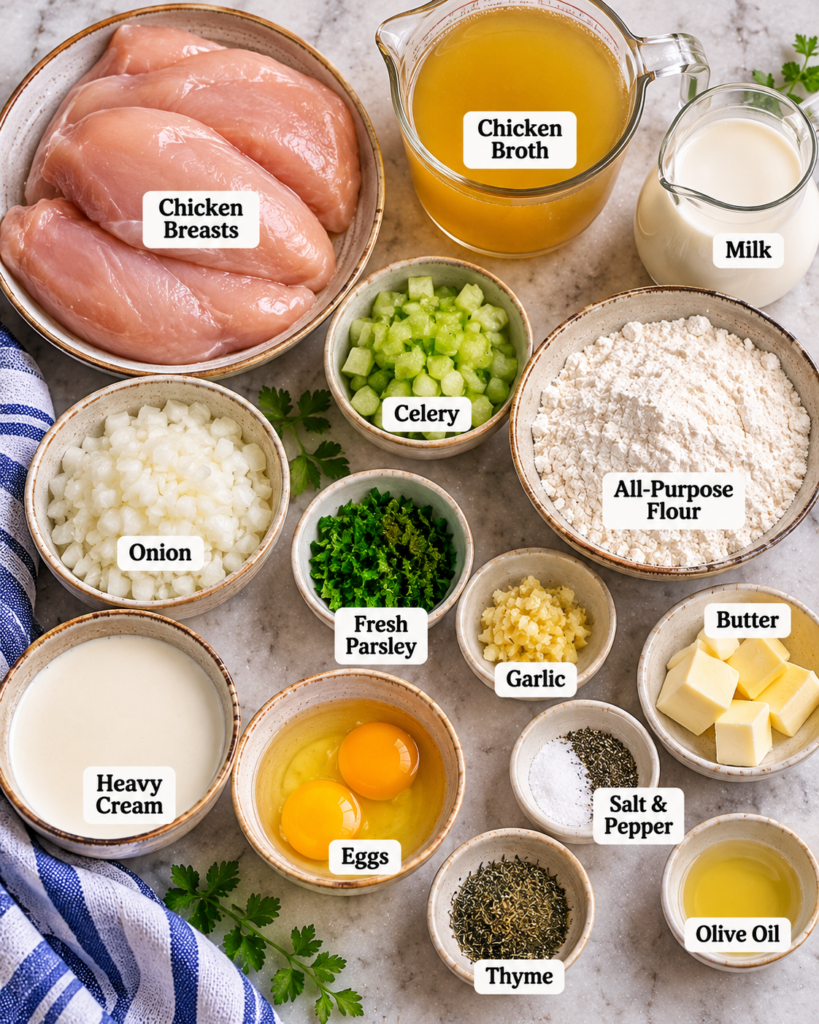
Ingredients
Method
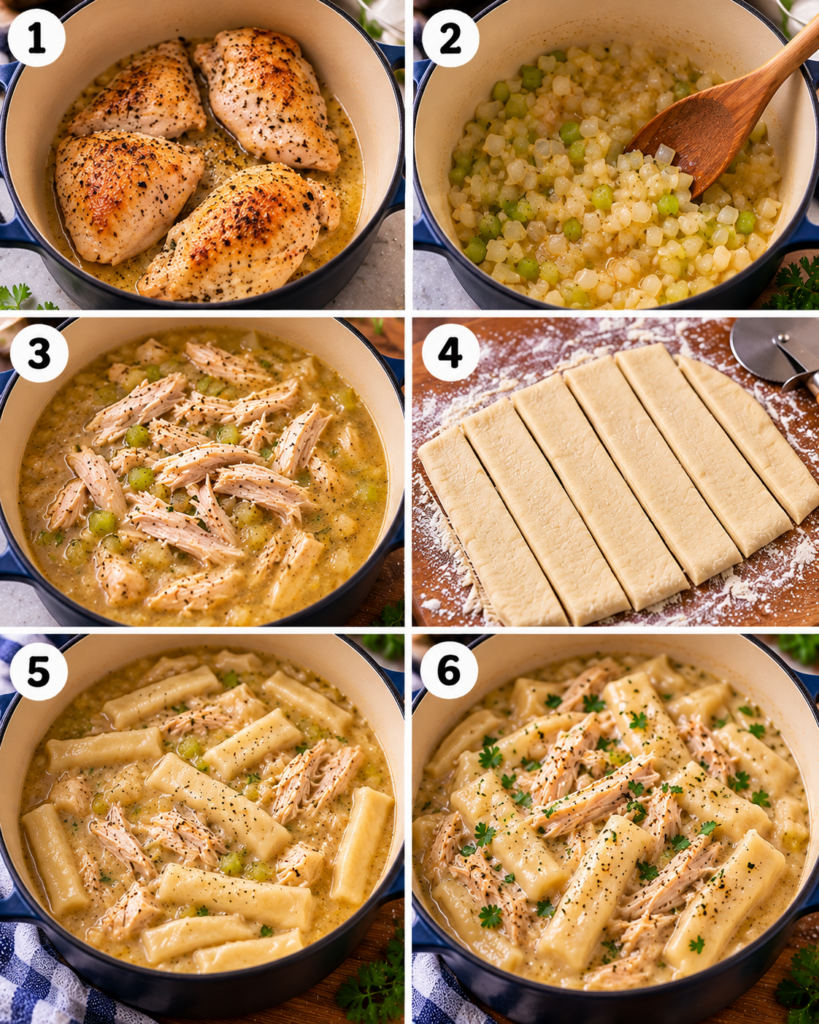
- In a large pot, combine the chicken pieces and broth. Bring to a simmer.
- Cook the chicken for about 30-40 minutes, until tender.
- Remove the chicken from the pot and allow it to cool slightly. Shred the meat, discarding the skin and bones.
- In a bowl, mix the flour and salt. Make a well in the center and add the beaten egg and milk.
- Stir until a dough forms. Roll the dough out on a floured surface to about 1/8 inch thick.
- Cut the rolled dough into thin strips.
- Bring the broth back to a gentle boil.
- Add the dumpling strips to the pot, stirring gently.
- Cook for 10-15 minutes, until dumplings are cooked through and tender.
- Add the shredded chicken back to the pot. Stir to combine.
- Season with additional salt and pepper to taste before serving.