
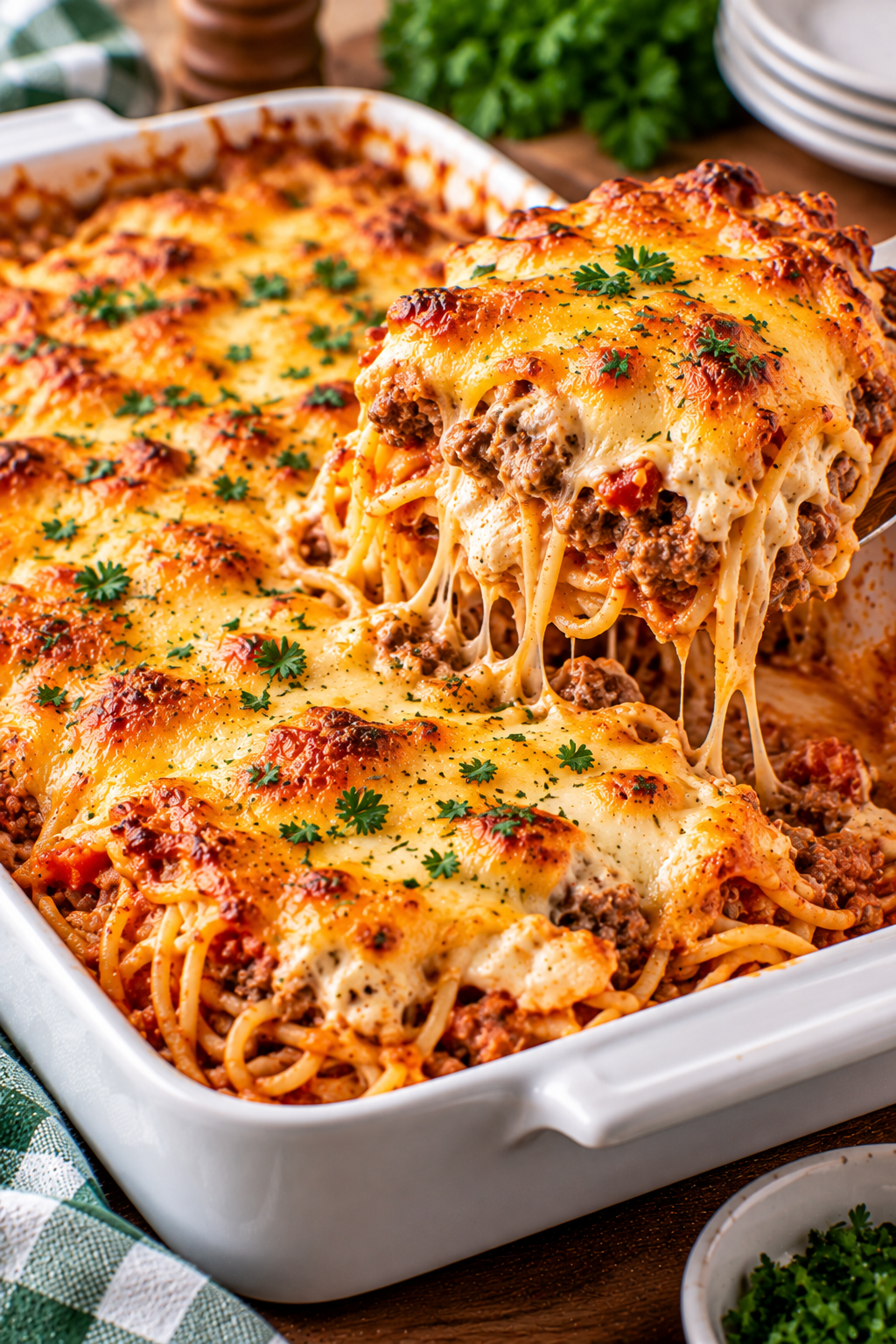
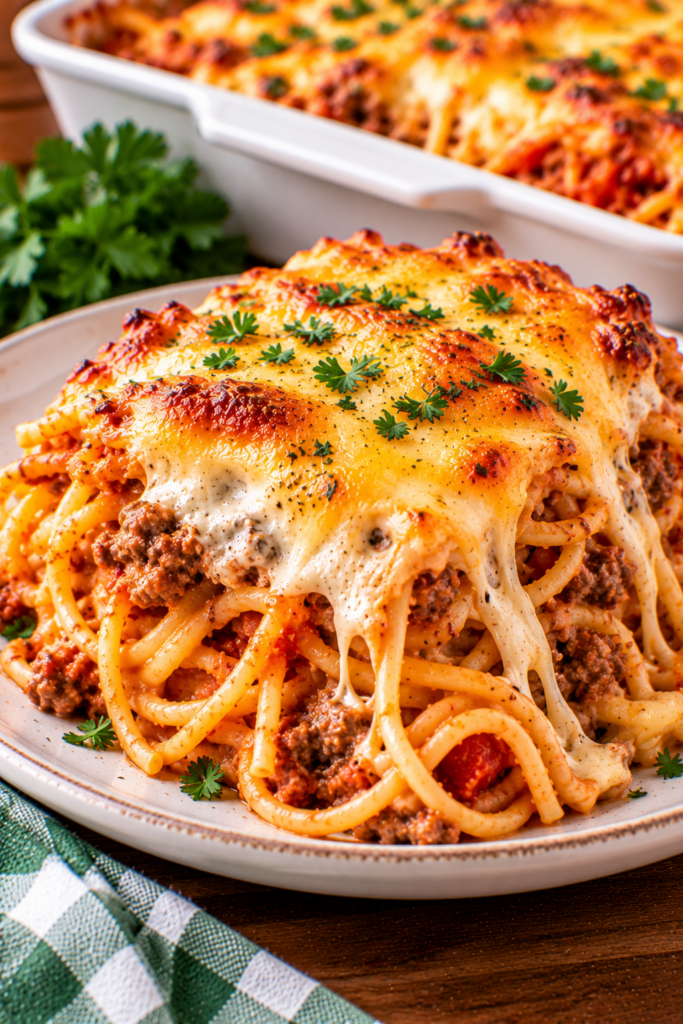
Baked spaghetti with cream cheese takes a familiar pasta dinner and turns it into a rich, comforting casserole. Instead of serving spaghetti with sauce on top, this version brings the pasta, creamy cheese, and savory sauce together in a baked dish that can be portioned and served straight from the oven.
What makes this baked cream cheese spaghetti casserole different is the texture. Cream cheese adds a smooth, slightly tangy richness that softens the acidity of tomato-based sauce and helps create a more substantial pasta dish.
It’s a useful option for family dinners, casual gatherings, or meal planning when you want something familiar but a little different from regular spaghetti. The most important detail is maintaining the right balance of pasta, sauce, and cheese so the casserole stays creamy rather than becoming dry or overly heavy.
Baked Cream Cheese Spaghetti vs Regular Baked Spaghetti
Regular baked spaghetti usually combines cooked pasta, tomato-based sauce, and cheese before finishing in the oven. It’s a convenient way to serve spaghetti in a casserole format, particularly when preparing food for several people.
Baked spaghetti with cream cheese adds another layer of richness. The cream cheese can create a smoother texture and a slightly tangy flavor that contrasts with the tomato sauce.
Depending on the recipe, the cream cheese may be distributed throughout the pasta or used as a distinct layer. Both approaches produce a different eating experience from spaghetti topped with a simple meat sauce.
Regular baked spaghetti often has a more pronounced tomato flavor, while the cream cheese version tends to taste milder and creamier.
If you enjoy pasta dishes with a rich, comforting texture, the cream cheese variation is worth trying.
Why Cream Cheese Makes This Casserole So Much Better
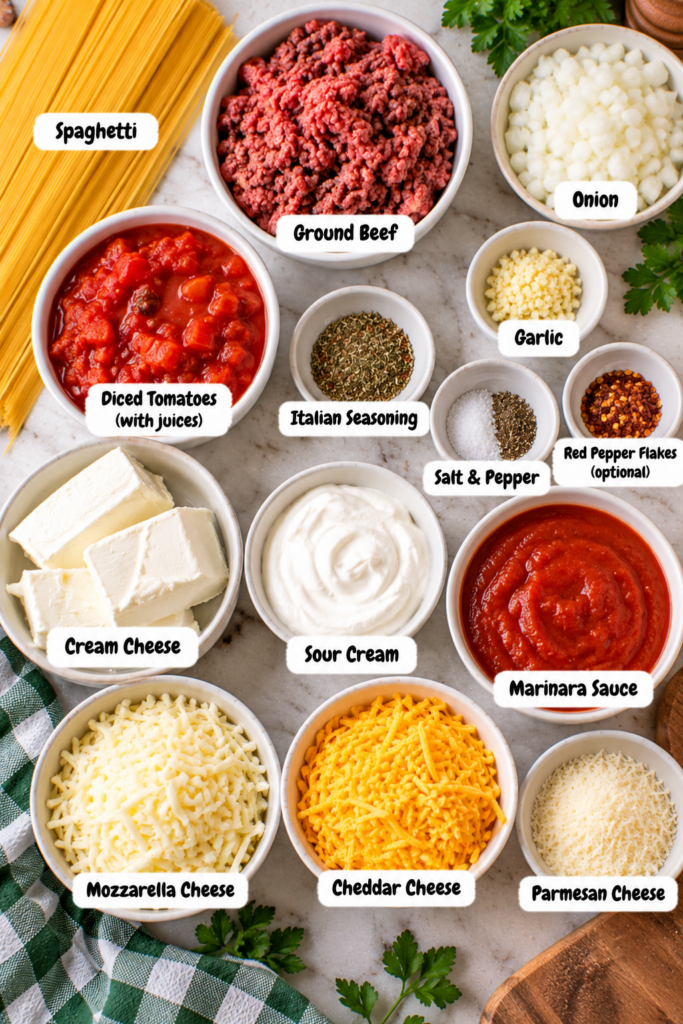
Cream cheese contributes more than richness. Its soft texture allows it to blend with other ingredients and create a creamy consistency that can help the pasta feel less dry.
It also brings a gentle tanginess that works well with tomato-based sauces. This contrast can balance the sweetness and acidity of tomatoes without completely changing the character of the dish.
The type of cream cheese matters. Full-fat cream cheese generally produces a richer result, while reduced-fat varieties may behave differently when heated.
Temperature can also affect how smoothly cream cheese combines with other ingredients. Very cold cream cheese is firmer and may be more difficult to distribute evenly.
The goal is a casserole where the cream cheese supports the other flavors rather than forming excessively heavy pockets.
What Type of Meat Works Best in This Casserole?
Ground beef is a popular choice for baked spaghetti casserole because it provides a savory flavor that works naturally with tomato sauce and cheese.
Its texture also distributes well throughout the pasta, making it easy to serve consistent portions.
Italian sausage is another possibility. Depending on the variety, it can add garlic, herbs, fennel, or spicy notes that give the casserole a stronger flavor.
Ground turkey offers a leaner alternative, although its milder taste and lower fat content can affect the richness of the finished dish.
A meatless version is possible, too. Mushrooms, spinach, or other suitable vegetables can add substance, but they may also release moisture and change the sauce consistency.
Choose a filling that complements the creamy pasta rather than competing with it.
How to Layer the Casserole for Perfect Results
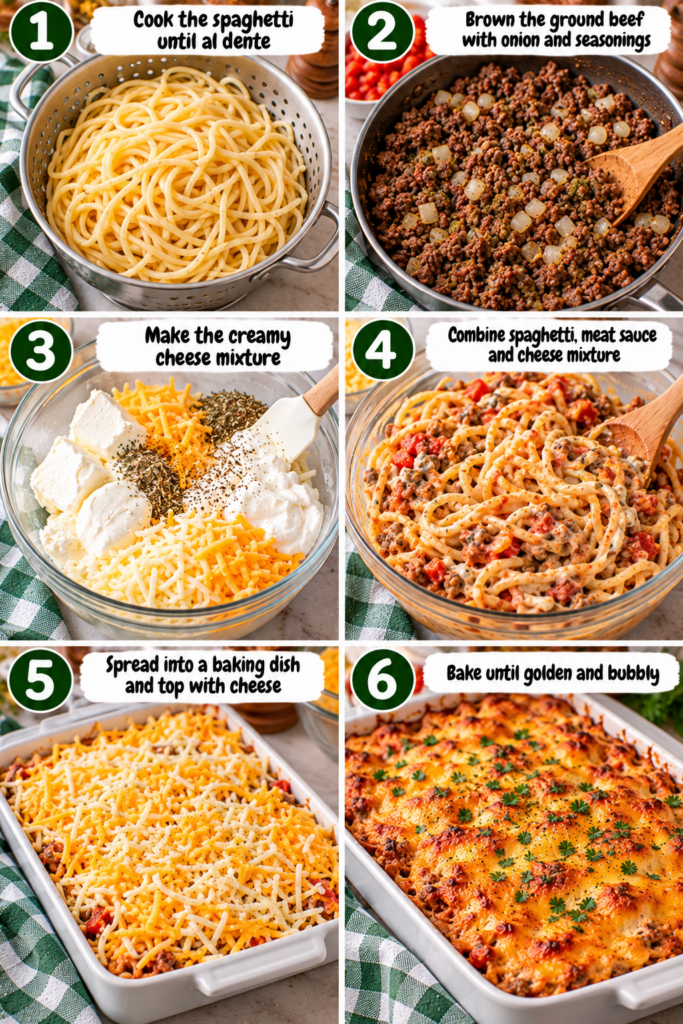
Layering affects both the appearance and texture of a baked spaghetti casserole. A well-balanced dish should provide pasta, sauce, and creamy cheese in each serving rather than concentrating everything in separate sections.
One common problem is uneven moisture. Pasta that isn’t sufficiently coated with sauce can become dry during baking, particularly around the edges of the dish.
Too much sauce creates the opposite issue, leaving the casserole loose and difficult to portion.
The cream cheese component also needs to be distributed appropriately. Large, uneven areas of cheese can make some portions much richer than others.
A good casserole should hold together reasonably well when served while still remaining moist and creamy.
The exact arrangement should follow your recipe card, since the best layering method depends on the ingredients and quantities being used.

Cheese Topping Ideas: Mozzarella, Parmesan, or Both?
Mozzarella and Parmesan bring different qualities to baked spaghetti.
Mozzarella is known for its mild flavor and melting ability. It can create a soft, stretchy topping that works well with creamy pasta and tomato sauce.
Parmesan provides a stronger, saltier flavor. A relatively small amount can add savory depth without contributing the same stretchy texture as mozzarella.
Using both can create a balance between mild creaminess and sharper cheese flavor. However, the total amount of cheese matters, especially when the casserole already contains cream cheese.
For a lighter topping, a modest amount of Parmesan may be enough. If you prefer a more traditional cheesy casserole appearance, mozzarella can provide that familiar melted surface.
Can You Make Cream Cheese Spaghetti Casserole Ahead?
Baked cream cheese spaghetti casserole can be convenient for meal preparation, but the pasta and sauce may change as they sit together.
Pasta absorbs moisture over time, which can make a prepared casserole thicker before it reaches the oven. This is particularly noticeable when the sauce contains creamy ingredients.
The texture of cream cheese can also change slightly after freezing and thawing. Some recipes reheat smoothly, while others may become less uniform.
For short-term storage, refrigerate cooked casserole promptly and use within three to four days. Keep it in a covered container at 40°F (4°C) or below.
When reheating leftovers, make sure the center reaches 165°F (74°C). If the pasta appears dry, the recipe may benefit from a little additional moisture during reheating.
Frequently Asked Questions About Baked Cream Cheese Spaghetti Casserole
Can I use low-fat cream cheese?
Reduced-fat cream cheese may work in some baked spaghetti recipes, but the texture can differ from full-fat cream cheese. It may be less rich and may not behave exactly the same when heated. If a smooth, creamy texture is important, use the type specified in your recipe card.
Why did my baked spaghetti turn out dry?
Dry baked spaghetti often results from too little sauce, excessive baking, or pasta that absorbs more liquid than expected. The edges can dry out faster than the center, especially when exposed to direct oven heat. Maintaining the intended sauce-to-pasta ratio is important for a moist casserole.
Can I make this casserole without meat?
Yes, meatless versions of baked cream cheese spaghetti are possible. Vegetables such as mushrooms or spinach may provide additional texture, although their moisture content needs consideration. Removing meat also changes the overall volume and balance, so a suitable meatless variation is preferable.
Can I freeze baked cream cheese spaghetti?
Many baked pasta casseroles can be frozen, but cream cheese-based components may change consistency after thawing. The pasta may also become softer. For the best quality, package portions securely, thaw safely, and reheat thoroughly.
Final Thoughts
Baked cream cheese spaghetti casserole is a comforting alternative to regular spaghetti, especially when you’re in the mood for something creamy and filling.
The combination works best when the pasta stays moist, the sauce remains balanced, and the cheese adds richness without overwhelming the dish. Serve it with a fresh salad or simple vegetable side for an easy family dinner.
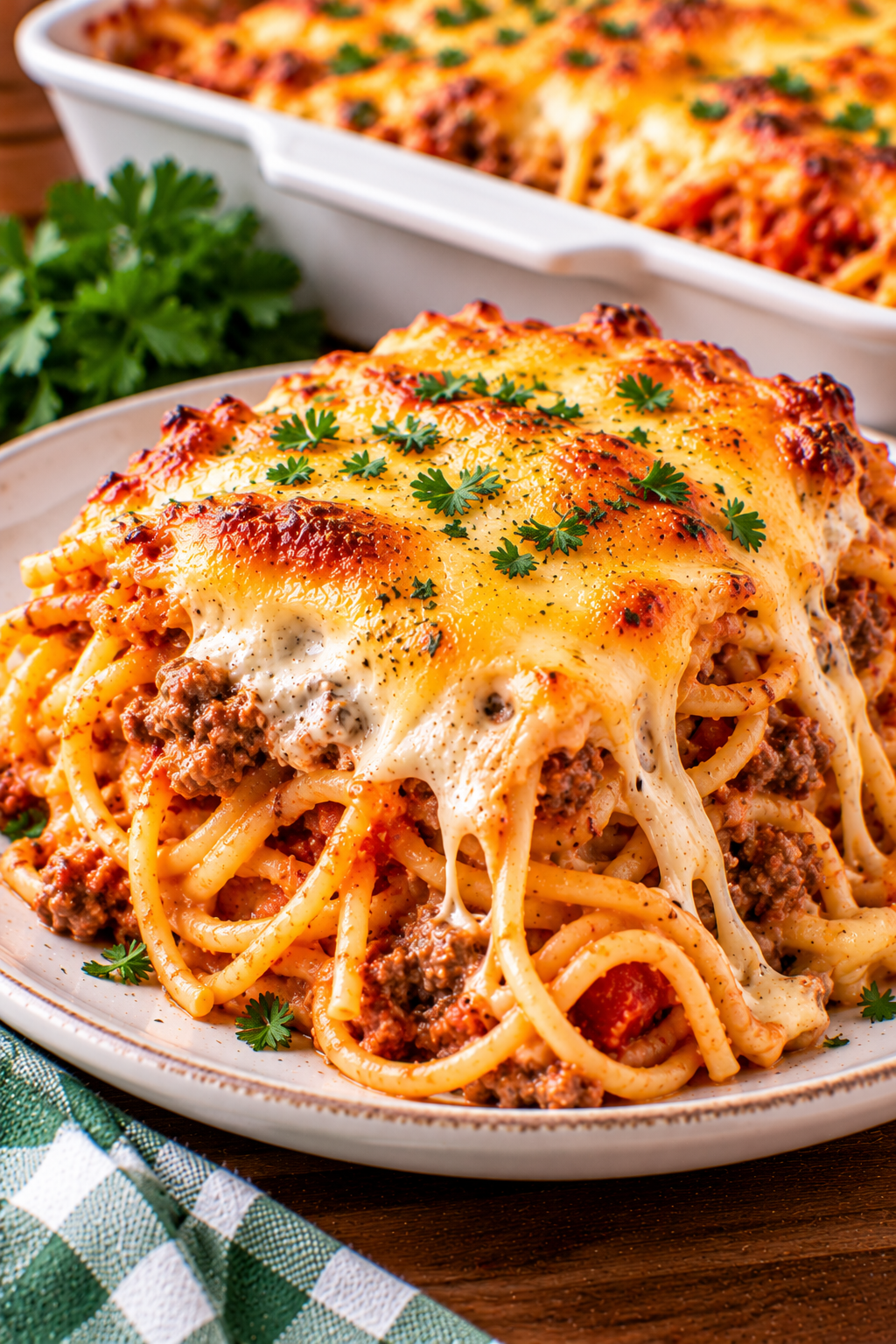
Baked Cream Cheese Spaghetti Casserole
Ingredients
Method
- Cook the spaghetti in salted water until just shy of al dente. Drain, but don’t rinse.
- In a pan, sauté onion in butter or olive oil until soft. Add garlic, then ground beef or sausage. Season with salt, pepper, and Italian seasoning. Cook until browned and crumbly.
- Stir in your marinara sauce and let it simmer on low.
- In a mixing bowl, blend softened cream cheese with sour cream and a splash of hot pasta water. Add a pinch of salt and pepper.
- Toss the hot spaghetti with the cream cheese mixture until each strand is glossy and coated.
- Layer in a greased baking dish: half the meat sauce, all the creamy spaghetti, then the rest of the meat sauce.
- Top with mozzarella cheese and a sprinkle of Parmesan.
- Bake at 350°F for about 20 to 25 minutes, or until bubbly around the edges and golden on top.
- Let it rest for 10 minutes before cutting so it sets nicely.