
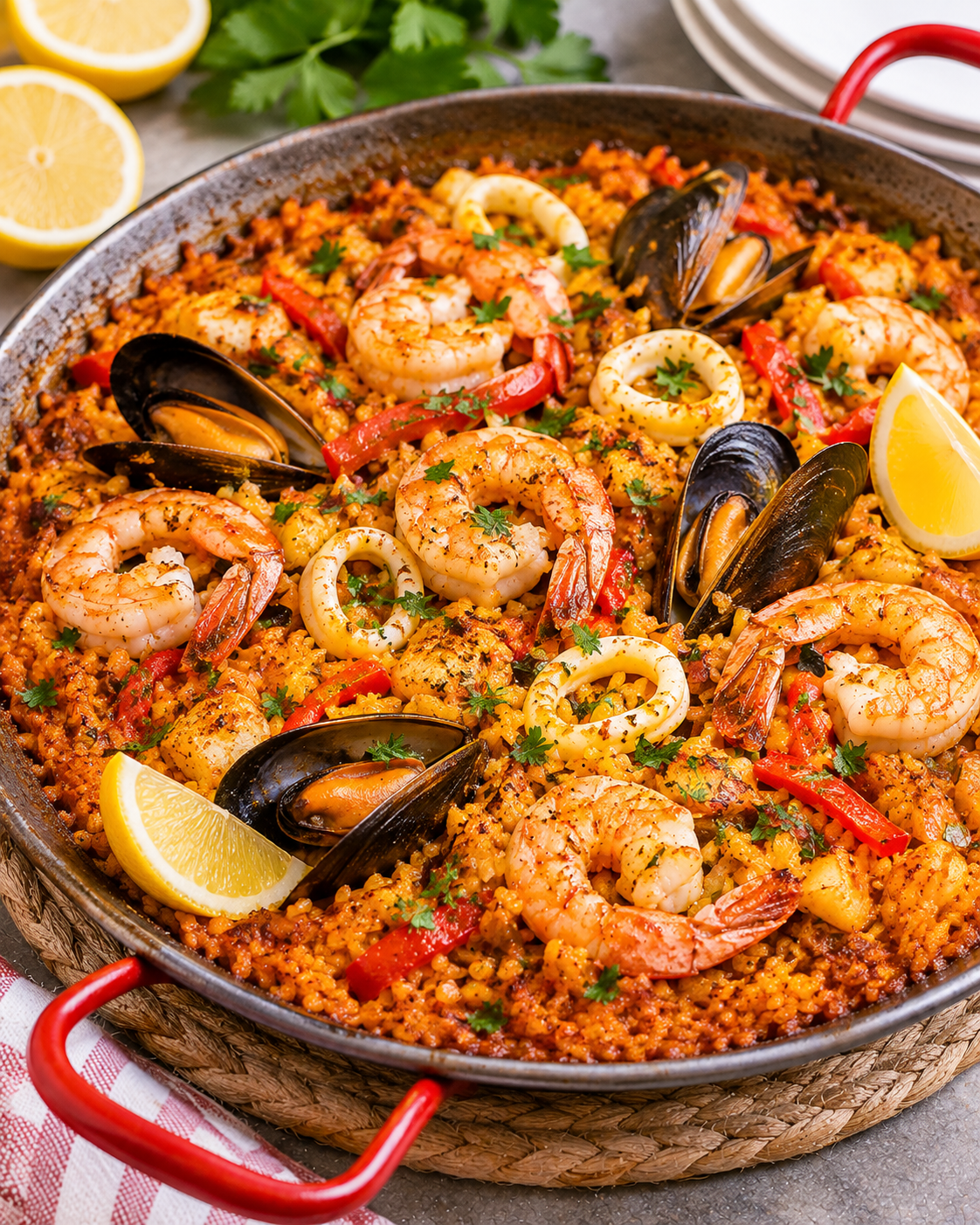
Spanish Seafood Paella can feel a little intimidating the first time, especially if you have guests hovering around the stove waiting for dinner. I get it. You want golden rice, tender seafood, that little crusty layer at the bottom, and zero stress. The good news is you can absolutely nail it at home with simple steps and the right mindset. Grab your biggest skillet, put on some music, and if you want a dunkable side for the shrimp and clams, bookmark this tasty seafood garlic butter dipping sauce. Let me walk you through my favorite way to make it feel like a chill weekend cook instead of a high-pressure performance.
What Is Spanish Seafood Paella?
Paella is a Spanish rice dish built around the idea of gathering, sharing, and letting great ingredients shine. Traditionally from Valencia, it has variations, but the version that wins hearts at my table is packed with seafood. You get saffron-scented rice that’s both cozy and sunny, dotted with shrimp, mussels, clams, maybe squid, and occasionally a few pieces of firm white fish. The key is that the rice is the star and everything else backs it up with flavor.
What Makes Seafood Paella Different From Other Rice Dishes?
Think of paella like a one-pan celebration. The rice cooks in a wide, shallow layer so it absorbs flavor from the broth, paprika, saffron, and seafood juices. Unlike risotto, you don’t stir it once the liquid has been distributed. You let it sit, gently simmer, and do its thing. That’s how you get a mix of tender grains on top and a toasty, savory base layer called socarrat.
If you’re wondering where to start, remember this: great paella depends on good stock, proper rice, and patience. Keep those three in mind, and your Spanish Seafood Paella will taste like a little trip to the coast.
The Secret to Perfect Seafood Paella With Socarrat
What Is Socarrat in Paella?
Socarrat is the gently toasted layer of rice at the bottom that tastes nutty and a bit caramelized. It’s the part people fight over. Getting it right is about heat control and timing. You want most of the liquid absorbed and the rice almost done before you give the bottom a little extra heat. That final toasting builds flavor without burning.
How to Get Crispy Paella Rice Without Burning It
The biggest thing to remember is that socarrat should taste toasted, not scorched. A faint crackling sound and a warm, nutty aroma are good signs, but a sharp burnt smell means the heat has gone too far. The thickness of your pan and the strength of your burner both make a difference, so don’t rely on timing alone.
A short rest after cooking also helps the rice settle and makes serving easier. Resist the urge to stir, even if you’re curious about what’s happening underneath. That bottom layer is part of what makes a good paella worth waiting for.
A few more practical secrets I swear by:
Use the right rice. Bomba or Calasparra are great choices because they absorb flavor without turning mushy.
Warm your stock. Warm broth keeps the simmer steady and helps the rice cook more evenly.
Build flavor early. Tomatoes, paprika, saffron, and a good stock give the rice its savory depth. The seafood should complement those flavors rather than overpower them.
And if you’re serving this for a crowd, I love putting a small bowl of garlic butter seafood dip on the table. It pairs especially well with the shrimp you pull from the pan.
“I was nervous the first time I tried paella, but following the heat cues for socarrat gave me that dreamy crust. My family asked when I was making it again before we even cleared our plates.”
Choosing the Best Rice and Seafood for Paella
Here’s what I look for when making a medium pan that serves a small gathering. Keep it flexible. If your market has beautiful mussels but no clams, swap. If you can only find shrimp, make it a shrimp-focused paella. It’s better to use great seafood in fewer varieties than to force a mix that isn’t fresh.
Which Rice Is Best for Spanish Paella?
Bomba and Calasparra rice are popular choices because they hold their shape while soaking up the flavorful broth. They give you tender grains that stay distinct instead of turning creamy. If you can’t find either, another suitable Spanish short-grain rice is worth looking for.
Arborio can work when that’s what you have, but it behaves differently and can become creamy more easily. The key is choosing rice that can absorb plenty of flavor while keeping a little structure. I wouldn’t reach for ordinary long-grain rice if you’re after that traditional paella texture.
Fresh vs. Frozen Seafood
Fresh seafood is wonderful when it’s available, but good-quality frozen seafood can make a delicious paella too. Shrimp, squid, and firm white fish all bring something different to the pan. Mussels and clams add that briny flavor that makes seafood paella taste like a little trip to the coast.
The most important thing is freshness and proper handling. Frozen seafood should be thawed safely and drained well, while shellfish should be cleaned and checked before cooking. Since different seafood cooks at different speeds, you want everything tender rather than rubbery by the time the rice is ready.
If you like a dipping moment for the shellfish, this buttery seafood dipping sauce is a crowd-pleaser. Serve it on the side so it doesn’t overpower the saffron and paprika in the rice.
Tips for Making Spanish Seafood Paella at Home
Set yourself up for success. Have your stock ready, your seafood cleaned, and enough space around the stove to work comfortably. The actual cooking feels much easier when you’re not searching for ingredients halfway through.
The rice should sit in a relatively even layer so it cooks consistently. Once the broth is distributed, avoid stirring as you would with risotto. That gives the grains a chance to absorb the liquid without releasing too much starch, and it helps the bottom develop that lovely toasted finish.
Pay attention to the seafood, too. Shrimp can turn rubbery if it spends too long over the heat, while mussels and clams need enough time to open and cook properly. If you’re working with several types, remember that they won’t all finish at exactly the same moment. Use visual cues and safe cooking temperatures rather than relying on the rice alone to tell you everything is ready.
That’s it. Nothing fancy, just good ingredients and patience. Your Spanish Seafood Paella should look vibrant, with rice that’s tender but not mushy, seafood that’s juicy, and a base that whispers toasty notes without bitterness.
Do You Need a Paella Pan?
Best Pan Size for Homemade Paella
Short answer: it helps, but you can still make a great paella in a wide skillet. A true paella pan is shallow and wide, which encourages evaporation and even cooking. If you have a 13 to 15 inch skillet, use that. The goal is to keep the rice in a relatively thin layer. Too deep and the bottom overcooks before the top is ready.
Common Pan Mistakes to Avoid
Avoid tall pots and small pans. You’ll end up with uneven rice. If your burner is small, rotate the pan a bit during cooking to distribute heat. If the middle cooks faster than the edges, you can move the pan slightly off-center to even it out.
For a crowd, two medium pans are better than one giant one if your stove struggles to heat a larger pan evenly. And for serving? Bring the pan to the table. That’s the charm. Paella is meant to be shared, and it tastes even better when everyone digs in together. When I plan a casual dinner, I pop a small bowl of seafood garlic butter dip next to the lemons and parsley and let people go to town.

Why Is My Paella Rice Mushy or Undercooked?
This is one of the most common frustrations when making paella at home. If the rice turns mushy, it may have absorbed too much liquid or spent too long simmering. Stirring after the broth goes in can also release extra starch, leaving you with a creamy texture closer to risotto than paella.
Undercooked rice usually means the liquid evaporated before the grains had enough time to soften. This can happen when the heat is too high or the pan is especially wide for the amount of rice you’re using. A little extra warm stock can help when the grains are still firm, but it’s best to add only what the rice needs rather than flooding the pan.
I’ve learned not to chase the socarrat if the rice itself isn’t ready. A toasted bottom is wonderful, but tender, flavorful rice matters more. Once you understand how your pan and stove behave together, the whole process becomes much easier to judge.
Frequently Asked Questions About Spanish Seafood Paella
What rice should I buy if I can’t find Bomba?
Use another suitable Spanish short-grain rice if possible. Arborio can work in a pinch, but watch the liquid and aim for a slightly firmer texture since it tends to get creamy. The rice you choose will affect how much broth it absorbs, so follow the recipe’s guidance and pay attention to the texture.
How much liquid do I need?
The amount depends on the rice variety, the width of your pan, and how quickly the broth evaporates. Bomba rice can absorb more liquid than some other varieties, so there isn’t one perfect ratio for every paella. Start with the amount specified in your recipe and adjust carefully if the rice needs more moisture near the end.
Can I use frozen seafood?
Yes, just thaw it safely in the refrigerator and pat it dry. Overly wet seafood can dilute flavor, so draining it well makes a difference. Frozen shrimp and squid are especially convenient when fresh options aren’t available.
How do I prevent overcooked shrimp?
Shrimp cooks quickly, so the main thing is not leaving it in the pan longer than necessary. It should turn opaque and firm without becoming tight or rubbery. For food safety, cook seafood thoroughly; shrimp and fish should reach 145°F, and mussels or clams that remain closed after cooking should be discarded.
Any good sauce to serve on the side?
Absolutely. A small dish of seafood garlic butter dipping sauce is perfect for dunking shrimp and clams without masking the saffron and paprika in the rice. I like to keep the sauce separate so everyone can add as much or as little as they want.
Let’s Get You Cooking With Confidence
Spanish Seafood Paella is simpler than it looks when you set yourself up, use the right rice, and trust the process. Keep the simmer gentle, avoid stirring once the stock goes in, and pay attention to the bottom of the pan for that light socarrat. If you want more guidance, this friendly walkthrough from Spanish Paella Recipe – Tastes Better from Scratch is super helpful, and this detailed method from Authentic Spanish Seafood Paella Recipe – Spain on a Fork explores the classic flavors. Grab a wide pan, quality stock, and fresh seafood, and you’ll be proud of what comes out of your kitchen tonight. You’ve got this, and your table is about to cheer.
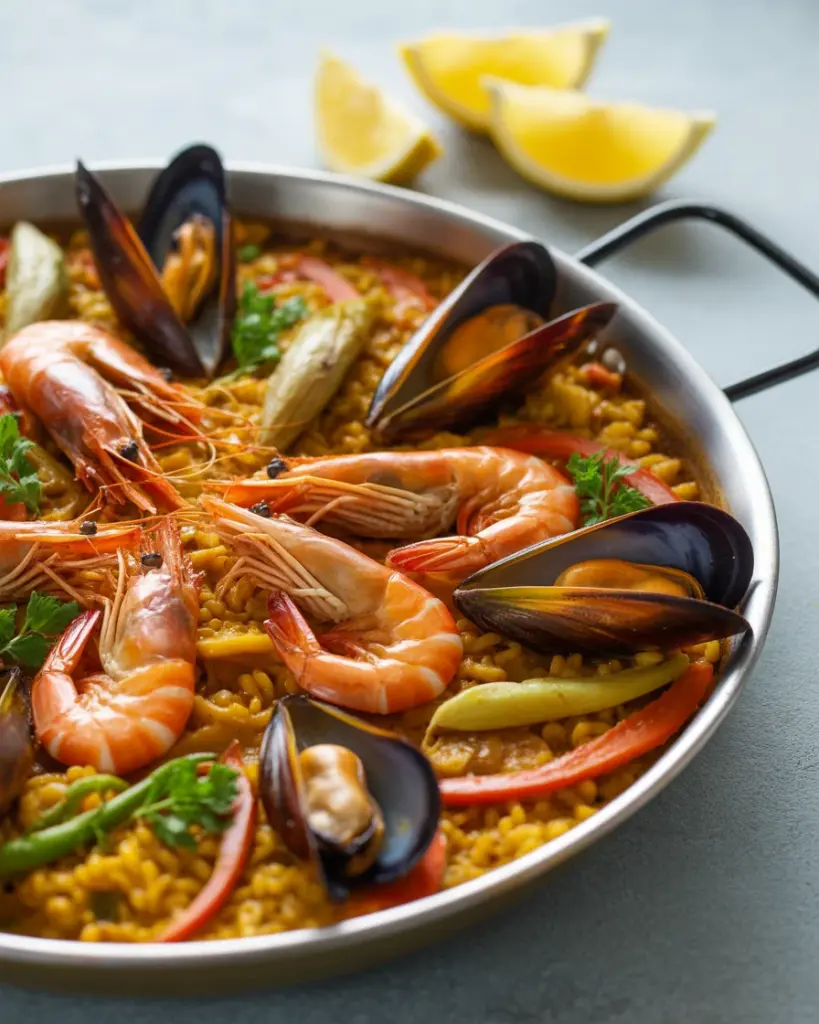
Spanish Seafood Paella
Ingredients
Method
- In a large skillet, heat olive oil over medium heat.
- Sauté chopped onion, garlic, and bell pepper until softened.
- Add the rice, saffron, and smoked paprika, stirring to coat the rice.
- Pour in the warm seafood stock and bring to a gentle simmer, avoiding stirring.
- Add shrimp, mussels, and clams evenly on top of the rice.
- Cover the skillet and allow to simmer for about 20 minutes until the rice is tender and most liquid is absorbed.
- Increase the heat slightly for the last few minutes to create a crispy socarrat at the bottom.
- Let the paella rest for about 5 minutes after cooking.
- Serve with lemon wedges and a bowl of seafood garlic butter dip.