
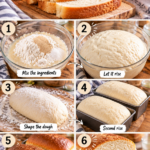
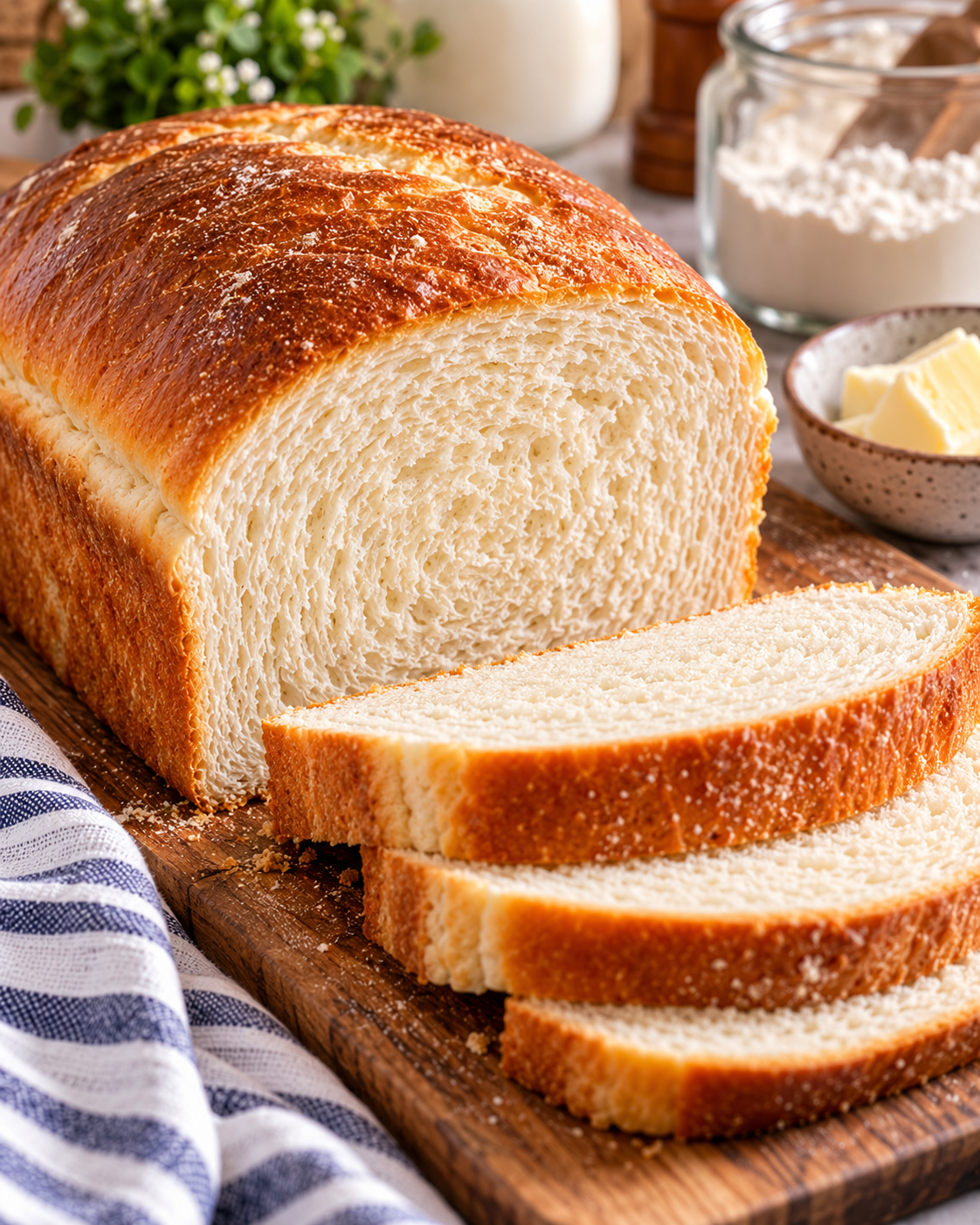
Few things make a kitchen feel more inviting than the smell of fresh bread. A plain loaf of white bread, with a golden crust and a soft interior that’s ideal for butter, toast or sandwiches, is especially reassuring.
Grandma’s country white bread is the kind of recipe that doesn’t require fancy toppings or out of the ordinary flavors. The appeal is in the texture: a tender crumb that cuts neatly, a crust with a little character, and a mild flavor that works with just about anything.
Making your own bread might seem daunting if you’re used to buying pre-sliced loaves but the basics of a good loaf are simple. The dough needs to be structured enough to rise properly and the baking should build the crust without drying out the center.
What’s Unique to Country White Bread?
Country white bread is typically thought of as a more homemade, simple loaf than the extremely uniform texture of commercial sandwich bread. It often looks a bit more rustic with a soft interior and a crust that turns a warm golden color.
That doesn’t mean it has to be tough or chewy. A good country white bread should be tender enough for sandwiches but still feel more substantial than a very soft packaged loaf.
The texture depends on the recipe. Some country-style loaves are enriched and especially soft; others have a simpler, slightly chewier crumb.
Its versatility is what sets it apart. It’s dinner bread, it’s toast for breakfast, it’s everyday sandwich bread, but it’s not special occasion bread.
Why You Should Make This Homemade Bread
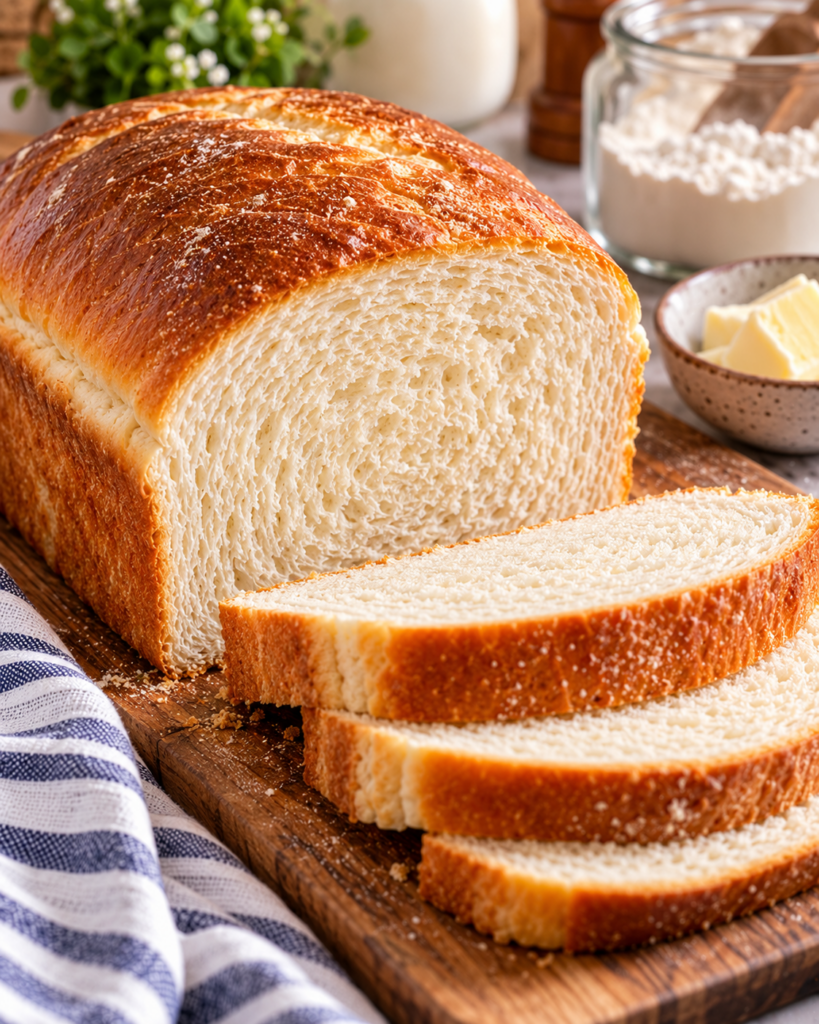
It is nearly impossible to appreciate the texture of fresh, homemade bread until you slice into a loaf that has cooled just enough to cut cleanly. The crumb is tender and the crust is fresh, and it changes as the bread ages.
It is also nice to have a loaf that can be used for several meals. Thick slices are good for toast, and thinner slices are good for sandwiches or grilled cheese.
Its flavor is mild enough to go with sweet or savory toppings. Butter and jam are the obvious choices, but the bread is also good with soup, eggs or a simple lunch.
Homemade bread doesn’t have to be perfectly uniform loaf to loaf. Its charm can be a slightly uneven top or rustic shape, provided the interior is properly baked.
What Are White Bread Ingredients
A lot of the bread’s structure is flour. Different wheat flours have different amounts of protein, which affects gluten development and the final crumb.
Traditional yeast breads depend on yeast to cause the fermentation and rising. Several factors influence the activity of the dough, including temperature and the overall conditions of the dough.
Liquid gives hydration, salt alters flavor and dough characteristics. Some recipes for white bread also contain enriching ingredients that make the bread softer.
These ingredients play together and changing one can have a bigger impact than you think. For example, a different flour may absorb a different amount of liquid and yield a tighter or softer dough.
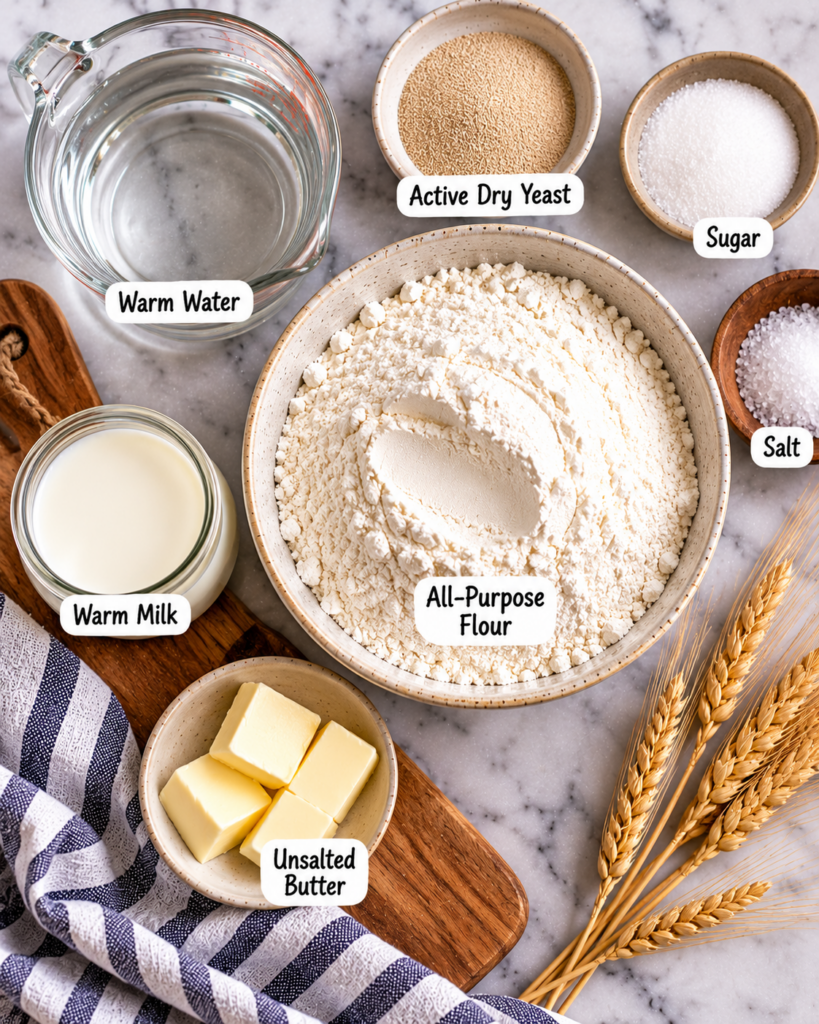
The recipe card has the list of ingredients and how much of each. That’s especially important in bread baking, in particular, because the balance of the dough determines how well it will rise.
How to get soft bread with a golden crust
A soft loaf needs enough gluten structure to hold the gas made during fermentation. Without that structure, the dough could spread or have a heavy crumb.
The rise is also important. If the dough doesn’t rise enough, the loaf can be heavy, and if it is proofed too long, it can collapse.
The crust is influenced by baking conditions. Sometimes the top of a loaf will appear golden brown and the middle still needs more time, particularly if it is in a deep pan.
Cooling is another important part of the finished texture. Bread continues to settle after it comes out of the oven, and cutting it while it’s still very hot can compress the crumb.
How to Tell When Dough Has Risen Properly
A properly risen dough will be noticeably bigger and feel lighter than it was before. But how much it rises depends on the recipe and the stage of fermentation.
Temperature affects how quickly yeast works, so a set time is not always an accurate way of judging readiness. A cool kitchen will slow the process down, but a warm environment will speed it up.
The visual and tactile clues in the recipe are more useful than the clock.
How to Prevent Heavy Homemade Bread
Too dense bread can be caused by too little gluten development, inactive yeast, incorrect dough hydration, or a failed rise. Too much flour can also make the dough tougher than you wanted.
It’s a good idea to look at the whole process rather than assume one thing caused the problem. Depending on the texture and appearance of the loaf, there are several reasons why it could be dense.

Common Mistakes When Baking Bread
Another common problem is adding too much flour, especially when the dough feels sticky. A stiff dough may not make a soft loaf.
Another problem is mis-understanding proofing time. Bread dough is temperature sensitive. So the same recipe may behave differently in winter than in summer.
Yeast condition is also important. Old or improperly stored yeast may not act as it should, and the dough will rise slowly.
An overcooked cake can have a dry crumb and a crust that is too thick. If you don’t bake it long enough, the center can still be gummy while the outside looks fine.
Finally, slicing a very hot loaf can cause the crumb to look doughy or compressed. Allow the bread to cool properly, this will help with the slicing and texture.
How to Use Country White Bread
Country white bread, fresh from the oven, is nice with butter, especially if the crust is still a little warm. Its delicate flavor makes it a natural partner for sweet or savory spreads.
It is wonderful for breakfast toast with jam, honey or eggs. The surface is lightly crisp from toasting and the crumb is soft.
Another obvious application is sandwiches. Country white bread goes with turkey, cheese, veggies or a peanut butter and jello filling.
It also goes well with a bowl of homemade soup. A thick slice is good with tomato soup, vegetable soup or a hearty stew.
If the loaf is a little stale it can still be used for toast or other dishes that do not need the softness of freshly baked bread.
Storing and Freezing Homemade Bread
Commercially packaged bread includes preservatives or dough conditioners to keep the bread fresh for longer. Homemade bread can get stale faster without these additives. Proper storage helps to protect its texture.
Once the loaf has cooled, store it covered and as per the storage advice in the recipe. Refrigeration does slow mold growth, but it can actually accelerate the staling of regular bread.
Freezing is a good option if you are not going to use the loaf quickly. It’s better at holding onto quality than just leaving bread out at room temperature for days.
Bread crust can become soggy in storage and frozen slices may not have the same mouthfeel as fresh-baked bread after thawing. Toasting is a good way to enjoy bread that has lost some of its original texture.
Frequently Asked Questions About Country White Bread
Why Is My Bread Heavy?
Dense bread can be caused by poor rising, not enough gluten development, too much flour, or yeast that isn’t working properly. This will depend on the dough and baking conditions.
How to Keep Homemade Bread Moist
A good recipe and good baking and good storage all add up to softness. Keep the crumb away from excess air which will dry it out.
Can you freeze white country bread?
Yes. Most white breads freeze well if wrapped up well. Freezing is especially useful if you’d like to save some of your homemade loaf for later.
How do you know when homemade bread is ready?
A properly baked loaf will have the crust and internal structure called for by the recipe. An instant-read thermometer can be an additional check, though the proper internal temperature will depend on the style of bread.
Concluding Thoughts
Grandma’s country white bread is a reminder that simple baking can be very satisfying. A homemade loaf with a soft crumb, golden crust and familiar flavor can be a thing of beauty.
The best part is its versatility, whether you use it for sandwiches, toast or a slice with dinner. This is the kind of bread that finds a permanent place in the kitchen.
Country White Bread
Ingredients
Method
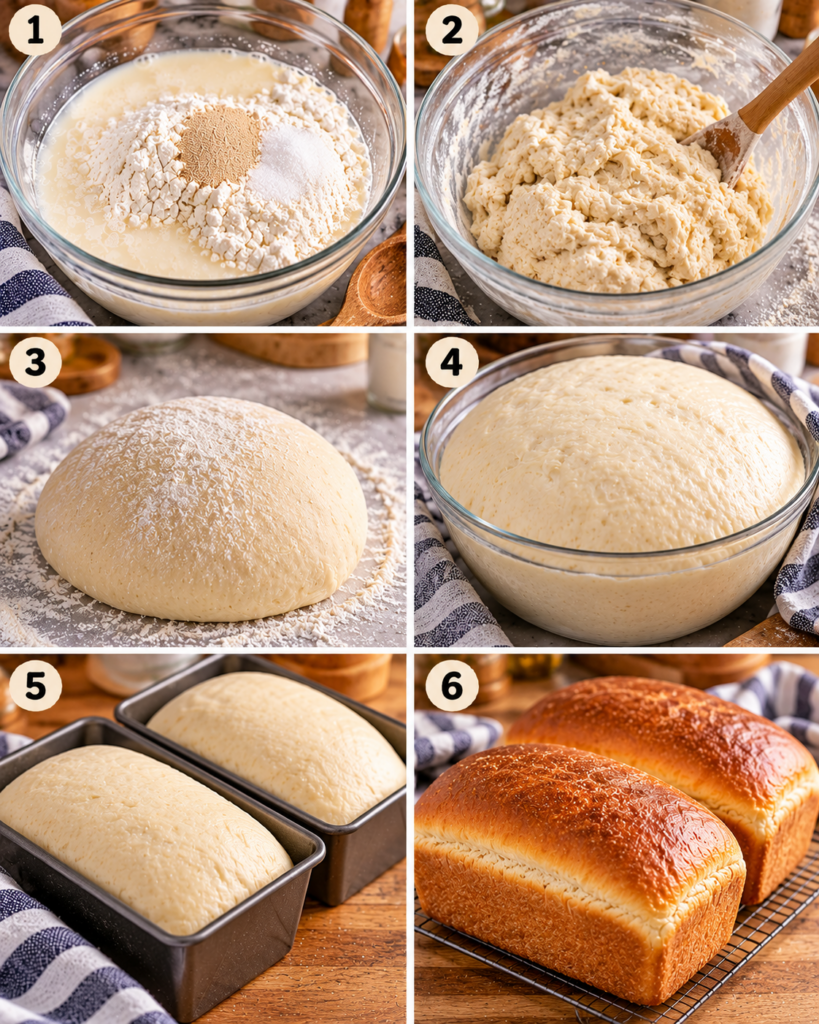
- In a bowl, mix warm water, sugar, and yeast. Let sit for 5-10 minutes until foamy.
- In a large mixing bowl, combine flour and salt.
- Make a well in the center and add the yeast mixture and melted butter, if using.
- Mix until the dough begins to come together.
- Transfer dough to a floured surface and knead for about 10 minutes until smooth and elastic.
- Place the dough in a greased bowl, cover with a damp cloth, and let rise in a warm place for about 1 hour or until doubled in size.
- Punch the dough down to release air, then shape it into a loaf.
- Place the shaped loaf into a greased loaf pan.
- Cover the loaf with a cloth and let it rise again for about 30 minutes.
- Preheat the oven to 375°F (190°C).
- Bake the loaf in the preheated oven for 25-30 minutes or until golden brown.
- Cool on a wire rack before slicing.