
Crème brûlée has always been a special dessert. And there’s the silky vanilla custard underneath, the thin caramelised sugar on top and that satisfying crack when a spoon breaks through the surface. Stacking those familiar qualities into a layer cake is a treat that feels both elegant and gloriously indulgent.
This French Vanilla Crème Brûlée Layer Cake combines the soft vanilla cake, the creamy custard-like layer and the caramelised sugar flavour that is so identifiable with crème brûlée. This is the kind of dessert that seems perfect for a birthday dinner or celebration when you want something more memorable than a regular frosted cake.
The trick is to balance the different textures. The cake needs to stay tender, the custard needs enough body to stay between the layers and any caramelised sugar decoration needs to be crisp without destroying the frosting underneath.
Classic Crème Brûlée or Crème Brûlée Layer Cake?
Classic Crème Brûlée is a custard dessert that is baked and topped with a layer of caramelised sugar. The reason it’s so appealing is the contrast between the cold, silky custard and the crisp sugar topping.
A layer cake of a crème brûlée takes those flavours and turns them into an entirely different structure. Instead of serving custard in a shallow dish, the dessert combines layers of cake with a custard-style filling or other vanilla cream component.
In this way the texture is more substantial. A forkful might include tender cake, creamy filling, frosting and a crisp caramel accent, rather than just custard and sugar.
The caramelised finish is different, too. A sugar crust that rests right on custard is supported by a smooth relatively stable surface whereas a frosted cake may need a different decorating approach.
A good layer cake should evoke crème brûlée, without pretending to be exactly like the original dessert.
The Secret to This Cake That Tastes Like Real Crème Brûlée
Vanilla is the base of classic crème brûlée. It should have a strong enough flavour to come through the custard and cake, but not be overly sweet or artificial.
The filling is custard-like, having the same rich, creamy character as the original dessert. Depending on the recipe, egg yolks, dairy and vanilla may add to that familiar flavour.
The other sure thing is caramelised sugar. Regular caramel sauce is delicious, but it doesn’t have the same crisp, slightly bittersweet edge of a well-caramelized sugar topping.
What is interesting about creme brulee is the contrast between the sweet vanilla and the much deeper flavour of caramelised sugar. Without that balance, the cake will just taste like a rich vanilla layer cake.
The best versions allow each ingredient to contribute something recognisable, rather than burying everything under overly-sweet icing.
How to Burn the Sugar Top but Not Melt the Icing
A kitchen torch can create lovely caramelised sugar, but be cautious about using it directly over a frosted cake. Excessive heat can cause custard fillings and frostings to melt or soften.
The reason classic creme brulee works is because you have sugar sitting right on top of chilled custard in a heatproof dish. Layer cakes are more fragile, especially if they have buttercream, whipped cream or other heat-sensitive toppings.
For some cakes, the sugar decorations are caramelised separately, rather than by torching sugar on the finished cake. This way, you get a crisp caramel element without exposing the whole dessert to the torch heat.
The exact method depends on your recipe and your decoration. A torch should only be used with suitable equipment and surfaces for direct flame, and away from flammable materials.
Over time the caramelised sugar will also take on moisture. The final decoration is time sensitive: a beautifully crisp finish can turn sticky if refrigerated or exposed to humid air.
Vanilla vs. French Vanilla: What’s The Flavour Difference?
French vanilla generally describes a vanilla flavour that is richer and custard-like. It does not refer to a different botanical variety of vanilla. In ice cream, the term traditionally refers to an egg-custard style, though packaged products may use it more broadly.
Regular vanilla cake can be a clean, sweet vanilla flavour without the creamy richness. French vanilla-style desserts tend to have a warmer, creamier impression.
That richer vanilla character makes sense for a crème brûlée cake because the original dessert is custard-based. The aim is for a flavour that is more substantial than a simple vanilla sponge.
Vanilla is important both in quality and quantity. More extract is not always the answer. Too much can make the flavour too harsh or too perfumed.
You want the vanilla to be there, but not so much that the caramelised sugar and the creamy filling can’t come through.
The Custard Filling: What Makes This Cake Special
It’s the filling that can make a crème brûlée layer cake taste really different than just a regular vanilla cake. It should provide a nice smooth creamy contrast to the soft layers of cake.
The consistency of the custard is extremely important. If the filling is too loose it can slide outwards under the weight of the cake, and if it’s too firm it can feel more like custard that has set into a block.

The temperature will affect the custard. When you have to stack more layers of cake on top of it, a chilled filling is usually easier to work with than a warm one.
The amount of filling is also important. A layer that is too thick might seem impressive initially, but it can make the cake unstable when sliced.
Another consideration is food safety. Egg and dairy custard fillings need to be cooked and refrigerated properly as per the recipe. A layer cake with a perishable filling should be refrigerated until serving.
Can You Make Crème Brûlée Layer Cake Ahead of Time?
The cake elements can be made in advance but the caramelised sugar finish needs some special attention. Refrigeration can soften crisp sugar, so a decoration that looks good fresh may lose its crunch after chilling.
Custard fillings also have to be well chilled. Keep refrigerated at 40°F (4°C) or lower. The assembled cake requires the same care.
For a party, it could be helpful to make the cake and the filling in advance, holding back the delicate caramel decorations until nearer to serving time. The timing will depend on the structure of the cake and frosting.
You also want to allow enough time for the cake to settle before you cut it. If you cut it too soon after assembly, very soft layers and fillings can shift.
If you’re storing leftovers, keep the cake from drying out, but be aware that the caramelised sugar will change texture. That’s a common limitation when you combine crisp sugar with a moist refrigerated dessert.
Frequently Asked Questions French Vanilla Creme Brulee Layer Cake
Does crème brûlée cake equal vanilla custard cake?
A vanilla custard cake might have a creamy filling but not the caramelised sugar element associated with crème brûlée. It’s that special mix of rich vanilla custard and caramelised sugar that makes crème brûlée-inspired desserts what they are.
How can I bake this cake without a kitchen torch?
Some recipes use a different caramel preparation or separate sugar decorations. The best substitute depends on the design of the cake. Don’t think it’s safe or a good idea to put a frosted layer cake under a grill.
Why is my custard filling leaking?
A filling that is too loose, too warm, or applied too thickly may not support the cake layers well. The weight of the cake and the structure of the filling. A recipe designed for layer cakes should yield a filling that is stable enough to assemble.
Should crème brûlée layer cake be refrigerated?
Yes, if it has a filling of custard or any other perishable dairy product. Refrigerate the cake and limit the amount of time it spends at room temperature. Caramelised topping can also soften in storage, even when stored safely.
Can you freeze creme brulee layer cake?
Some cake layers freeze well but custard fillings and caramelized-sugar decorations may not be the same as they were. In some recipes it might be better to freeze components separately. Follow directions of your specific filling and frostings.
Closing Thoughts
French Vanilla Crème Brûlée Layer Cake is a beautiful way to bring the flavours of a traditional custard dessert into a festive cake. Soft vanilla cake, luscious cream filling, and caramelised sugar is a combo that’s fancy enough but still has the comforts of a homemade cake.
The main characteristics: firm filling, balanced sweetness and a careful handling of the sugar finish. Combine those elements, and the dessert delivers the creme brulee experience in a whole new way.
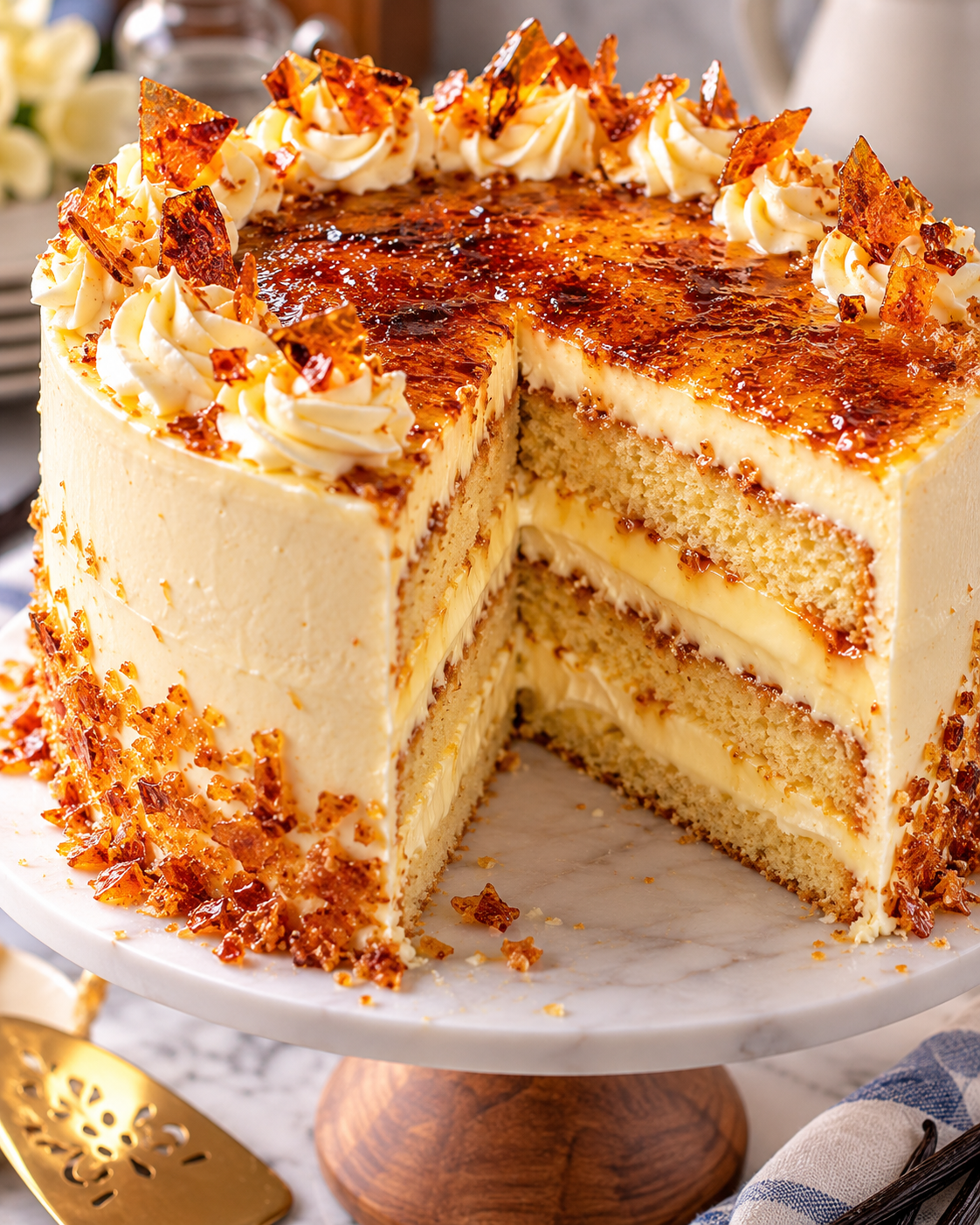
French Vanilla Crème Brûlée Layer Cake
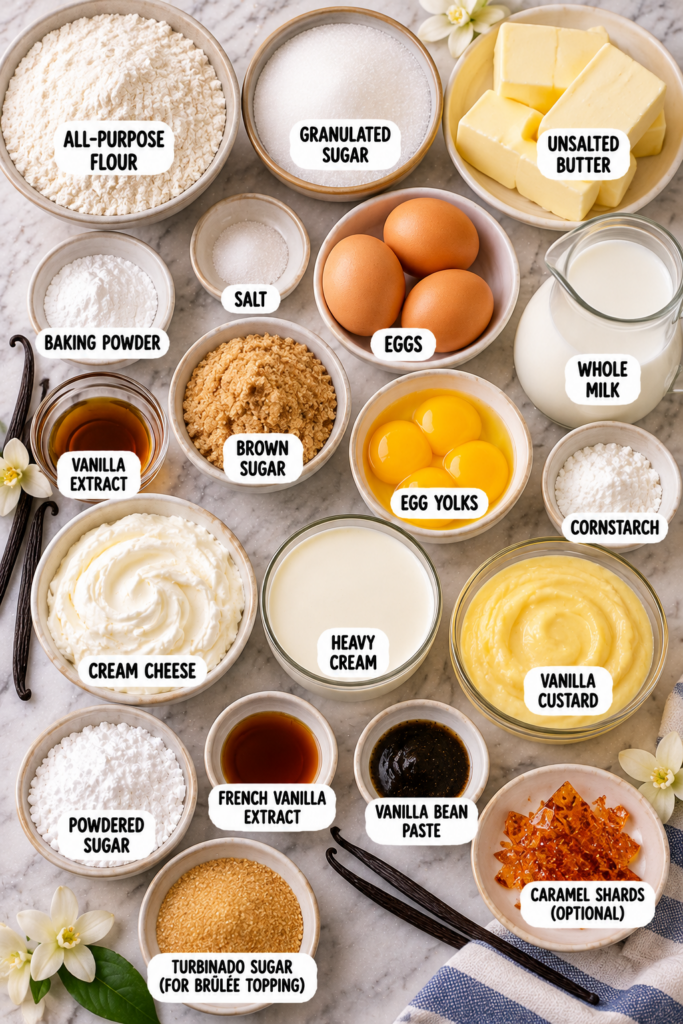
Ingredients
Method
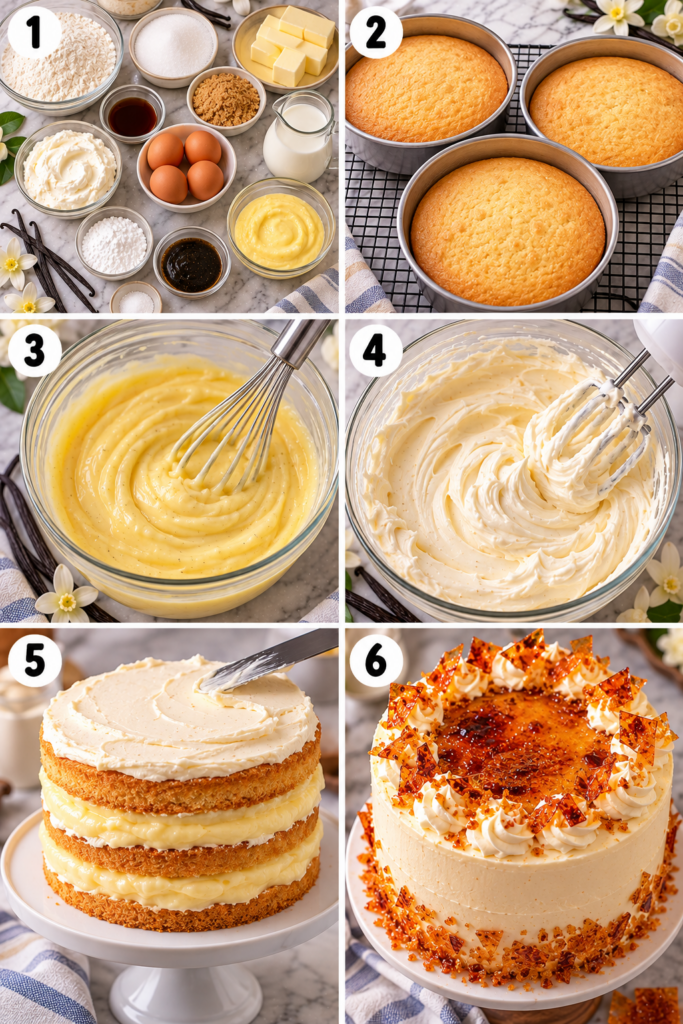
- Preheat your oven to 350°F (175°C) and grease two 9-inch round cake pans.
- In a bowl, cream the softened butter and sugar together until light and fluffy.
- Add in the eggs one at a time, mixing well after each addition.
- Stir in the vanilla extract.
- In a separate bowl, mix the flour, baking powder, and salt.
- Gradually add the dry ingredients and milk to the creamed mixture, alternating between the two, until just combined.
- Divide the batter evenly between the prepared pans and smooth the tops.
- Bake for about 25-30 minutes, or until a toothpick inserted into the center comes out clean.
- Let the cakes cool in the pans for 10 minutes before transferring to wire racks to cool completely.
- In a saucepan, heat the heavy cream over medium heat until it begins to simmer.
- In a bowl, whisk the egg yolks and sugar until pale and thick.
- Gradually pour the hot cream into the egg mixture, whisking constantly to temper the yolks.
- Return the mixture to the saucepan and cook over low heat, stirring continuously until thickened.
- Remove from heat and stir in vanilla extract. Allow to cool completely.
- Once the cakes and custard filling are completely cool, place one cake layer on a serving plate.
- Spread the custard filling over the first cake layer, then top with the second cake layer.
- Refrigerate the cake for at least 1 hour to set the filling.
- Sprinkle the granulated sugar evenly over the top of the chilled cake.
- Using a kitchen torch, carefully caramelize the sugar until it melts and forms a golden crust. Watch closely to avoid burning.