
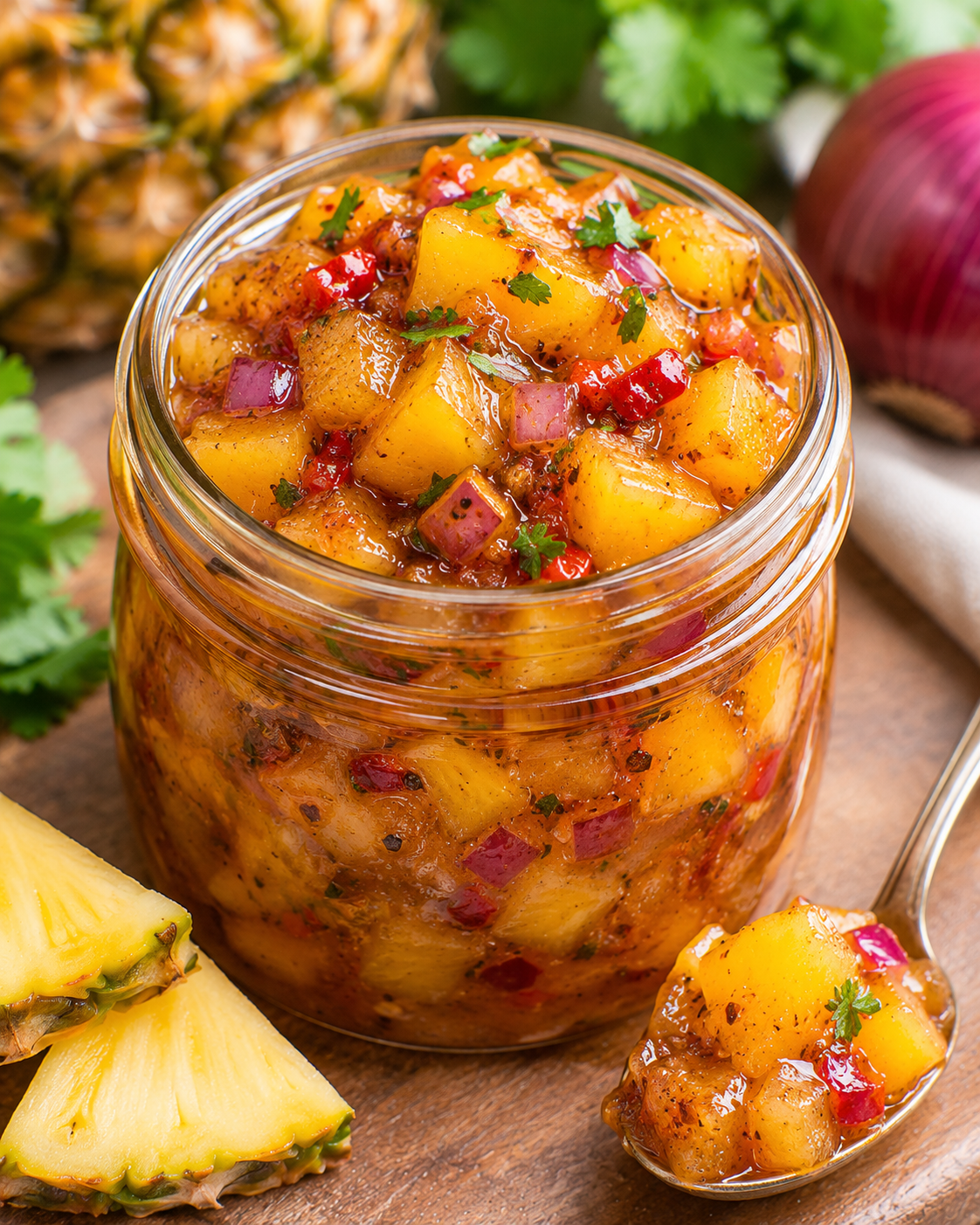

pineapple chutney recipe is one of those lifesaver things I make when I have a pineapple sitting on the counter and I can tell it is about to go from sweet to suspicious. You know that moment when you want something exciting with dinner, but you do not want to cook a whole extra dish? This is exactly for that. It is sticky, bright, a little tangy, and it makes boring meals taste like you tried harder than you did. I started making it after a backyard dinner where everything needed a pop of flavor, and now I keep it in my fridge like a secret weapon. Let me walk you through it like I would if you were hanging out in my kitchen.
What Makes Our Recipe So Good?
This is not one of those chutneys that takes all afternoon or asks you to own fancy spices you will never use again. My version is quick, forgiving, and it hits that sweet and savory balance that makes you keep “taste testing” straight from the spoon.
Here is what I think makes this pineapple chutney recipe special:
- Real pineapple flavor that stays bright because we do not overcook it.
- Just enough tang from vinegar and lime to keep it from being sugary.
- A gentle heat you can control, so it works for spice lovers and cautious eaters.
- Weeknight friendly because it is mostly chopping and stirring.
And yes, you can absolutely adjust it to your taste. If you like it sweeter, add a little more brown sugar. If you like it punchier, bump up the vinegar by a teaspoon. This is home cooking, not a chemistry exam.
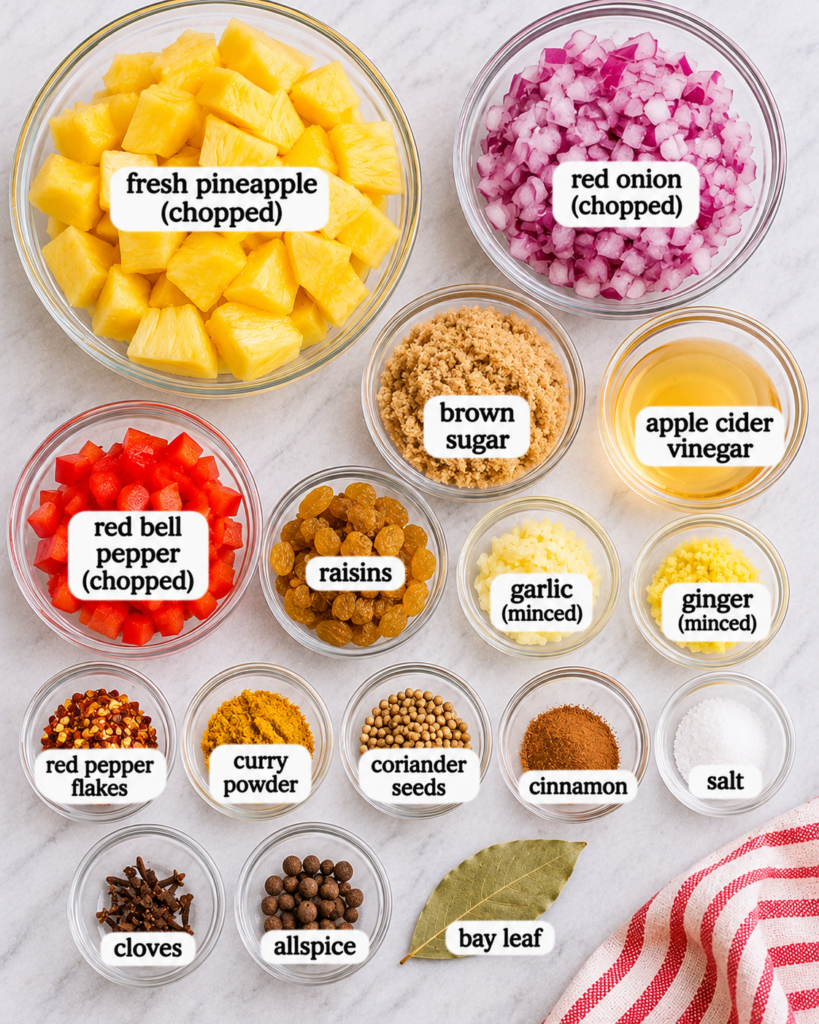
What you will need (nothing complicated): a saucepan, a spoon, a cutting board, a knife, and a clean jar with a lid.
I like it best after it sits for at least 30 minutes because the flavors settle and get cozy together. And if you want an easy meal idea that already loves pineapple, these Hawaiian chicken bacon pineapple kebabs are basically begging for a spoonful of chutney on the side.
How to pick a ripe pineapple?
This part matters more than people think. If the pineapple is under-ripe, your chutney can taste sharp in a not-so-fun way. If it is over-ripe, you can end up with something that tastes a little fermented, and not in the cute trendy way.
Here is my simple grocery store checklist:
My quick ripeness checklist
- Smell the bottom. If it smells sweet and pineapple-y, you are good. If it smells like nothing, it is probably not ready.
- Look at the color. A little golden yellow on the outside is a good sign. Fully green usually means it needs time.
- Give it a gentle squeeze. It should have a tiny bit of give, not be rock hard.
- Check the leaves. If a center leaf pulls out with a gentle tug, it is often ripe. Do not yank the poor thing apart though.
If you already bought a pineapple that is not quite there yet, just leave it on the counter for a day or two. Once it smells sweet, then I would make your pineapple chutney recipe. Also, if you end up with extra pineapple, it is great chopped into snacks or blended into something cold later.
One more real-life tip: when you cut it, taste a small piece. If it is too tart, add a touch more sugar while cooking. If it is very sweet, lean into vinegar and lime to balance it.
How to serve pineapple chutney
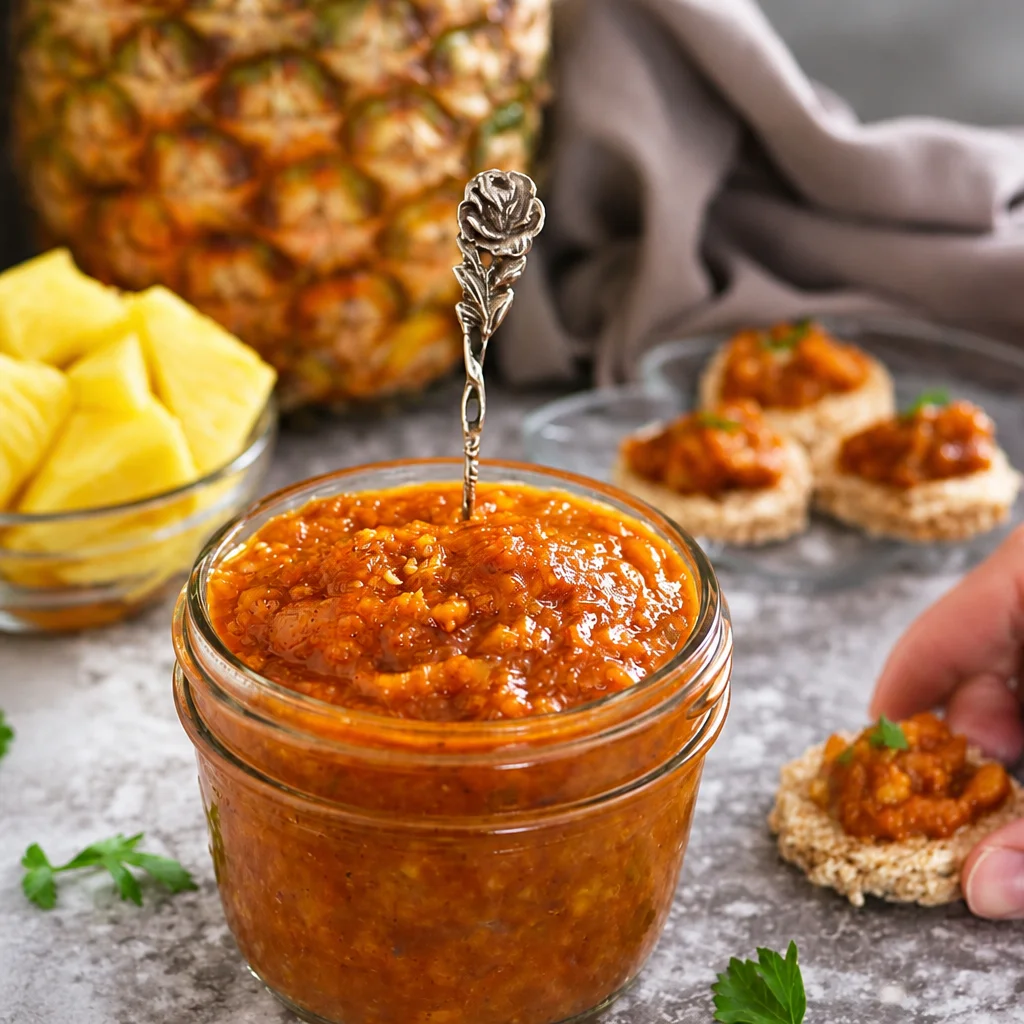
This is where the fun starts. I honestly make this chutney because it makes leftovers feel brand new. The sweet tangy flavor works with salty foods, spicy foods, and even creamy stuff that needs a little contrast.
My favorite ways to use it
- Spoon it on grilled chicken, pork chops, or shrimp.
- Add it to a cheese board with crackers, cheddar, or creamy brie.
- Use it like a sandwich spread with turkey or ham.
- Serve it with rice bowls, especially with black beans or roasted veggies.
- Dollop it on tacos, especially fish tacos.
When friends come over, I put it out with chips and dips. It is surprisingly good next to a creamy party dip, like this 7 layer dip recipe. The contrast is honestly addicting.
“I made this chutney on Sunday and by Tuesday it was gone. My husband put it on everything, even scrambled eggs. It tasted like something from a little specialty shop.”
If you are serving kids or anyone sensitive to spice, just skip the chili. You still get plenty of flavor from ginger, onion, and that pineapple sweetness.
How long will this chutney keep?
Once it is cooled and stored in a clean jar, it keeps well in the fridge. For me, it tastes best in the first week, but it is usually safe longer if handled properly.
Here is my realistic storage guide:
- In the fridge: about 10 to 14 days in a sealed container.
- In the freezer: up to 2 months. Thaw in the fridge overnight.
A couple of common sense notes from my own kitchen habits:
- Always use a clean spoon. Double dipping shortens the life fast.
- If it smells off, looks moldy, or tastes fizzy, toss it.
- Chutney thickens as it chills, so do not worry if it looks slightly loose when hot.
If you want a thicker chutney, simmer it a few extra minutes. If you want it looser for drizzling, stir in a teaspoon of water when reheating. I sometimes warm a spoonful in a small pan to spoon over dinner like a quick sauce.
And if you are planning a cozy comfort-food night, try it next to something hearty like this Amish hamburger steak bake. The sweet tang cuts through the richness in the best way.
Recipes you can Pair up Pineapple Chutney With
This pineapple chutney recipe plays well with lots of food, but a few pairings really shine. Think salty, smoky, roasted, or creamy. Basically, anything that loves a bright contrast.
Quick pairing ideas for real life meals
- Grilled meats: chicken thighs, pork tenderloin, kebabs.
- Snack boards: sharp cheese, nuts, crackers, olives.
- Brunch plates: sausage, eggs, roasted potatoes.
- Potluck stuff: sliders, wraps, baked appetizers.
If you are doing a casual breakfast or brunch spread, something warm and simple like these 7 up biscuits is such a good match. The biscuit is buttery and soft, and a tiny spoon of chutney on the side makes it feel extra special.
And for a lighter moment, I love having something fresh after spicy or grilled foods. This acai bowl recipe easy at home is a great cool-down option if you are making a weekend spread.
Frequently Asked Questions About Pineapple Chutney
Can You Use Canned Pineapple Instead of Fresh Pineapple?
Canned pineapple can be used to make pineapple chutney when fresh pineapple is unavailable, making it a convenient option for preparing this flavorful condiment throughout the year. For the best results, choose pineapple packed in its own juice rather than heavy syrup, as syrup-packed varieties can make the finished chutney excessively sweet. Drain the pineapple thoroughly before adding it to the recipe, and cut larger pieces into evenly sized chunks to encourage consistent cooking. Because canned pineapple may contain added sugar or have a softer texture than fresh pineapple, taste the mixture before adding the full amount of sugar specified in the recipe. Fresh pineapple generally provides a brighter, more pronounced tropical flavor and a slightly firmer texture, while canned pineapple produces a softer chutney with a naturally sweet character. Both options work well when balanced with vinegar, ginger, and complementary spices. Adjusting the sweetness and cooking time as needed will help you achieve a chutney with a pleasant balance of fruitiness, acidity, and warmth.
Do You Need Vinegar to Make Pineapple Chutney?
Vinegar is an important ingredient in pineapple chutney because it balances the natural sweetness of the fruit and creates the distinctive sweet-and-tangy flavor associated with traditional chutneys. Without sufficient acidity, the mixture may taste more like a sweet pineapple compote or fruit sauce rather than a savory condiment. Apple cider vinegar is a popular choice because its mild fruity notes complement pineapple particularly well, while distilled white vinegar provides a sharper, more straightforward acidity. White wine vinegar may also work, depending on the other ingredients and the flavor you want to achieve. Although vinegar contributes acidity, adding it does not automatically make homemade chutney safe for long-term storage at room temperature. If you plan to preserve pineapple chutney through home canning, use a scientifically tested recipe with the specified vinegar type, acidity, and processing instructions. For an everyday homemade version, refrigerate the finished chutney promptly in a clean, airtight container rather than relying on vinegar alone for preservation.
How Do You Make Pineapple Chutney Less Spicy?
The easiest way to prepare a mild pineapple chutney is to reduce or omit the hot peppers while retaining the aromatic ingredients that contribute flavor. Fresh ginger is an excellent addition because it provides gentle warmth and complexity without the same level of heat as chili peppers. If the recipe includes red pepper flakes, fresh chilies, or chili powder, begin with a smaller quantity and adjust gradually according to your preference. For a family-friendly version, you can leave out the hot peppers entirely and rely on ginger, vinegar, and mild spices to create a balanced flavor. If the chutney has already become too spicy, adding more pineapple can help dilute the heat, while a small amount of sugar may soften the perception of spiciness. Keep in mind that additional sugar will also affect the overall sweetness, so taste carefully before making further adjustments. Allowing the chutney to cool before serving can also help you evaluate the final balance of flavors more accurately.
Can You Make Pineapple Chutney Ahead of Time?
Pineapple chutney is an excellent make-ahead condiment because its flavors often become more balanced after the mixture has had time to rest. Preparing it several hours in advance allows the pineapple, vinegar, ginger, and spices to blend, creating a more developed sweet-and-savory flavor. For entertaining or meal preparation, making the chutney the day before serving is particularly convenient. Once cooked, transfer it to a clean, shallow container, allow it to cool briefly, and refrigerate it within two hours. Store the chutney in an airtight container and use it within approximately one week for the best quality, unless you are following a tested recipe with different storage guidance. Always use a clean spoon when serving to minimize contamination, and discard the chutney if it develops mold, an unusual odor, or other signs of spoilage. Homemade pineapple chutney can be served chilled or brought to room temperature shortly before serving, making it a versatile accompaniment to grilled meats, roasted vegetables, sandwiches, and cheese boards.

Why Is My Pineapple Chutney Too Watery?
Watery pineapple chutney is usually caused by excess moisture in the fruit or insufficient cooking time. Pineapple naturally contains a significant amount of juice, and the amount released during cooking can vary depending on the fruit’s ripeness and whether fresh or canned pineapple is used. If the chutney appears too thin, continue simmering it uncovered over low to medium-low heat, stirring regularly to prevent the sugars from sticking to the bottom of the pan. As the excess liquid evaporates, the mixture will gradually develop a thicker, more concentrated consistency. You can also gently mash some of the pineapple pieces to help create a more cohesive texture while retaining a pleasant amount of fruit throughout the chutney. Avoid cooking over excessively high heat, as the sugar may scorch before enough liquid has evaporated. Remember that pineapple chutney will thicken further as it cools, so it is best to allow the mixture to rest before deciding whether additional reduction is necessary. The finished chutney should be thick enough to hold together on a spoon while remaining soft and easy to spread.
A little final nudge to try it
If you have never made chutney before, this pineapple chutney recipe is a friendly place to start. It is quick, flexible, and it makes everyday food taste exciting with almost zero effort. If you want to compare variations, I found helpful inspiration in Pineapple Chutney (Easy 15-Minute Recipe) – Savory Spin and Super Easy Homemade Pineapple Chutney – Larder Love, and it is fun to see how small tweaks change the vibe. Make a jar, keep it chilled, and try it on whatever you are eating this week. Let me know what you pair it with because I am always looking for new excuses to make another batch.
Pineapple Chutney
Ingredients
Method
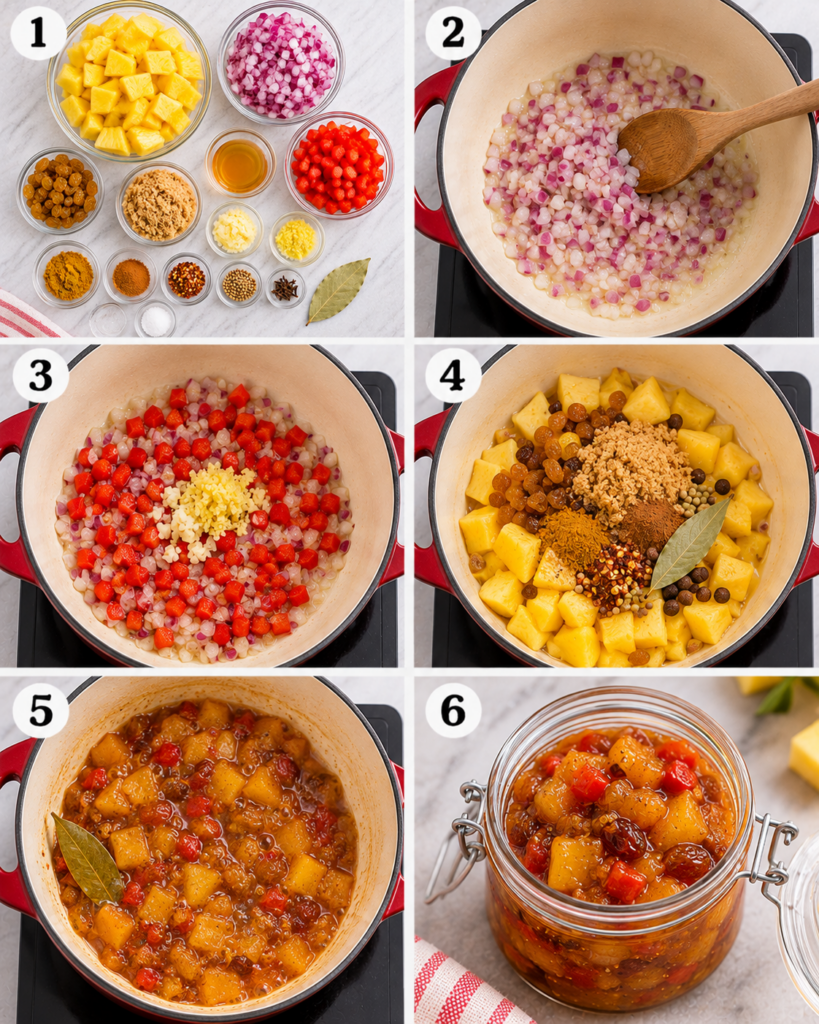
- Add onion to a saucepan with a tiny splash of water and cook for 2 to 3 minutes to soften.
- Stir in garlic and ginger for 30 seconds to release the aroma.
- Add pineapple, vinegar, brown sugar, salt, and your chili or flakes.
- Bring it to a gentle simmer, then cook for 12 to 18 minutes, stirring occasionally.
- When it looks jammy but still has small pineapple pieces, turn off the heat.
- Finish with lime juice, cool it down, then jar it up.