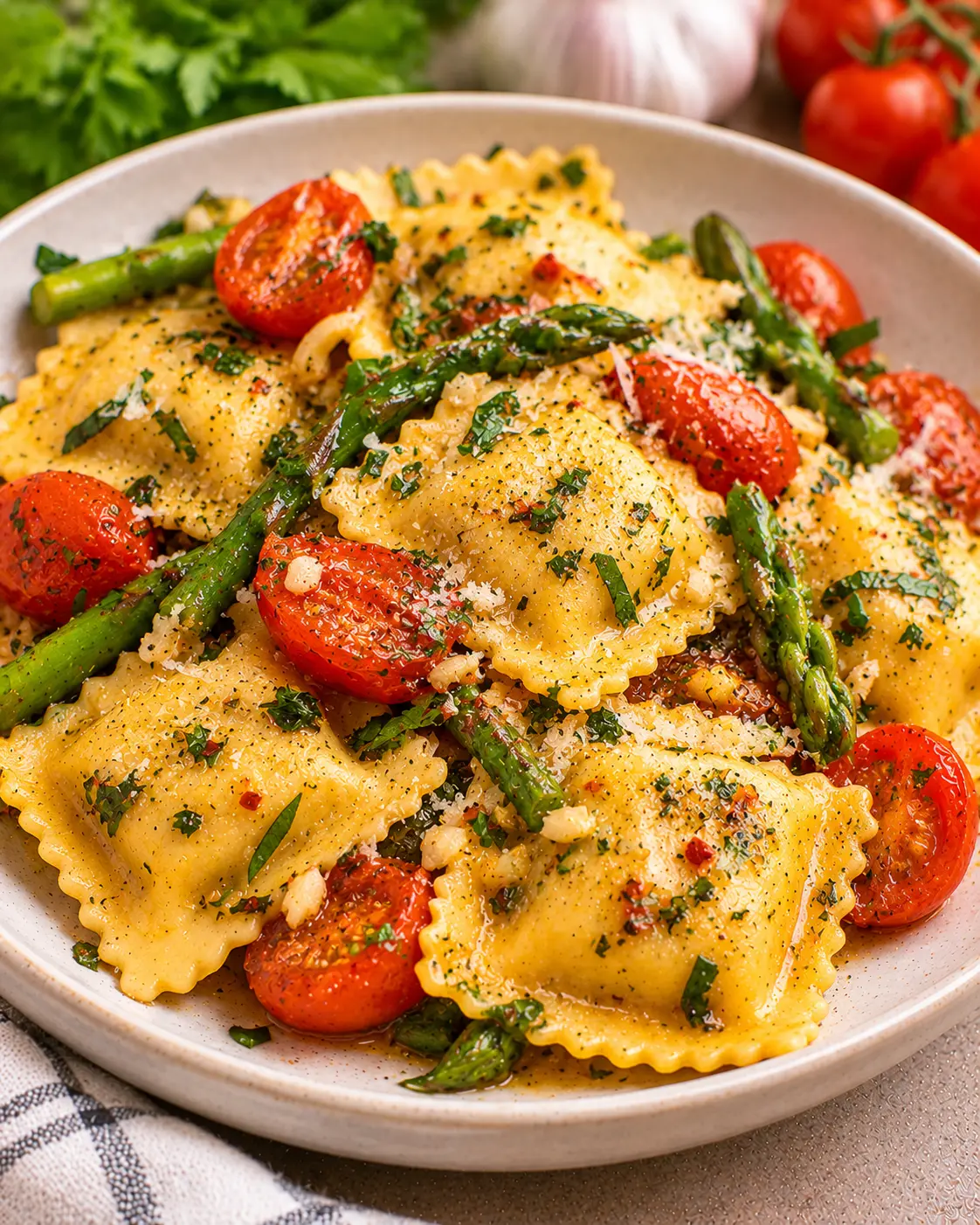

Ravioli with Tomatoes, Asparagus, Garlic, and Herbs is my answer to those weeknights when you want comfort food fast but still crave fresh flavor. I make it when I need something bright, cozy, and totally doable after a long day. It’s cheerful on the plate, buttery and garlicky on the tongue, and easy on the brain. The secret is letting simple ingredients do the heavy lifting. If you can boil water and stir a pan, you’ve got this. Let me show you how I get it done without stress.
Quick Ravioli Recipe
This is my no-fuss, weeknight-friendly version that still feels special. I reach for store-bought cheese ravioli, then build a quick skillet sauce with cherry tomatoes, tender asparagus, and a kiss of garlic. The whole thing is done in the time it takes the pasta to cook, which is exactly what I need on nights when hunger arrives right now.
Here’s what makes it work: we keep the heat medium, so the tomatoes soften and burst without burning, the asparagus stays crisp-tender, and the garlic perfumes the oil instead of going bitter. A splash of pasta water helps everything cling to the ravioli. Fresh herbs brighten it up at the end, and a squeeze of lemon is optional but lovely if you like a little sparkle.
I’ve tested this for busy evenings, cozy date nights at home, and even a quick lunch when I had leftover ravioli in the fridge. It’s flexible and forgiving, which is my favorite kind of recipe. If you’re new to pan sauces, this one teaches you all the right moves with almost zero effort.
“I made this after work and was honestly shocked how fresh it tasted. My teenager asked for seconds, and I used the leftovers for lunch the next day. Huge win.”
Cook time: about 15 minutes. Pots and pans: one large pot and one skillet. Skill level: super approachable, great for beginners.
Ingredients You’ll Need for this Recipe
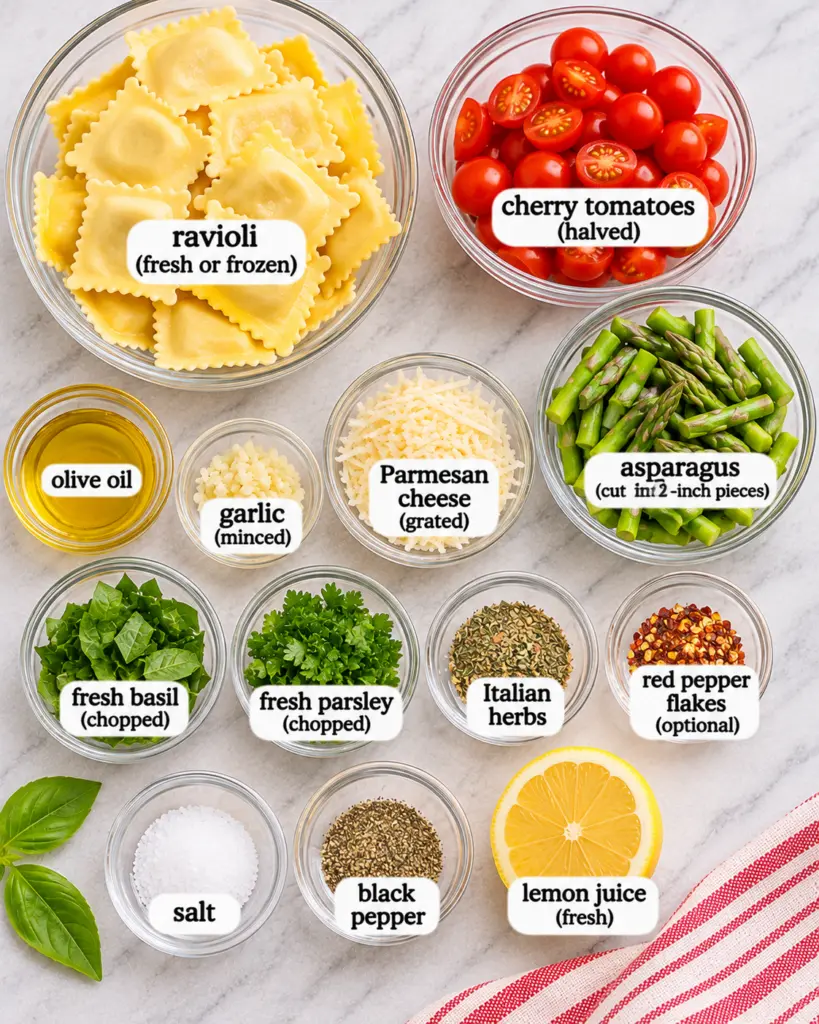
You don’t need anything fancy here. The secret is good olive oil, firm asparagus, and sweet tomatoes. If your grocery store has decent fresh ravioli, grab that. If not, frozen works perfectly too. Keep your herbs fresh if possible, but dried can pinch-hit.
- 1 pound cheese ravioli, fresh or frozen
- 2 tablespoons olive oil, plus more if needed
- 2 cups cherry or grape tomatoes, halved
- 1 bunch asparagus, trimmed and cut into 1 to 2 inch pieces
- 3 to 4 cloves garlic, thinly sliced
- 1 tablespoon butter, optional for gloss
- 1 lemon, cut into wedges, optional
- 2 to 3 tablespoons fresh basil and parsley, chopped
- Salt and black pepper to taste
- Freshly grated Parmesan for serving
Ingredient tips:
Ravioli: Cheese is classic here, but spinach or mushroom fillings also work great. Cook until just al dente so the pasta finishes in the pan without falling apart.
Tomatoes: Cherry or grape tomatoes are best because they’re sweeter and burst quickly. If using larger tomatoes, chop them a bit smaller and cook a minute longer.
Asparagus: Look for spears with tight tips and no wilting. If the stalks are thick, peel the lower third so they cook evenly.
Herbs: Fresh basil and parsley bring the flavor to life. If you only have dried herbs, add a small pinch early so they bloom in the oil.
Want a fresh, crisp side to balance the pasta? I like a simple salad like this cucumber and carrot salad. It adds crunch and coolness next to the warm ravioli.
How to Make this Delicious Ravioli Recipe
Ready to cook? Here’s my step-by-step so you can nail it on the first try.
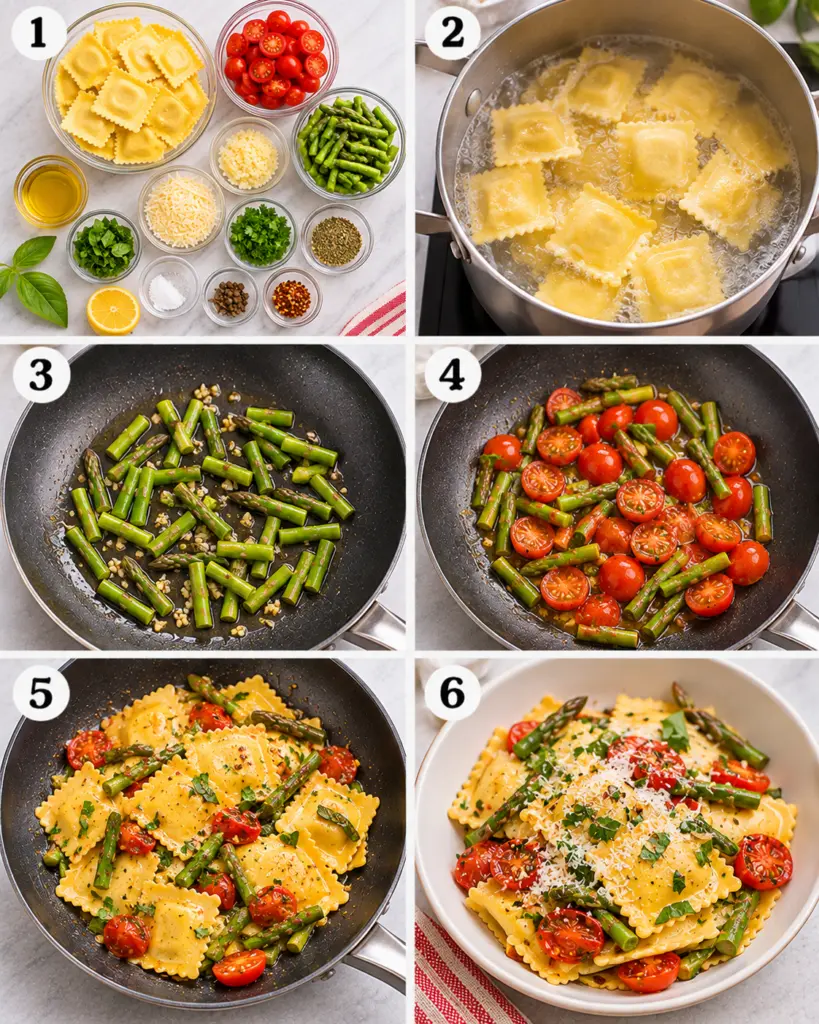
- Bring a large pot of salted water to a boil. Cook the ravioli according to package directions until just al dente. Scoop out 1 cup of the starchy pasta water, then drain.
- While the water heats, warm the olive oil in a wide skillet over medium heat. Add the sliced garlic and cook 30 to 60 seconds until fragrant. Don’t let it brown too much.
- Add the tomatoes and a pinch of salt. Cook 2 to 3 minutes, stirring gently, until some tomatoes burst and release their juices.
- Drop in the asparagus. Cook 3 to 4 minutes more until crisp-tender. If the pan looks dry, add a splash of pasta water.
- Transfer the drained ravioli to the skillet. Add a small knob of butter if you like, and 2 to 4 tablespoons pasta water. Toss gently so the sauce coats everything.
- Turn off the heat, then stir in the chopped basil and parsley. Taste and add salt and pepper as needed. If you enjoy brightness, squeeze a little lemon over the top.
- Serve with Parmesan and a drizzle more olive oil if you’re feeling fancy.
Simple timing tips
Start the skillet as soon as the water goes on. By the time the ravioli are ready, your tomatoes and asparagus will be too. Always save pasta water. It adds silkiness and helps the sauce hug the pasta.
Pan sauce insights
Gentle heat keeps tomatoes juicy and sweet. If the garlic darkens, pull the pan off heat for 30 seconds, then continue. Remember, you can always add more salt or lemon at the table, but you can’t take it away.
Love creamy pasta too? You might enjoy this cozy bowl of creamy rotini with mushroom when you’re craving a richer vibe.
Variations on this Recipe
Once you’ve made it as written, play a bit. The base is simple and happy to adapt. Here are my favorite twists that keep the spirit of the dish while letting you cook with what you have.
Protein add-ins
Cooked chicken sausage, torn rotisserie chicken, or a handful of shrimp all work well. Add them right after the tomatoes start to burst so they warm up without overcooking. If you’re adding crispy bacon, fold it in off the heat to keep the crunch.
Vegetable swaps
No asparagus? Use zucchini coins or baby spinach. In late summer, corn shaved off the cob is fantastic with tomatoes and herbs. Broccolini also loves a quick sauté in this sauce.
For a nutty twist, sprinkle toasted pine nuts or even candied nuts on top of your salad course. I like to pair this pasta with a small bowl of snacky sweetness like these crisp candied pecans on the side. It’s unexpected and fun.
For heat lovers, a pinch of red pepper flakes goes in with the garlic. For more zip, grate in a little lemon zest along with the herbs. To make it extra silky, add a small splash of cream at the end and let it bubble for 15 seconds.
More Delicious Pasta Recipes
If you’re a pasta person through and through, there’s plenty more you’ll love. When I want cozy and earthy, I reach for mushroom-forward meals like the one I linked above. On sunny days, I keep it bright with fresh herbs and quick veggies. Don’t be shy about mixing shapes and sauces based on your cravings.
For a playful starter before the pasta, try a warm slice of toast with creamy ricotta and a drizzle of honey. Here’s my go-to for that simple snack: ricotta and honey toast. And if dessert is calling, I’m obsessed with the soft layers in this sweet, crowd-pleasing treat: peaches and cream trifle. Both bring a lovely finish to the table after a fresh, herb-packed pasta.
Frequently Asked Questions About Ravioli with Tomatoes, Asparagus, Garlic, and Herbs
Can You Use Frozen Ravioli Instead of Fresh Ravioli?
Frozen ravioli is an excellent alternative to fresh ravioli and works well in most recipes without requiring significant adjustments. There is no need to thaw the pasta before cooking, as placing it directly into boiling water helps preserve its shape and prevents the filling from becoming overly soft. Follow the cooking instructions on the package, keeping in mind that frozen ravioli generally requires a few additional minutes compared with fresh varieties. Use a large pot with enough water to allow the pasta to move freely, and maintain a gentle boil rather than an excessively vigorous one. Begin checking for doneness near the end of the recommended cooking time, as the exact duration depends on the size, thickness, and filling of the ravioli. Once the pasta is tender and the filling is thoroughly heated, remove it carefully using a slotted spoon or spider strainer. Frozen ravioli can deliver a satisfying texture and flavor while offering the convenience of an ingredient that is easy to keep on hand for quick meals.
What Can You Use Instead of Fresh Herbs in a Ravioli Recipe?
Dried herbs are a convenient substitute when fresh basil, parsley, or other herbs are unavailable. Italian seasoning is particularly useful because it typically contains a combination of herbs that complement pasta, olive oil, garlic, and Parmesan cheese. As a general guideline, use approximately one teaspoon of dried herbs for every tablespoon of fresh herbs called for in the recipe, adjusting according to taste. Dried basil, oregano, thyme, and parsley can also be used individually, depending on the flavor profile you want to achieve. To help release their aroma, add the dried herbs to warm olive oil or melted butter early in the sauce preparation, taking care not to let them burn. Dried herbs tend to have a more concentrated flavor than fresh varieties, so begin with a small amount and add more if needed. A little freshly grated lemon zest or a squeeze of lemon juice can provide additional brightness when fresh herbs are not available.
How Do You Keep Ravioli From Breaking Apart During Cooking?
Preventing ravioli from breaking begins with using the correct cooking temperature and handling the pasta carefully. Bring a large pot of salted water to a boil, then maintain a gentle, steady boil after adding the ravioli to avoid excessive movement that could damage the delicate pasta. Stir carefully during the first minute to prevent sticking, but avoid vigorous stirring once the ravioli begins to soften. Cooking the pasta just until tender is equally important, as overcooked ravioli can become fragile and more likely to split at the seams. Instead of pouring the entire pot into a colander, consider lifting the ravioli out with a slotted spoon or spider strainer. This approach reduces the pressure placed on the filled pasta and helps preserve its shape. When transferring the ravioli to a skillet or sauce, use gentle folding motions rather than aggressive stirring or tossing. A small amount of reserved pasta water can also help loosen the sauce, allowing it to coat the ravioli without excessive handling.
Can You Make This Ravioli Recipe Dairy-Free?
A dairy-free ravioli dish is possible with a few ingredient substitutions, although it is important to check the pasta filling as well as the sauce. Many traditional ravioli varieties contain ricotta, mozzarella, or Parmesan cheese, so look for a clearly labeled dairy-free option or choose a suitable vegetable-filled ravioli that does not contain milk-based ingredients. For the sauce, replace butter with extra virgin olive oil or a dairy-free butter alternative that works well for cooking. Omit traditional Parmesan cheese or use a dairy-free alternative if you want to maintain a similar savory finish. Fresh lemon juice, lemon zest, garlic, and herbs can add plenty of flavor without relying on dairy products. If the original recipe uses a creamy sauce, an unsweetened plant-based cooking cream may provide a suitable substitute, depending on the desired consistency. Always review packaged ingredient labels carefully, particularly when preparing the dish for someone with a milk allergy. With the right substitutions, dairy-free ravioli can still offer a flavorful and satisfying pasta meal.
How Do You Reheat Leftover Ravioli Without Making It Tough?
The best way to reheat leftover ravioli is to warm it gently with a small amount of liquid to prevent the pasta from drying out or becoming tough. Place the ravioli in a nonstick skillet over low to medium-low heat and add a splash of water, vegetable broth, or chicken broth, depending on the sauce and filling. Cover the skillet briefly to help the pasta heat evenly, then gently turn the ravioli as needed without breaking the delicate edges. If the original dish contains olive oil or butter, adding a small amount during reheating can help restore the sauce’s consistency and prevent sticking. Avoid prolonged cooking or high temperatures, which can make the pasta overly soft and cause the filling to separate from the outer layer. For food safety, refrigerate leftover ravioli promptly in an airtight container, use it within three to four days, and reheat it thoroughly to 165°F. A final sprinkle of fresh herbs, a little lemon zest, or a small amount of grated cheese can refresh the flavor before serving.
A happy, quick, and fresh pasta to make tonight
This bowl brings all the good stuff together fast: juicy tomatoes, crisp asparagus, pan-kissed garlic, and soft pillows of pasta. When I’m craving something bright but easy, Ravioli with Tomatoes, Asparagus, Garlic, and Herbs never lets me down. If you want another take for comparison, check out the version from Ravioli with Tomatoes Asparagus Garlic and Herbs – Cooking Classy, or peek at the fresh spin at Sun-Kissed Ravioli with Tomato, Asparagus, and Herbs – NorthEast …. Then circle back here and try this simple method that keeps weeknights relaxed. I hope it becomes one of those keeper recipes you can make from memory and share with a smile.

Ravioli with Tomatoes, Asparagus, Garlic, and Herbs
Ingredients
Method
- Bring a large pot of salted water to a boil.
- Cook the ravioli according to package directions until just al dente.
- Scoop out 1 cup of the starchy pasta water, then drain the ravioli.
- Warm the olive oil in a wide skillet over medium heat.
- Add the sliced garlic and cook for 30 to 60 seconds until fragrant.
- Add the tomatoes and a pinch of salt. Cook for 2 to 3 minutes, stirring gently, until some tomatoes burst and release their juices.
- Drop in the asparagus and cook for 3 to 4 minutes more until crisp-tender. If the pan looks dry, add a splash of pasta water.
- Transfer the drained ravioli to the skillet. Add a small knob of butter and 2 to 4 tablespoons of pasta water. Toss gently to coat.
- Turn off the heat, then stir in the chopped basil and parsley. Taste and add salt and pepper as needed.
- If desired, squeeze a little lemon over the top.
- Serve with freshly grated Parmesan and a drizzle more olive oil, if desired.