
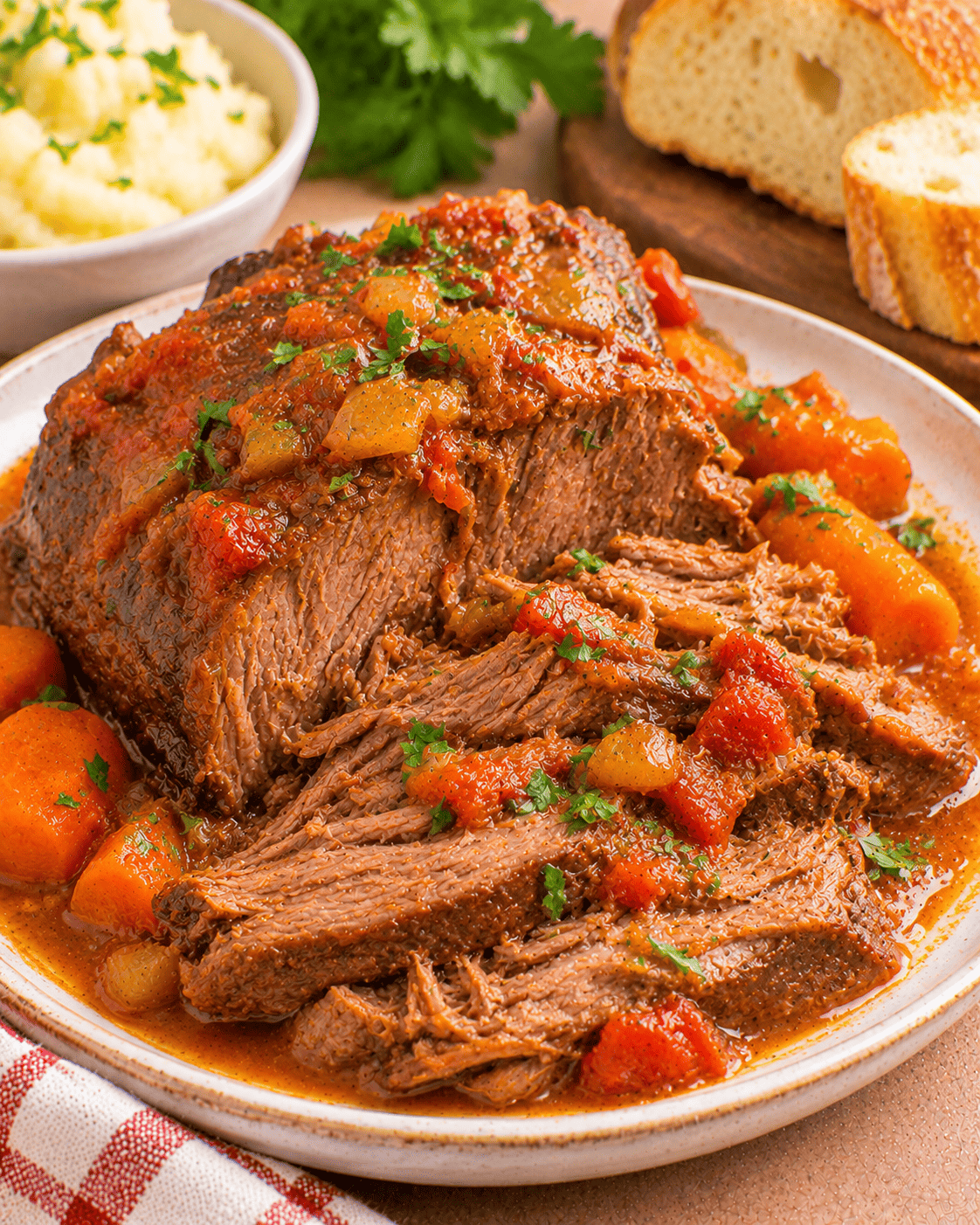

Stracotto: Italian-Style Pot Roast is the kind of cozy, slow-cooked dinner that solves a very modern problem. You want something special, but you also want dinner to take care of itself while you live your life. You want rich flavor without complicated steps or fancy gadgets.
You want a meal that makes the house smell like home and gets big smiles at the table. That’s exactly why I love this dish. With tender beef, a rich tomato and red wine sauce, and plenty of Italian herbs, it’s comfort food that feels impressive without being fussy.
The best part is that this Italian pot roast rewards patience rather than constant attention. Once the flavors have had time to develop, you’re left with fork-tender beef and a savory sauce that’s wonderful over polenta, pasta, or mashed potatoes.
What Is Stracotto?
In simple terms, stracotto means cooked for a long time. It’s an Italian slow-braised beef dish that becomes wonderfully tender in a flavorful sauce made with tomatoes, aromatics, wine, and herbs.
Think of it as Italy’s comforting cousin to classic pot roast, but with the deep, layered flavors of tomatoes, good wine, and plenty of garlic. It’s the kind of hearty meal that fits naturally into a relaxed Sunday dinner.
What makes stracotto special is the slow braising. The beef develops a rich flavor, while the vegetables, tomatoes, and wine create a sauce that becomes more concentrated as it cooks.
The result is hearty, savory, and a little rustic in the best way. The sauce coats every bite of beef, making it perfect for serving with something that can soak up all that goodness.
You can enjoy stracotto with creamy polenta, pasta, mashed potatoes, or crusty bread. It’s a flexible dinner that works beautifully for family meals and gatherings.
One more thing worth mentioning: stracotto often tastes even better the next day. Like a good stew, the flavors deepen as it rests, making it an excellent make-ahead meal.
Why This Italian Pot Roast Recipe Is a Keeper
I’ve made a lot of pot roasts over the years, and I keep returning to this one for a reason. The sauce is rich without being overly heavy, and the beef turns wonderfully tender after slow cooking.
The tomato base brings brightness, while the wine, garlic, and herbs give the sauce a deeper savory flavor. Everything works together without needing complicated ingredients.
I also love that this is a great weekend meal that makes leftovers for the week. You can shred the beef and use it in so many ways, from pasta and polenta to sandwiches with melted provolone.
And if you love a classic meat-and-potatoes dinner, you’ll want to bookmark this cozy idea for serving pot roast over mashed potatoes. Pure comfort.
“I made this for a small family get-together and everyone went quiet for a minute. Then came the wow comments. My picky eater even asked for seconds. This is going into our regular rotation.”
Another reason this recipe works so well is its flexibility. Dried herbs can stand in for fresh, and you can adjust the wine and broth to suit your preferences.
You can prepare stracotto in a Dutch oven or adapt it for a slow cooker. Either way, the goal is the same: tender beef and a rich, comforting sauce.
What Makes Stracotto Different From Regular Pot Roast?
Both stracotto and traditional American pot roast rely on slow cooking to transform a tougher cut of beef into a tender, flavorful meal. The biggest difference is usually the sauce and seasonings.
Italian-style pot roast often features tomatoes, wine, garlic, and Mediterranean herbs. These ingredients give the braising liquid a richer tomato flavor and a slightly brighter finish.
Traditional pot roast is more commonly associated with beef broth, onions, carrots, and potatoes. Both versions are comforting, but stracotto has a distinct Italian character.
The long cooking time is essential to both dishes. It allows the connective tissue in the beef to soften, creating that fork-tender texture everyone loves.
The Best Cut of Beef for Stracotto
Choosing the right beef makes a big difference in slow-braised dishes. You want a cut with enough connective tissue and marbling to become tender during a long, gentle cook.
Why Chuck Roast Works Best
Chuck roast is my favorite because it has the right balance of fat and connective tissue. During slow cooking, that connective tissue softens and helps create a rich, tender texture.
It’s also a practical choice because it’s widely available and generally more affordable than premium steak cuts.
A well-marbled chuck roast gives the sauce extra flavor without requiring additional ingredients.
Can You Use Brisket or Bottom Round?
Yes, both can work, although the finished texture will be slightly different.
Brisket has plenty of connective tissue and can become beautifully tender with slow cooking. Bottom round is leaner, so it may produce a firmer result and needs careful attention to prevent dryness.

Boneless beef short ribs are another delicious option if you want an especially rich version of Italian braised beef.
Whatever cut you choose, slow, gentle cooking is the key to tenderness.
Tips for the Best Italian Braised Beef
Stracotto is a forgiving recipe, but a few small details help create a deeper flavor and better texture.
Brown the Beef for Richer Flavor
Browning develops the savory flavor that makes a good pot roast taste so satisfying. Those golden-brown bits left in the pot add depth to the sauce.
Patting the beef dry helps it brown rather than steam. Give it enough space in the pot so it can develop a proper crust.
Choose a Good Dry Red Wine
A dry red wine adds richness and complexity to the tomato sauce. Chianti or Sangiovese are classic choices, but other dry reds can work beautifully.
You don’t need an expensive bottle. Choose something with a flavor you enjoy, since its character will influence the finished sauce.
If you prefer not to cook with wine, additional beef broth can provide a savory base, although the flavor will be different.
Keep the Braising Liquid Balanced
Stracotto should have enough liquid to keep the beef moist during cooking, but the roast doesn’t need to be completely submerged.
Too much liquid can dilute the sauce, while too little can allow the pot to dry out. A gentle braise helps maintain the right balance.
If the sauce seems thin near the end, reducing it can concentrate the flavor. If it becomes too thick, a little additional broth can help.
Balance the Tomato Acidity
Tomatoes and wine both contribute acidity, which helps balance the richness of the beef. However, some tomato products can taste sharper than others.
Long cooking often mellows the sauce naturally. If it still tastes too tangy, a small adjustment to the seasoning can help.
A little balsamic vinegar can add complexity, but use it carefully because it also brings acidity. Taste the sauce before deciding what it needs.
Let the Beef Rest in the Sauce
One of my favorite things about stracotto is how the beef absorbs the flavors of the sauce. Keeping the meat with the braising liquid helps it stay moist and flavorful.
If you’re preparing the dish ahead, storing the beef in its sauce is especially helpful. It also makes reheating easier.
Want something even more hands-off? You can adapt this recipe to a slow cooker. If you’re a slow cooker fan, you might also love this easy slow cooker pot roast with gravy for busy weeknights.
My favorite make-ahead tip: Prepare stracotto the day before you plan to serve it. After proper cooling and refrigeration, the flavors settle together beautifully, and the sauce becomes even richer.
Can You Make Stracotto in a Slow Cooker?
Absolutely. Stracotto adapts well to slow cooking because the beef benefits from gentle heat over several hours.
A slow cooker is especially convenient when you want a hearty dinner without keeping the oven on all afternoon. The meat can become beautifully tender while the tomato sauce develops its flavor.
The main difference is that slow cookers retain more moisture than an uncovered pot. As a result, the sauce may be thinner and need a little adjustment before serving.
For the best flavor, browning the beef beforehand is still worthwhile. It adds the savory depth that makes this Italian pot roast so delicious.
Follow the cooking guidance in your recipe card and check the beef for tenderness rather than relying only on the clock.
What to Serve With Stracotto
There are so many delicious ways to bring Stracotto: Italian-Style Pot Roast to the table. It loves starchy side dishes that can soak up the rich sauce, along with something fresh to balance the meal.
Creamy polenta is one of the most traditional and comforting choices. Its soft texture pairs beautifully with tender beef and tomato sauce.
Mashed potatoes are another family favorite. If you want more serving inspiration, try this comforting plate of pot roast over mashed potatoes.
Roasted potatoes add a little crispness to the meal. These parmesan herb crusted roasted potatoes are especially good with the rich sauce.
Pappardelle or other wide pasta works wonderfully with shredded stracotto. The sauce clings to the noodles, creating a hearty Italian-style dinner.
Parmesan risotto makes the meal feel a little more special. For inspiration, take a look at this Italian pot roast with parmesan risotto.
A simple green salad or garlicky green beans can provide a fresh contrast to the richness of the beef.
If you’re thinking about a wine pairing, a medium-bodied Italian red such as Chianti or Montepulciano works beautifully. Something with good acidity helps balance the savory sauce.
For dessert, a simple cookie or biscotti with coffee makes the meal feel complete without much extra work.
Why Is My Stracotto Tough or Dry?
If your Italian pot roast isn’t as tender as expected, the problem is often related to the cut of beef or the cooking conditions.
The Beef Needs More Time
Chuck roast contains connective tissue that takes time to soften. If the meat is still tough, it may simply need additional gentle cooking.
A properly braised roast should be easy to pull apart with a fork. Cooking time can vary depending on the size and shape of the meat.
The Heat Is Too High
A vigorous boil can cause the meat fibers to tighten and lose moisture. Stracotto benefits from a gentle simmer rather than aggressive bubbling.
Low, steady heat gives the connective tissue time to soften while helping the beef retain its moisture.
The Pot Needs More Liquid
Although the beef doesn’t need to be fully submerged, the pot should contain enough liquid to maintain a moist cooking environment.
If the sauce reduces too quickly, adding a little broth can help prevent the bottom from drying out.
The Cut Is Too Lean
Lean cuts such as bottom round can become firmer than chuck roast during long cooking. They don’t have the same amount of marbling to help maintain a rich texture.
For the most forgiving result, I recommend a well-marbled chuck roast.
How to Store and Reheat Italian Pot Roast
Stracotto is one of those meals that makes excellent leftovers. The sauce often tastes even richer after resting overnight, and the beef stays flavorful when stored with its braising liquid.
How Long Does Stracotto Last in the Refrigerator?
Store the cooled beef and sauce in airtight containers in the refrigerator for up to 4 days.
Divide large batches into smaller containers so they cool more quickly. Refrigerate leftovers within two hours of cooking.
Keeping the beef covered with sauce helps prevent it from drying out.
Can You Freeze Stracotto?
Yes, stracotto freezes beautifully. Store the beef with enough sauce to keep it moist, using freezer-safe containers or bags.
For the best quality, enjoy frozen portions within about 3 months. Thaw overnight in the refrigerator before reheating.
This is one of my favorite ways to turn a weekend cooking project into an easy weeknight dinner.
What’s the Best Way to Reheat Stracotto?
Gentle reheating helps keep the beef tender. Warm the meat and sauce together, adding a splash of broth if the sauce has thickened too much.
Make sure leftovers are heated thoroughly before serving. The beef should be steaming hot throughout.
I especially love using leftover stracotto over pasta or creamy polenta. It feels like an entirely new meal with very little extra effort.
Frequently Asked Questions About Stracotto
Can I make Stracotto: Italian-Style Pot Roast in advance?
Yes, and it’s actually one of the best dishes to prepare ahead. The beef and sauce develop even more flavor after resting overnight in the refrigerator. Store the meat with its sauce and reheat gently before serving.
What if I don’t cook with wine?
You can replace the wine with additional beef broth. A small amount of balsamic vinegar can add complexity, although the finished flavor will be different from a wine-based braise. The tomatoes, garlic, and herbs still create a rich, comforting sauce.
How do I keep the meat from drying out?
Choose a well-marbled cut such as chuck roast and cook it gently with enough braising liquid. Avoid a vigorous boil, which can make the meat tougher. Keeping the beef in its sauce during storage and reheating also helps preserve moisture.
Can I use a different cut of meat?
Yes, brisket, bottom round, and boneless beef short ribs can all work. Chuck roast is my preferred choice because its marbling and connective tissue make it especially suitable for slow braising. Leaner cuts may produce a slightly firmer texture.
How should I store and reheat leftovers?
Store leftover stracotto in an airtight container in the refrigerator for up to 4 days or freeze it for about 3 months for the best quality. Keep the beef with its sauce to prevent drying. Reheat gently with a splash of broth if needed, making sure the meat is thoroughly hot before serving.
Ready to Make Your Kitchen Smell Like Sunday?
If you’re craving comfort that feels special but not fussy, Stracotto: Italian-Style Pot Roast is the recipe to try. The ingredients are familiar, the cooking is gentle, and the payoff is a beautifully tender roast with a rich Italian tomato sauce.
For more inspiration and variations, I love how clearly this guide explains Italian Pot Roast from From a Chef’s Kitchen. I also enjoy browsing Italian Pot Roast (Stracotto) from Closet Cooking for additional serving ideas.
Let the pot do the work while you get on with your day, then sit down to a meal that tastes like effort without the stress. Whether you serve it over creamy polenta, mashed potatoes, or pasta, it’s the kind of dinner that brings everyone happily to the table.
I hope you make it soon and share it with someone you love. And when your house fills with that wonderful tomato, garlic, and red wine aroma, you’ll know you’re in for a good night.

Stracotto: Italian-Style Pot Roast
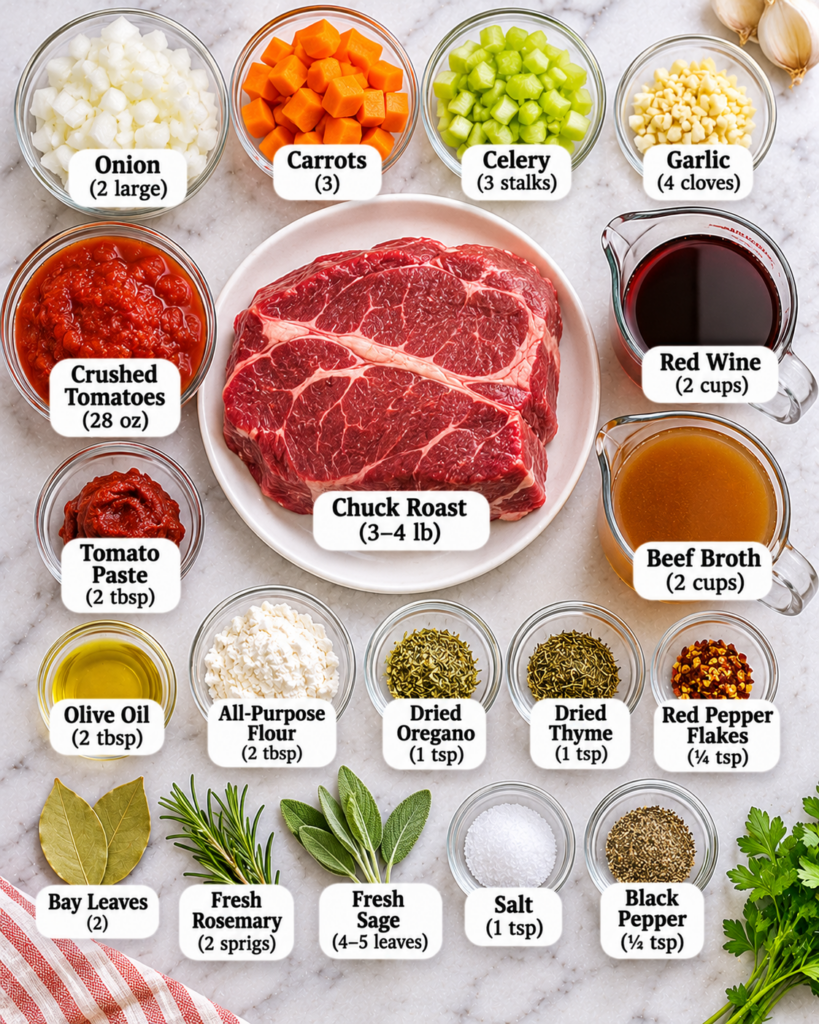
Ingredients
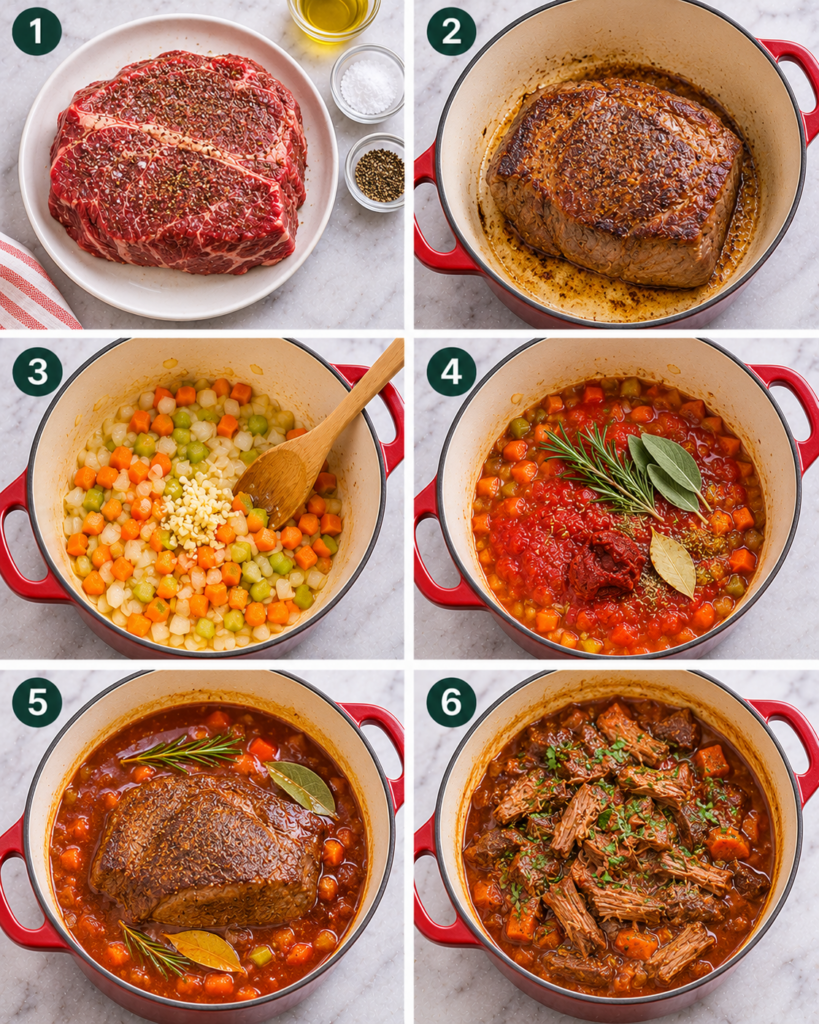
Method
- Season the beef very well with salt and pepper. Pat it dry so it sears nicely.
- Heat olive oil in a heavy Dutch oven over medium-high heat. Sear the roast on all sides until deep brown. Set it aside on a plate.
- Lower the heat a bit. Add onion, carrot, and celery with a pinch of salt. Cook until softened and lightly golden, about 6 to 8 minutes. Stir in the garlic for 30 seconds.
- Stir in tomato paste and cook it for a minute to caramelize.
- Pour in the wine and scrape up the browned bits from the bottom of the pot. Let it simmer 2 to 3 minutes to reduce slightly.
- Add crushed tomatoes, 1 cup beef broth, oregano, thyme, and bay leaf. Stir well.
- Return the roast and any juices to the pot. Liquid should come about halfway up the meat. Add more broth if needed.
- Cover and cook low and slow. Stovetop at a gentle simmer or oven at 300 F for 3 to 3.5 hours, flipping once halfway through.
- When the roast is very tender, remove it and shred or slice. Skim excess fat from the sauce.
- Adjust with salt, pepper, and a splash of balsamic if you desire a hint of tang.
- Return the meat to the sauce and simmer for 5 minutes to marry the flavors. Finish with chopped parsley.