

The reason why chicken wings are always among the first to go at a game day table. fun to share and loaded with flavour, and just as satisfying for a casual dinner as they are for a party. These dry rub chicken wings have all the goodness, none of the sticky sauce coating.
The flavour is instead from a well balanced combination of seasonings that complement the chicken and create a savoury exterior. You get to enjoy the pleasure of biting into a seasoned wing, the spices delivering warmth, depth and just the right amount of heat to keep things interesting.
The best dry rub wings are full of flavour, but not dusty or overly salty. The seasoning should complement the chicken, while the skin should be pleasantly crisp rather than rubbery.
Dry Rub Chicken Wings vs Sauced Wings Why Dry Rub?
Sauced wings are so popular for a reason. Buffalo sauce, barbecue sauce and other coatings add moisture and bold flavour but also provide a different eating experience than dry-seasoned wings.
Let the seasoning sit right on the skin of the dry rub chicken wings. This gives the spice blend a little extra kick and can help to keep the exterior crisp when the wings are cooked properly.
They’re also convenient to serve. Without a heavy sauce, the wings are usually less messy to eat and easier to arrange on a platter.
But dry rub doesn’t mean it’s always crispier. It is influenced by the cooking method, surface moisture and skin rendering.
If you like the flavour of the chicken itself, dry rub wings are a very good option. For a tangy or sticky finish, wings are better when sauced.
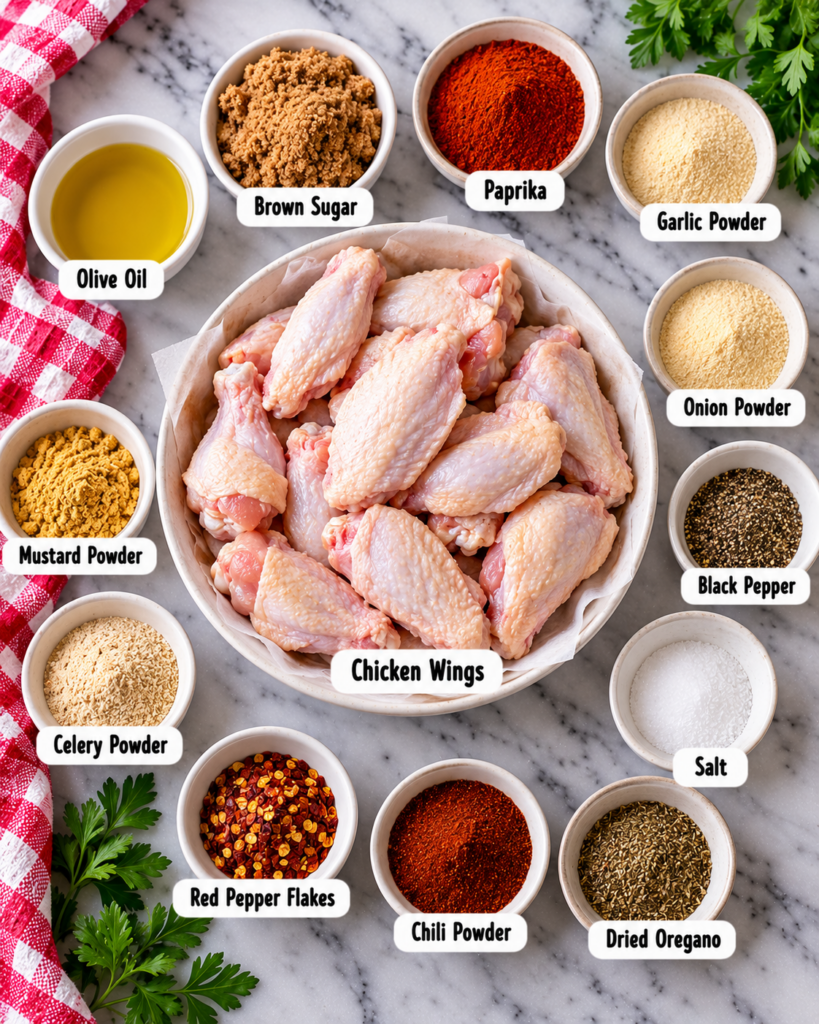
How To Make The Perfect Homemade Dry Rub
A good dry rub should be savoury, aromatic and spicy. Salt helps to bring out the chicken’s natural flavour, and spices like paprika, garlic powder and black pepper can add extra complexity.
Paprika gives colour and a bit of peppery taste. Smoked paprika has a different character, especially when baking the wings instead of smoking them.
Garlic and onion are common seasonings because they provide a familiar savoury foundation. Chilli spices give heat, but the amount of heat is variable.
And it’s about the sweetness, too. Sugar is also included in some dry rubs for flavour and browning. Sugar can burn at high heat.
The most important thing is to have balance. A rub should not taste like one big spice, or leave a thick, powdery coating on the finished wings.
How To Cook Dry Rub Wings: Baked, Smoked or Air Fryer
Baked wings are easy to make in larger quantities because they can be spread out on baking sheets. The surrounding heat can help develop a browned exterior, if the recipe is meant for it.
The smoked wings have a more robust flavour from the cooking environment. But smoking alone at low temperature may not deliver the crispy skin some are after.
Another good choice for smaller batches is the air fryer, which can create a nice crisp exterior with the circulating hot air. But basket size matters, and packed wings may cook unevenly.
Each method has its merits. It’s great for feeding a crowd, the smoker adds a unique flavour, and the air fryer is useful for smaller quantities.
Regardless of the method, chicken wings need to reach a safe internal temperature of 165°F (74°C). The appearance and crispness are no guaranty the meat is cooked all the way through.
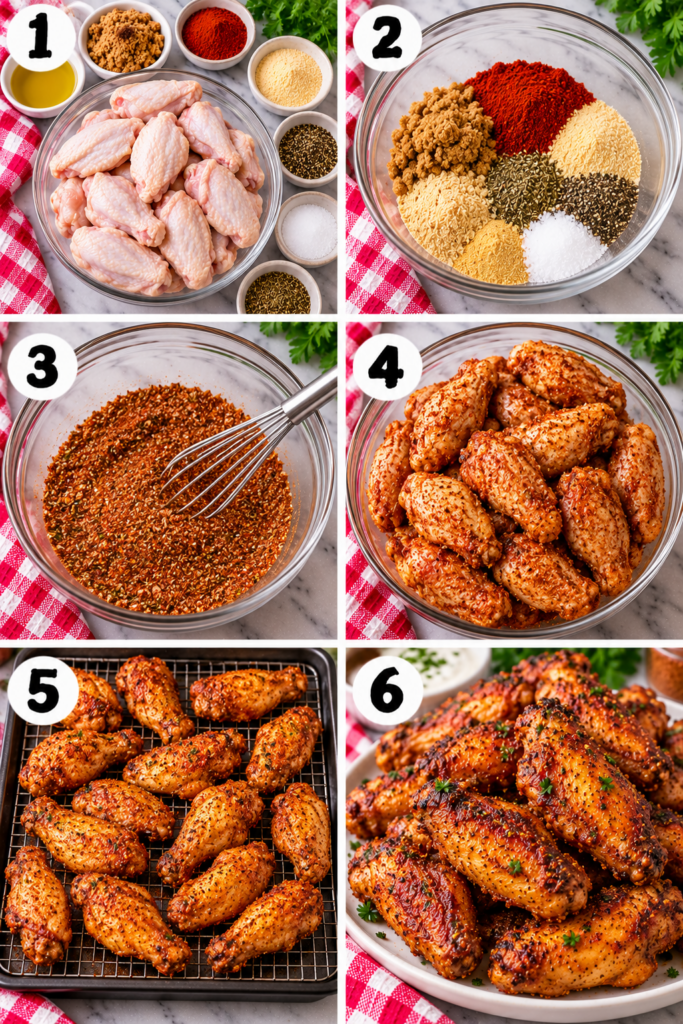
How to achieve crispy skin without frying
Surface moisture is one of the biggest hurdles to crispy chicken skin. Wet skin is likely to steam before it browns, which can retard the formation of a crisp exterior.
The amount of fat in the chicken skin is important too. Some of the fat melts as it cooks which gives the texture that people associate with well cooked wings.
Air circulation lets moisture escape. Wings pressed closely together may remain softer where they touch.
Some recipes use a little baking powder to alter the surface texture but the product and proportions make a difference. Baking powder is not a replacement for baking soda.
A good crisp wing should be pleasantly bite-size, not dried out. The goal is to get crispy skin and juicy meat, not just the maximum amount of cooking time.
Mild or Spicy: Adjusting the Heat Level
You can change the dry rub wings to suit your own taste. A mild blend might focus on paprika, garlic and savoury herbs with little heat from the chilli.
If you want a little kick, sprinkle in some cayenne or other hot pepper seasoning for some umph. This amount is important, as concentrated spices can easily dominate the other flavours.

Black pepper is a different kind of hot than chilli pepper. A rub that uses both can have a more rounded taste.
If you are serving a mixed group, a fairly seasoned batch with hot sauce on the side can be a reasonable choice.
Best spicy wings taste like well seasoned chicken. Heat should bring excitement, not hide the rest of the flavour.
Preparing Chicken Wings with a Dry Rub in Advance
While seasoning chicken wings in advance is a convenient option for parties, raw poultry needs proper refrigeration during the preparation process.
During storage the seasoning can interact with surface moisture and this can affect the behaviour of the skin during cooking. Some recipes are pre-seasoned.
Keep raw chicken covered and refrigerated at 40 degrees F (4 degrees C) or below. Don’t leave it out at room temperature while you’re getting the other party food ready.
Also, refrigerate cooked wings immediately. Leftovers should be properly stored and used within three to four days.
Wings should be reheated thoroughly to 165°F (74°C). Their skin might not be as crisp as when they are first cooked, but a good reheating technique can improve the texture.
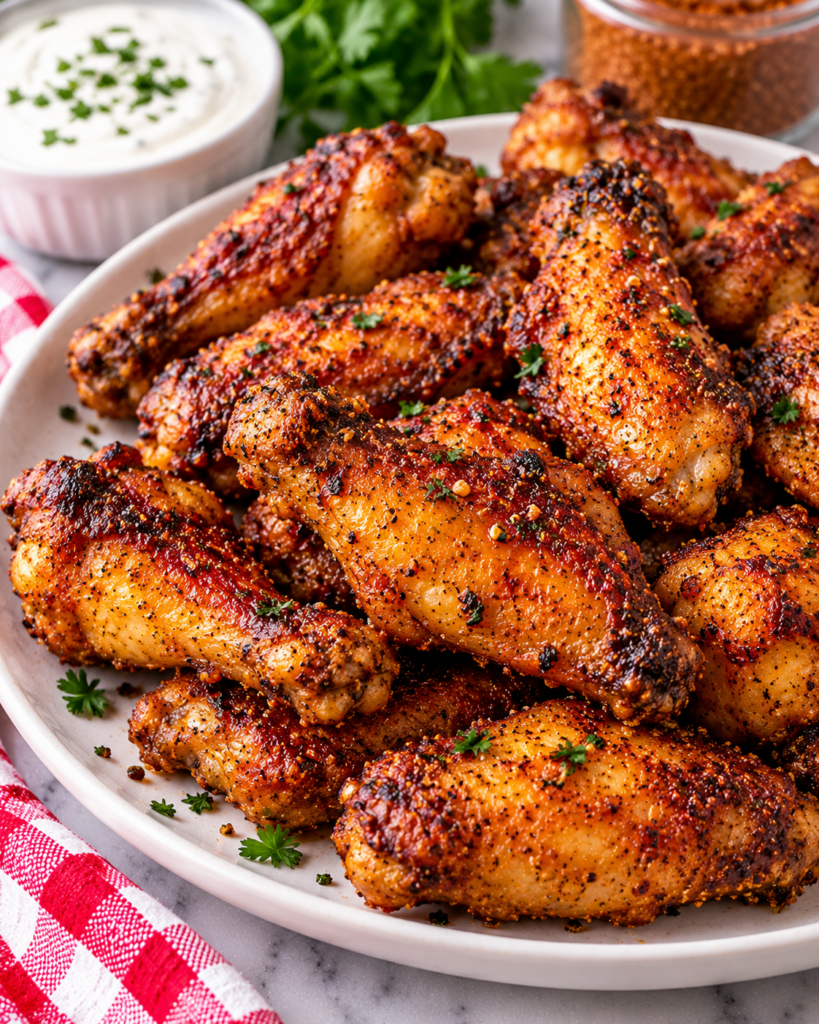
Frequently Asked Questions About Dry Rub Chicken Wings
Are dry rub wings better than sauced wings?
It is contingent upon the ingredients, the way it is cooked and the portion size. Dry rub wings may have less added sugar than some sweet barbecue wings but sodium and fat levels can vary widely.
Why are my dry rub chicken wings not crispy?
Too much moisture, overcrowding the pan, or insufficient crisping of the skin will compromise crispness. The cooking method and size of the wings also play a role in the outcome.
How to freeze chicken wings?
Yes, but frozen wings need a method of preparation made for them. Cooking time and surface moisture may vary from thawed wings so use a suitable recipe and check safe internal temperature.
What kind of sauce to dip dry rubbed wings in?
Ranch, blue cheese dressing and barbecue sauce are familiar options. A cool, creamy dip can be a nice contrast, especially if the seasoning is spicy.
Is It Possible to Freeze Dry Rub Wings?
Yes, cooked chicken wings can be frozen in appropriate airtight packaging. Their skin may be a bit softer after thawing, so the texture will be different than freshly cooked wings.
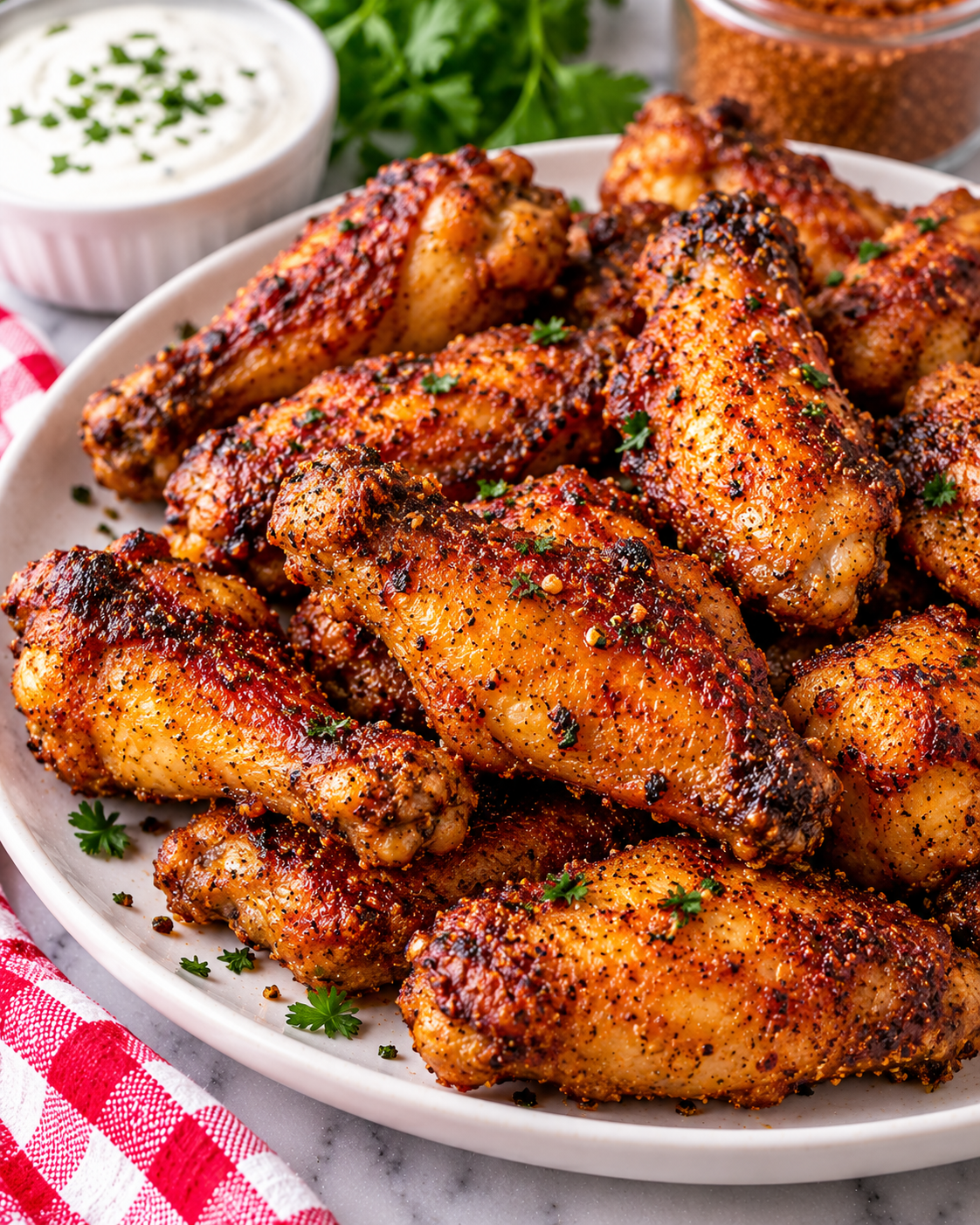
Dry Rub Chicken Wings
Ingredients
Method
- Preheat the oven to 425°F (220°C).
- In a bowl, mix all dry rub ingredients together.
- Pat the chicken wings dry with paper towels to remove excess moisture.
- Coat the chicken wings with the dry rub evenly.
- Place the seasoned wings on a baking sheet lined with parchment paper.
- Bake for 40-45 minutes, turning halfway through for even crispiness.
- Ensure wings reach an internal temperature of 165°F (74°C).
- Serve hot with dipping sauces of choice like ranch or blue cheese.