
One of the prettiest patterns you can find in a home made dessert is a jelly roll. Those delicate swirls of sponge cake and fruit filling look so pretty when sliced and mixing them with creamy cheesecake makes something that feels particularly suitable for celebrations.
Jelly Roll Topping Cheesecake – two very different textures. The cheesecake is based on a rich, smooth base, with the jelly roll adding a soft sponge cake and a fruity layer that prevents the dessert from being too heavy.
It’s the presentation that makes it so appealing. Laid across the top of the jelly roll or in another decorative layer, those visible spirals give the dessert a unique look without the need for fancy piping or frosting.
The biggest problem is to preserve the texture of both components. Sponge cake may absorb moisture from cheesecake, while a too-soft filling can make it difficult to cut the dessert cleanly.
Classic Cheesecake vs Jelly Roll Topped Cheesecake
Traditional cheesecake is typically made with a crumb crust and a creamy filling, which is the main attraction of the dessert. It can be served plain or topped with fruit, chocolate or other topping.
Jelly roll topped cheesecake adds a second dessert for the presentation. It has slices or sections of rolled sponge cake with visible spiral filling rather than relying on sauce or garnish alone.
This alters the flavour and texture. A traditional cheesecake is pretty consistently creamy in each bite. The jelly roll version gives you soft cake, fruit filling and cheesecake all together.
The visual difference is equally obvious. A classic cheesecake can look classy with a smooth top, but a jelly roll topping creates a pattern for decoration that’s already part of the cake.
This is especially good if you want a cheesecake that looks fancier without slathering it in frosting.
Why Jelly Roll Is So Perfect for Cheesecake?
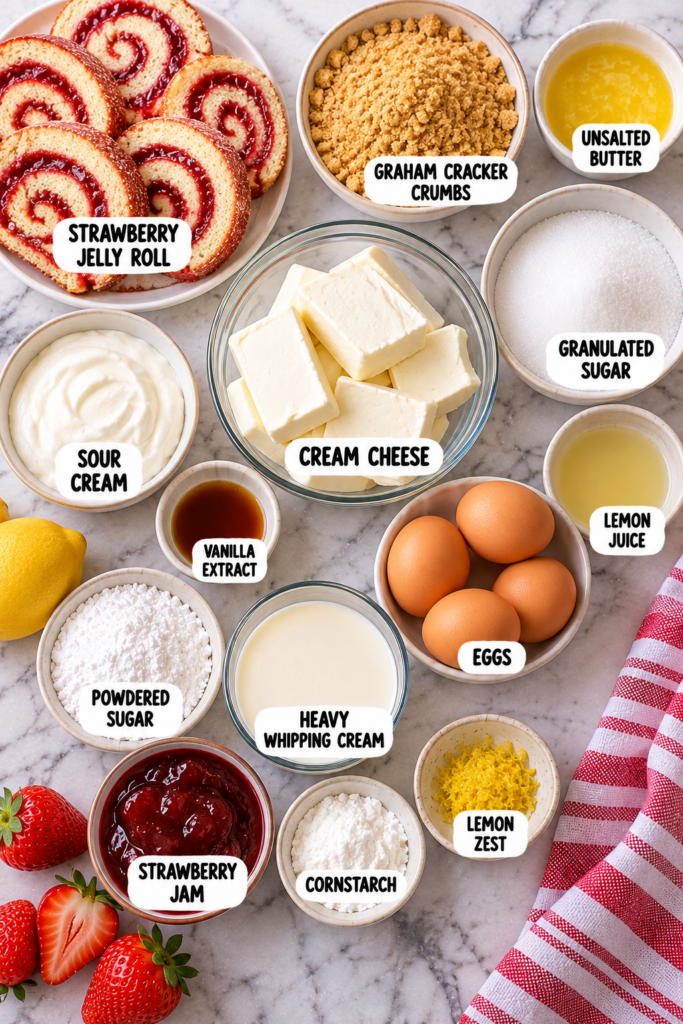
A jelly roll is a thin sponge cake rolled around a sweet filling, usually jam or fruit preserves. Cut into, the filling and cake make a spiral pattern.
Usually the sponge is lighter and more flexible than a normal butter cake. That flexibility allows it to be rolled without breaking when the recipe is done right.
The texture contrasts nicely with cheesecake. The sponge gives a soft, cakey bite, and the cheesecake lends creaminess and richness.
The fruit fillings also add a nice tartness. The raspberry, strawberry and lemon flavours balance the sweetness of the cheesecake, and make the dessert feel fresher.
It works especially well when the jelly roll is still discernible. If the sponge gets too wet or the fruit filling disappears into the cheesecake, the contrast is less interesting.
How to Make a Jelly Roll Without Cracking
One of the most common frustrations with rolled sponge cakes is cracking. The cake has to be flexible enough to bend without breaking and this is a matter of texture and handling.
Make sure not to overbake the sponge cake, or it will get dry and crisp. The cake that has dried out too much is not very likely to bend easily.
Thickness is important too. A very thick sponge is harder to roll tightly and a cake that is too thin may tear during handling.
The cooling and rolling process varies for each recipe. Some sponge cakes are rolled while still warm to fix their shape, others take a different approach.
If your jelly roll has a few surface cracks, it can still be a great topping for cheesecake. Even if the outer cake isn’t perfectly imperfect, the spiral can still be attractive.
The most important thing is not to have a dry, stiff sponge that crumbles apart when sliced or arranged.
Baked or No-Bake Cheesecake? Which One is Best for This Recipe?
Baked cheesecake generally has a denser, more structured texture. It can be a good starting point for a decorative jelly roll topping, especially if you make it for neat slices.
No-bake cheesecakes tend to have a lighter, softer filling. It could be a lovely option for a chilled dessert, but it has to have the right amount of structure to hold the jelly roll together without collapsing.
The topping itself matters too. The sponge cake is delicate so the jelly roll should be added at the right time and the recipe should allow for extended baking with a bit of flexibility.
A no-bake cheesecake and a baked cheesecake are not interchangeable without changes in the formula. Their fillings set in different ways, and their moisture levels impact on the sponge.
If your recipe is for a chilled jelly roll cheesecake, just go with that and don’t try to adapt a regular baked cheesecake without testing.

Fun Flavour Combinations: Strawberry, Raspberry and Lemon Jelly Roll
Strawberry is always a familiar option, since its mild sweetness works naturally with cheesecake. A strawberry jelly roll is a dessert that seems especially right for springtime parties and birthdays.
Raspberry has a stronger fruit flavour. The acidity provides a nice counterbalance to the rich cream cheese and is a good choice if you want the finished dessert to be less sweet.
Lemon points to a brighter path. A lemon jelly roll can make the cheesecake taste refreshing, especially when the filling is citrus-flavored and well balanced.
You can also consider combinations such as raspberry and vanilla cheesecake or strawberry and lemon-flavored cheesecake base. The important thing is that the flavours work together, that you don’t have a lot of competing elements.
The filling colour also contributes to the presentation. Light cheesecake is an especially appealing background for a bright fruit spiral.
Can You Make Jelly Roll Cheesecake Ahead?
The jelly roll cheesecake is great for making ahead, but the sponge and cheesecake layers have different storage needs.
Cheesecake often benefits from chilling properly, especially if the filling has to set. However, the jelly roll may soak up moisture from the cheesecake or toppings around it while in storage.
This may soften the sponge and blur the spiral. Also, if you have a fruit filling that is a little loose, it can release moisture.
For best looks, adhere to the recipe’s assembly and chilling schedule. Some are designed to be fully assembled ahead of time, while others may be better with the decorative jelly roll added closer to serving time.
Dessert contains cheesecake. Keep refrigerated at 40°F (4°C) or below. Do not let the surface dry out, but be aware that the sponge texture will gradually change during storage.
Frequently Asked Questions Cheesecake Topped With Jelly Roll
What is a jelly roll? Is it the same as a Swiss roll?
The terms are closely related, and sometimes used interchangeably. Traditionally a jelly roll is a sponge cake rolled up with a fruit or jelly filling. Swiss rolls may be filled with cream or chocolate or other fillings. They both create the swirled pattern that makes this cheesecake so pretty.
Can I use store bought jelly roll?
Yes, if the recipe calls for it. You can make dessert easier if you use a ready made jelly roll, although the sponge may be thicker and the filling different, and the sweetness not quite the same as if you make it yourself. Choose one with a texture suitable for slicing and laying out.
What makes the center of my cheesecake wet?
The sponge might be drawing moisture from the cheesecake or fruit filling. This happens if the jelly roll is kept in the refrigerator a long time, especially if it is in direct contact with a very moist layer. The method and timing of assembly are important to preserve texture.
How to make a no bake jelly roll cheesecake?
Some jelly roll cheesecake recipes use a no-bake filling but the exact structure depends on the ingredients. The sponge cake has to be supported by a stable no-bake cheesecake. Don’t try to substitute a baked filling with a no-bake one; use a recipe that is designed for that method.
Can you freeze a Jelly Roll Topped Cheesecake?
The cheesecake filling and the sponge cake can change in freezing. Fruit fillings may release moisture as they thaw and the jelly roll could become softer. If you include freezing in your recipe, careful wrapping and thawing in the refrigerator are important.
Concluding Thoughts
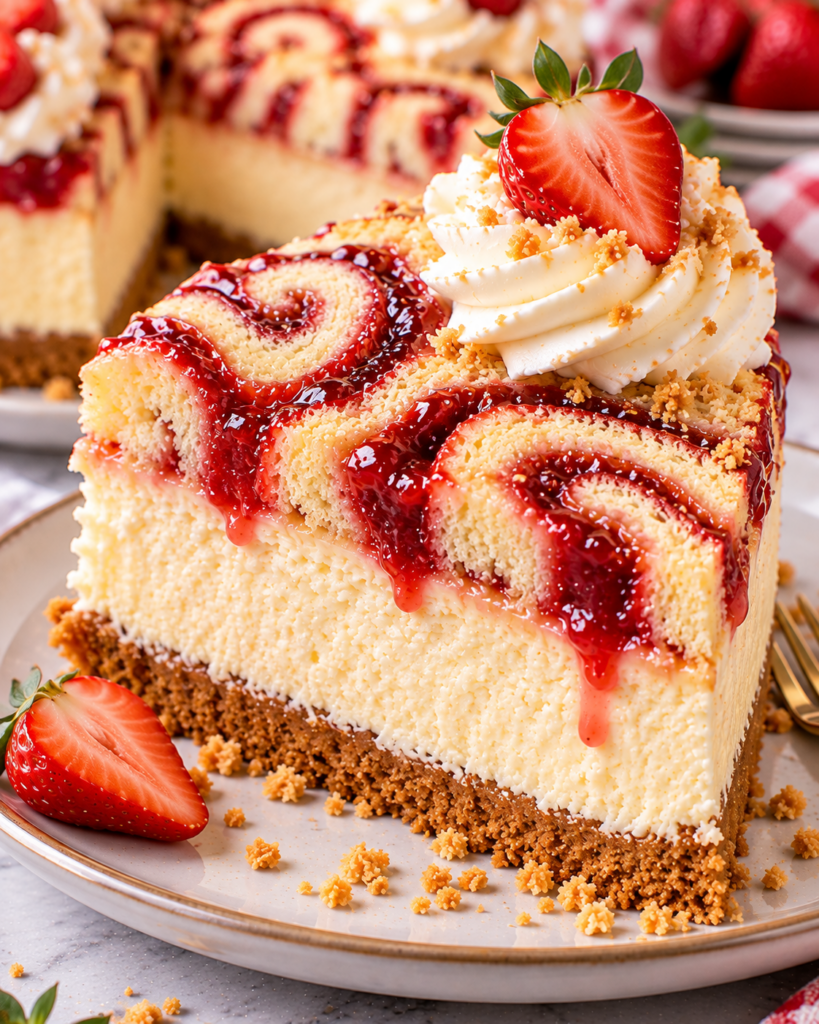
Jelly Roll Topped Cheesecake is a beautiful dessert when you want something with the richness of cheesecake and the lighter texture of a sponge cake. The colourful spiral makes the presentation memorable and the fruit filling provides a welcome contrast to the creamy base.
Choose flavours that complement each other, keep the sponge from getting too soggy and allow the cheesecake to set correctly. The result is a special
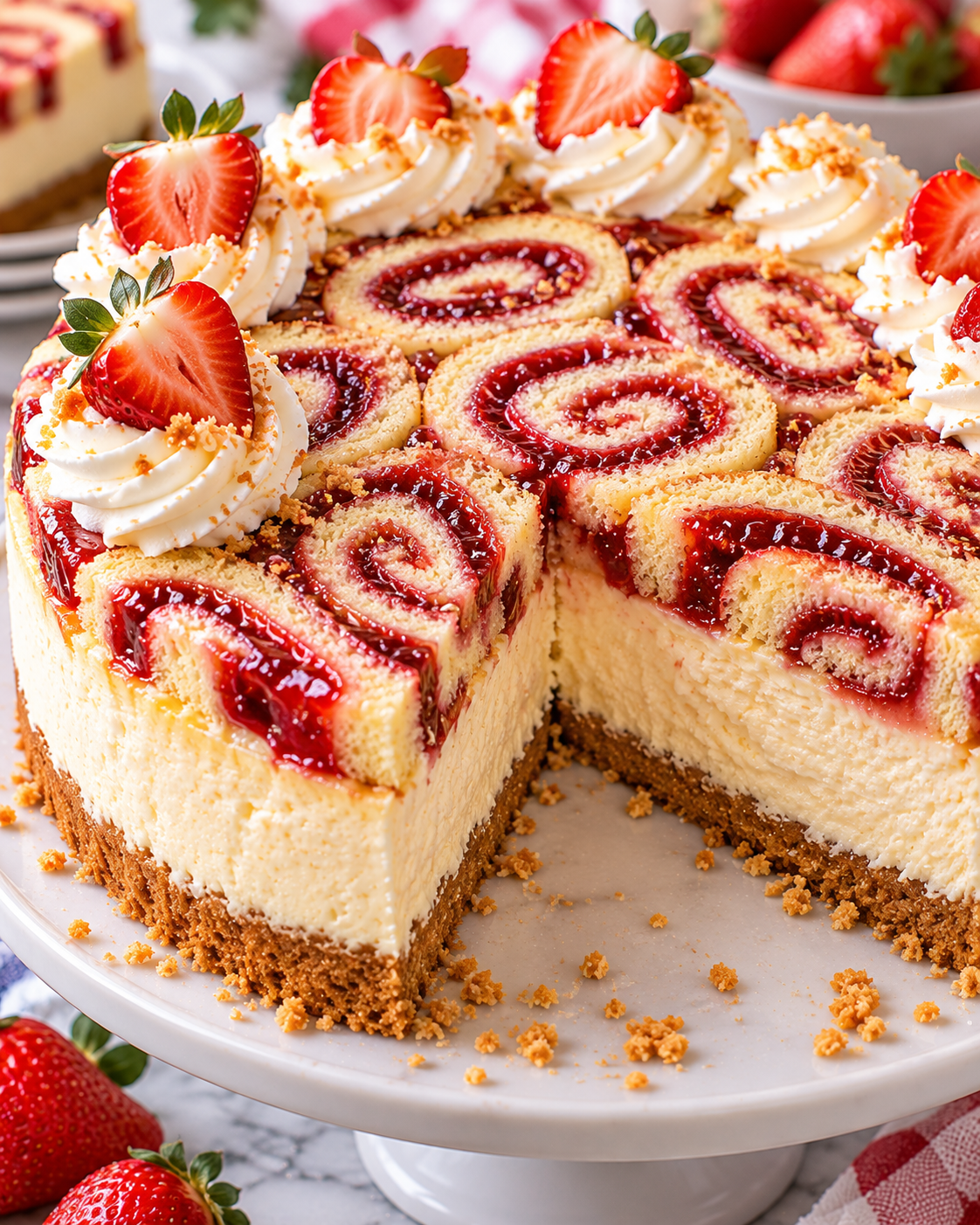
Jelly Roll Topped Cheesecake
Ingredients
Method
- Preheat the oven to 325°F (160°C).
- In a large mixing bowl, beat the softened cream cheese until smooth.
- Gradually add the sugar, and mix until well combined.
- Add sour cream, eggs, and vanilla extract, mixing until smooth and creamy.
- Pour the cheesecake mixture into a prepared springform pan.
- Bake in the preheated oven for 50-60 minutes or until the center is set.
- Turn off the oven and let the cheesecake cool in the oven with the door ajar for about an hour.
- Transfer to the refrigerator to chill for several hours or overnight.
- In a mixing bowl, beat the eggs and sugar until thick and pale.
- Sift in the flour and baking powder, then gently fold in.
- Add the milk and mix until combined.
- Pour the batter into a greased and lined jelly roll pan.
- Bake at 375°F (190°C) for 12-15 minutes, or until lightly golden.
- Immediately roll the cake in a clean towel and let cool completely.
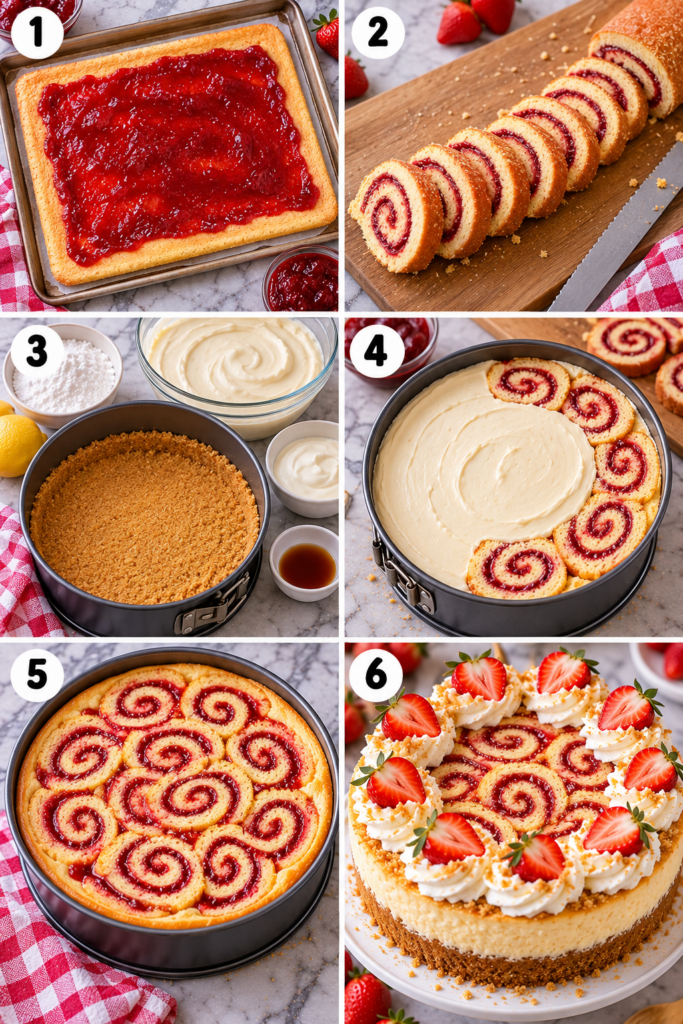
- Unroll the cooled jelly roll and spread fruit preserves evenly over the surface.
- Re-roll the jelly roll tightly and slice into rounds.
- Arrange the jelly roll pieces on top of the chilled cheesecake, creating a decorative pattern.
- Chill again if necessary before serving.