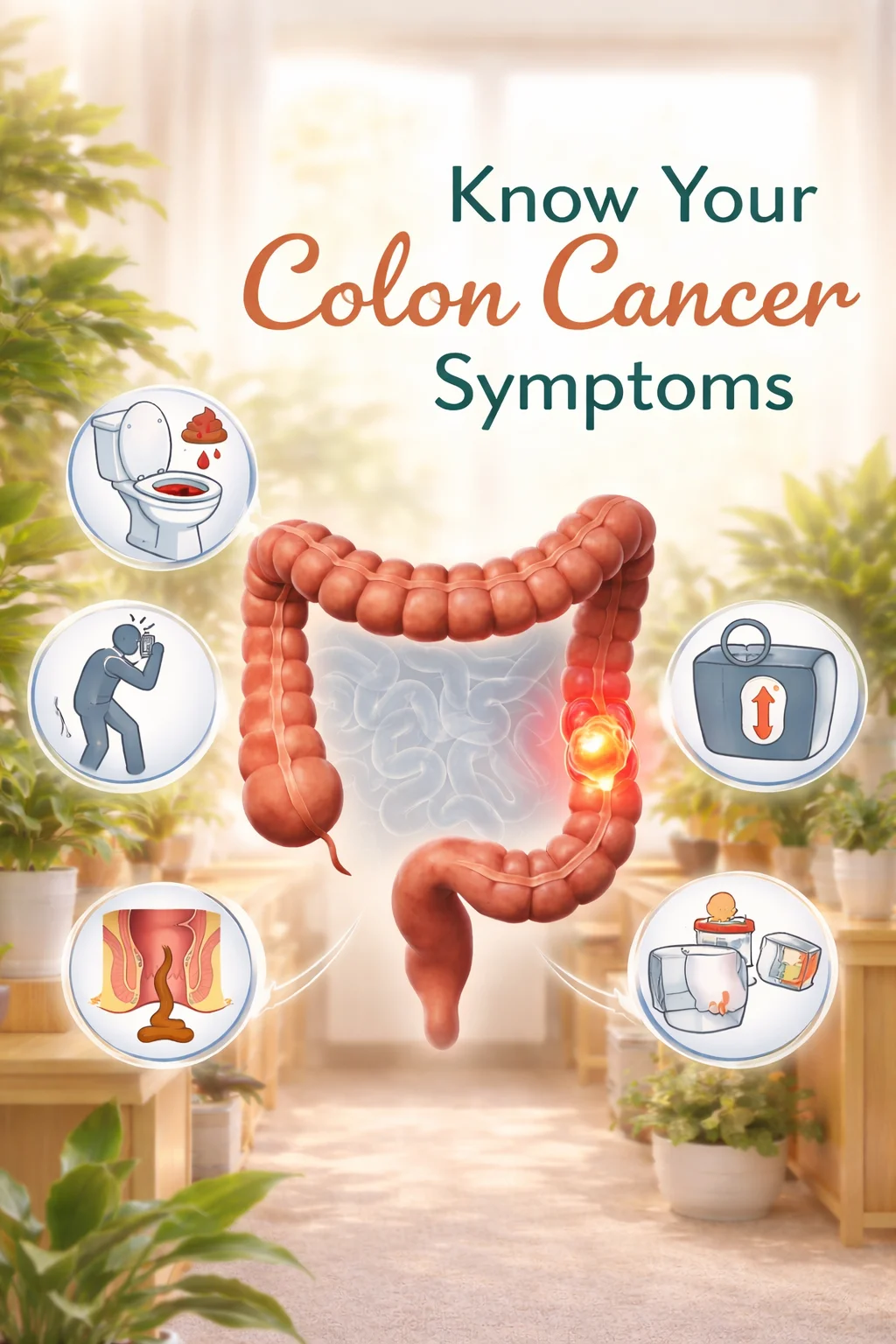
Understanding Colon Cancer Symptoms can feel like one of those mega-scary topics no one wants at the dinner table. But let’s be honest, we all know someone who’s had a brush with cancer – or at least, we’ve worried when something weird’s going on with our body. I started thinking seriously about this after a friend spotted odd symptoms that turned out to be something way bigger than anyone expected. Who’d have thought those little hurdles—like weird bathroom adventures or mystery aches—might mean more? While it’s super easy to shrug off minor things, it’s wild how important it is to tune into signals our bodies are tossing out (if you’ve ever been curious about other symptoms, here are some that show up on your face, and there are some easy ways to unblock your nose if you’re struggling with cold symptoms too). 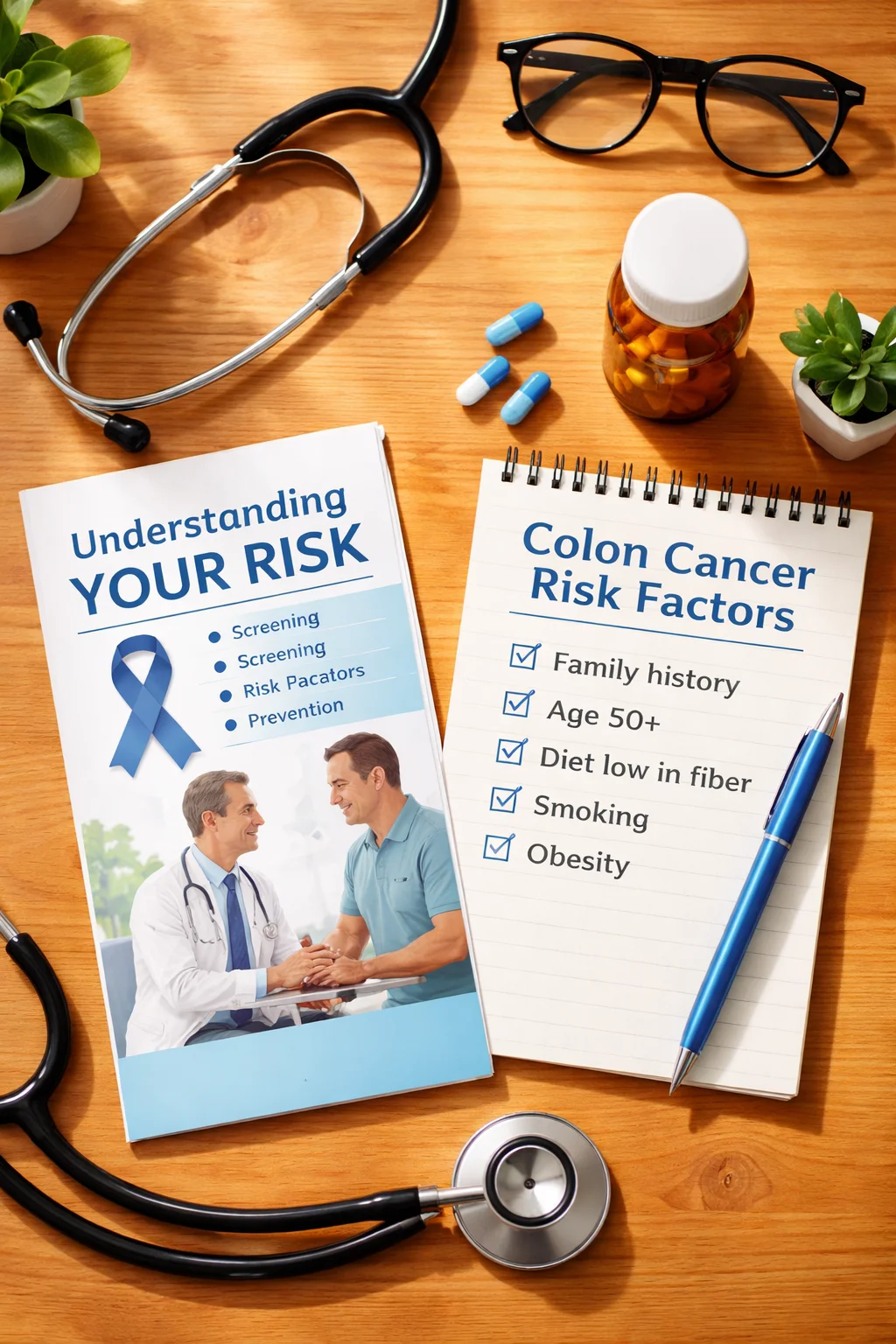
Quick Guides
Okay, real talk—no one has the patience to sift through a mountain of medical lingo, especially when it feels stressful. Here’s the cheat sheet:
- Colon cancer starts quietly, and it’s common to miss early signs.
- Most symptoms are easy to wave off as “just getting older” or “something I ate.”
- Catching the clues early changes everything. Seriously.
- Reach out to a doc if new symptoms stick around more than a few weeks.
“Wish I’d listened sooner when things felt ‘off.’ Early checks made my journey way smoother,” says Greg, a friend who beat it.
Understanding Your Risk
Who’s actually at risk? Spoiler: It’s not one-size-fits-all.
- Age is a biggie—most folks find trouble after 50, but not always. (Don’t get cocky if you’re younger!)
- Genetics matter. If someone in your family’s been through this ride, your odds go up.
- Lifestyle—think: little exercise, too much processed junk, or even smoking.
- Some other conditions (like certain digestive issues) can slip you into higher risk.
Want to know more about pain locations and what they could possibly mean? There’s a deep dive right here about abdominal pain locations health insights if you’re curious. 
Know the Symptoms
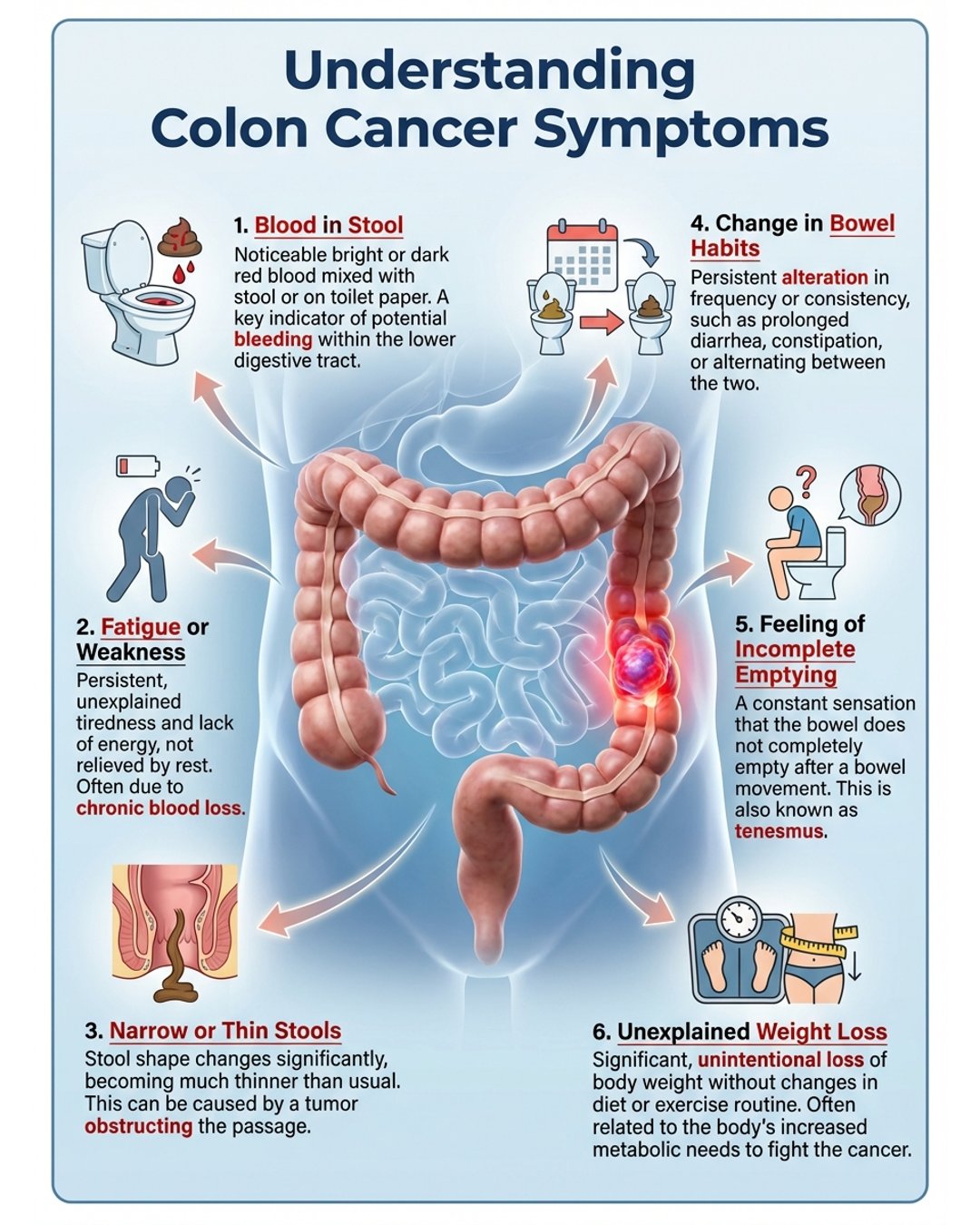
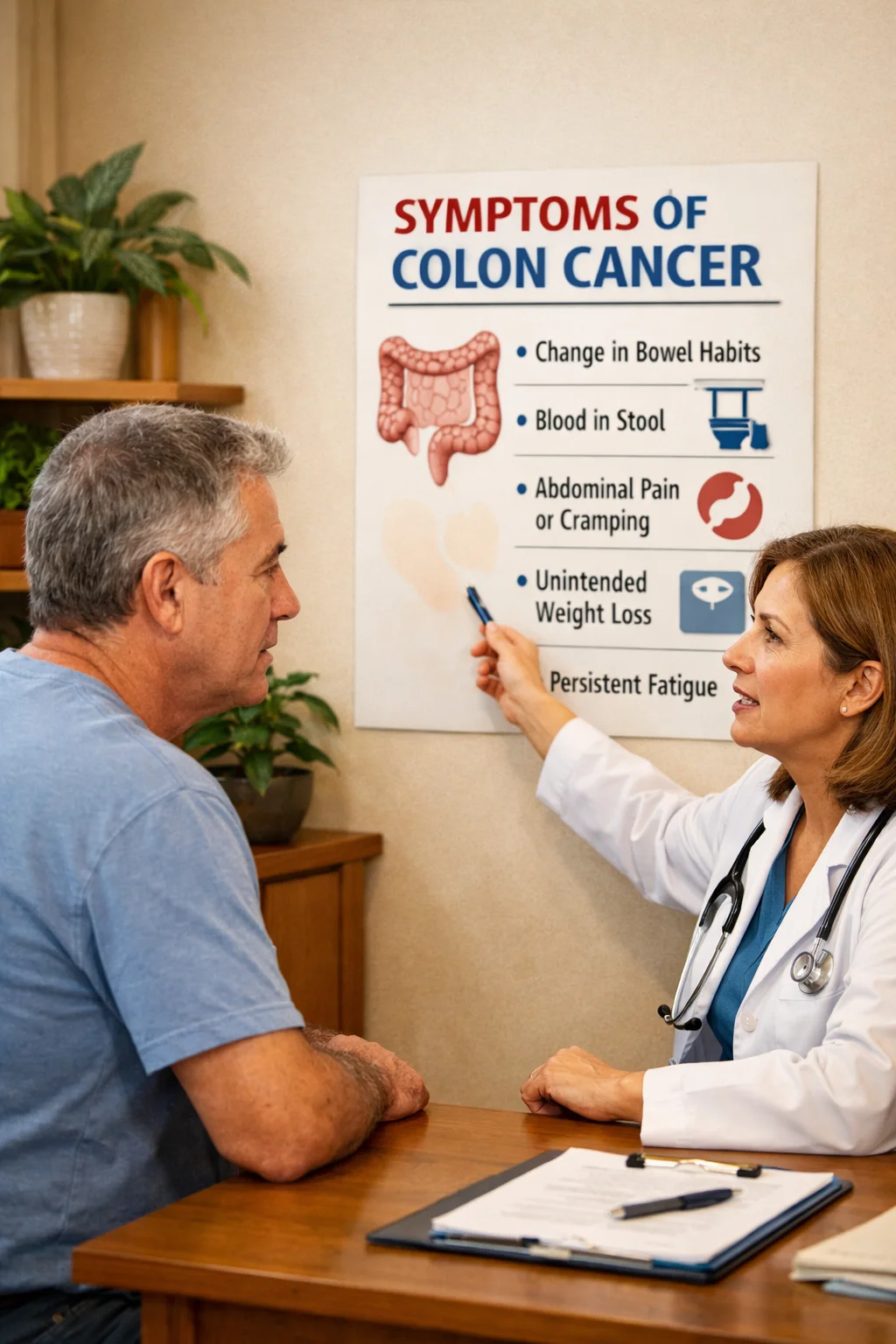
Now, here’s where it gets tricky—colon cancer symptoms love hiding in plain sight.
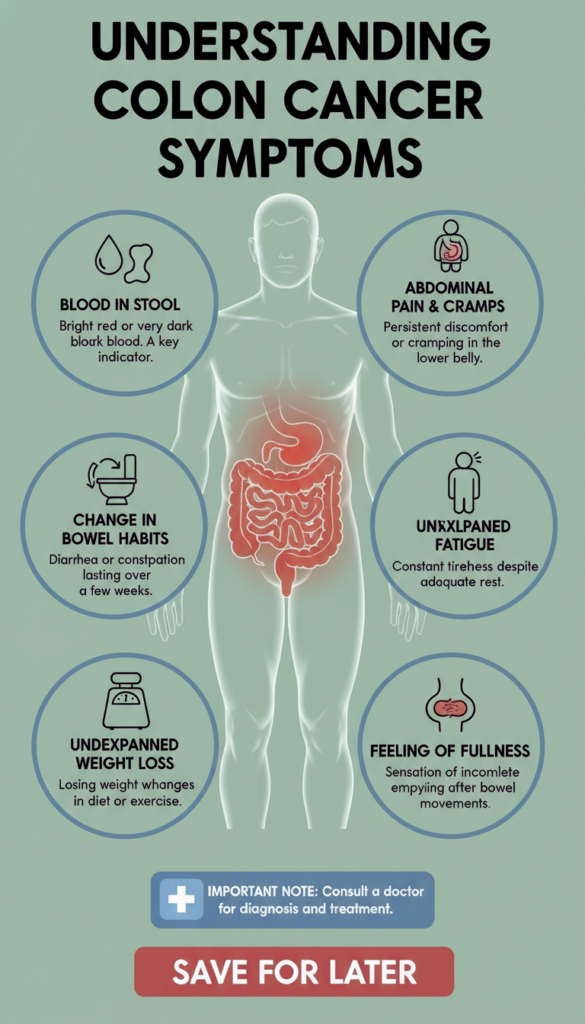
- Change in bowel habits: Tantrums, whether that’s diarrhea or constipation, are common.
- Odd poop shapes or blood showing up (yeah, TMI, but so important).
- Stomach drama—aches, cramps, or feeling gassy for ages.
- Weight falling off for no good reason. (If only it happened for happy reasons.)
- Always tired, or your body just feeling zapped—like the flu… but not.
If you’re good at brushing off weird bodily stuff, don’t ignore this. And hey, sometimes high cholesterol symptoms sneak up too, so give that a look if you’re curious what’s going on inside.
Early Detection Saves Lives
Okay, this is where I get really soapbox-y—early checks are the best life hack.
- Screening isn’t scary. Boring? Maybe, but not as bad as you imagine.
- Docs recommend starting regular screening around 45, maybe sooner for some.
- Tests aren’t all the same: there’s stool tests, a colonoscopy (uh, fun), and other fancy screenings.
- If doctors catch it before symptoms explode, survival rates are five-star restaurant good.
I kept putting off my own screening for ages until a story on heart failure symptoms scared me into action. Honestly, wish I hadn’t waited.
Treatment Options: There is Hope
Let’s skip the doom-and-gloom. Seriously—medicine has come a long way.
- Surgery is still the headliner, but it’s not the only player.
- Chemo and radiation mean you’ve got options depending on the stage.
- New treatments like targeted therapies—science is a wild, helpful beast sometimes.
- Support groups can be a huge life-raft (yeah, I thought they’d be awkward, but no—total game-changers).
That “C-word” used to mean a dead end, but these days, it feels more like a detour (annoying, but not the end of the road). If you need a break from all this chatter, here’s something interesting about scalp reflexology and health—it never hurts to explore all avenues for feeling better.
Common Questions
How do I know if my symptoms are serious?
If you’re seeing blood, losing weight fast, or symptoms refuse to quit after a couple weeks, go get checked. Better safe than sorry, right?
Is colon cancer always painful?
Not always—sometimes there’s zero pain until things get serious. That’s why it’s so sneaky.
Can young people get colon cancer?
Yes—rare, but it’s happening more. Don’t let age trick you into thinking you’re immune.
What’s the best thing I can do to lower my risk?
Move more, eat brighter (veggies! colors!), quit smoking, and—sorry, can’t help myself—don’t ghost your screenings.
Are symptoms the same for men and women?
Pretty much, though how we notice or describe them might vary. Trust your gut if something’s off.
Stay Curious, Stay Healthy
So, short and sweet: listening to our bodies (and checking out trustworthy info, like this breakdown on colon cancer symptoms and causes from Mayo Clinic or this rock-solid colorectal cancer info from American Cancer Society) can literally save our bacon. Colon cancer isn’t something to brush off or hide from. If something feels funky, get it checked. You don’t have to navigate the mystery symptoms solo—there’s lots of support and solid advice out there. Stay bold, stay curious, and don’t forget: you’ve got this.