
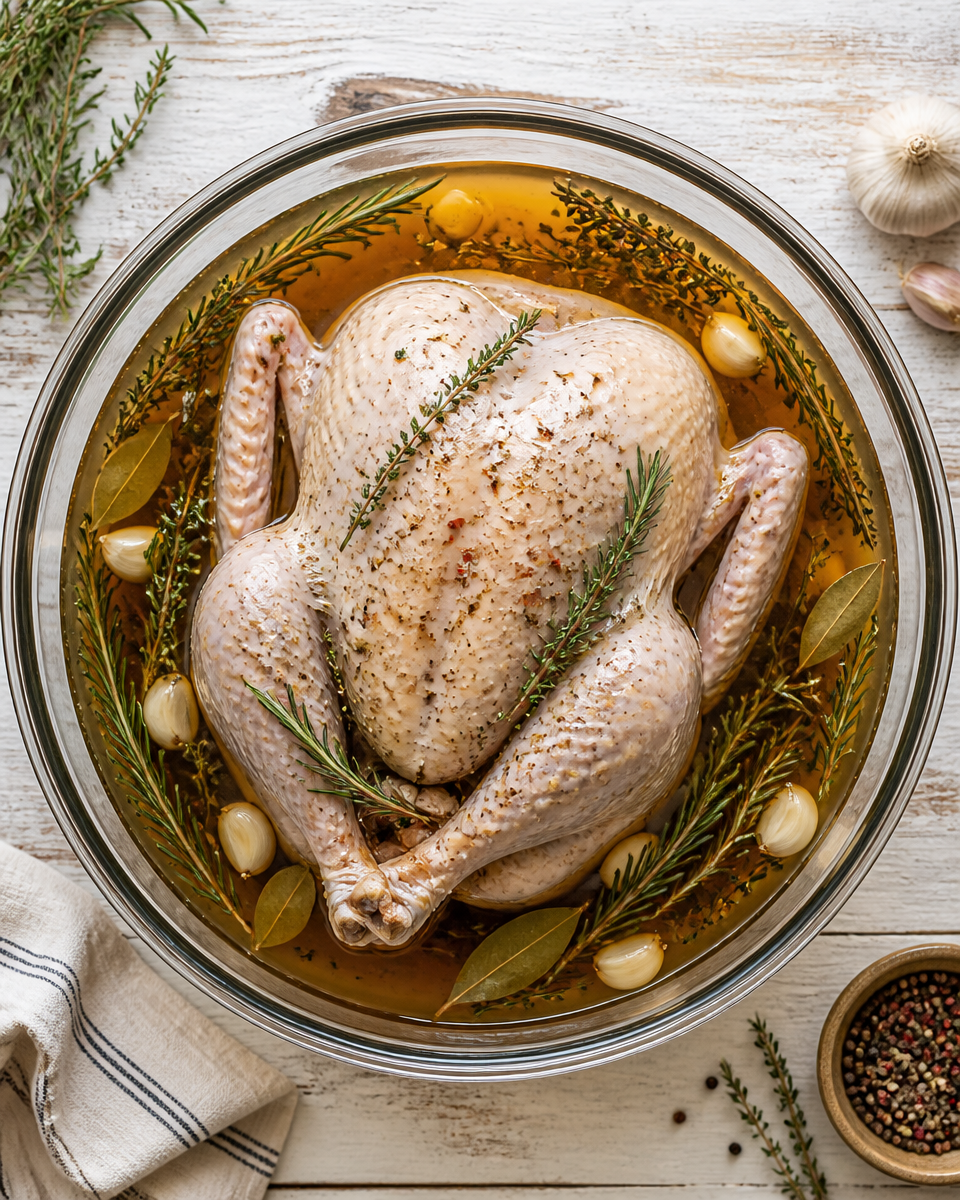
turkey brine recipe conversations always seem to pop up right when you are already juggling side dishes, guests, and that one roasting pan you cannot find. I used to skip brining because it sounded like extra work, but then I served one too many turkeys that were pretty on the outside and a little dry inside. Brining is the easiest way I know to make the meat juicy and forgiving, even if your timing is not perfect. Plus, it gives you that seasoned, holiday style flavor all the way through, not just on the skin. If you are cooking turkey for people you love, this is one of those small steps that really pays off.
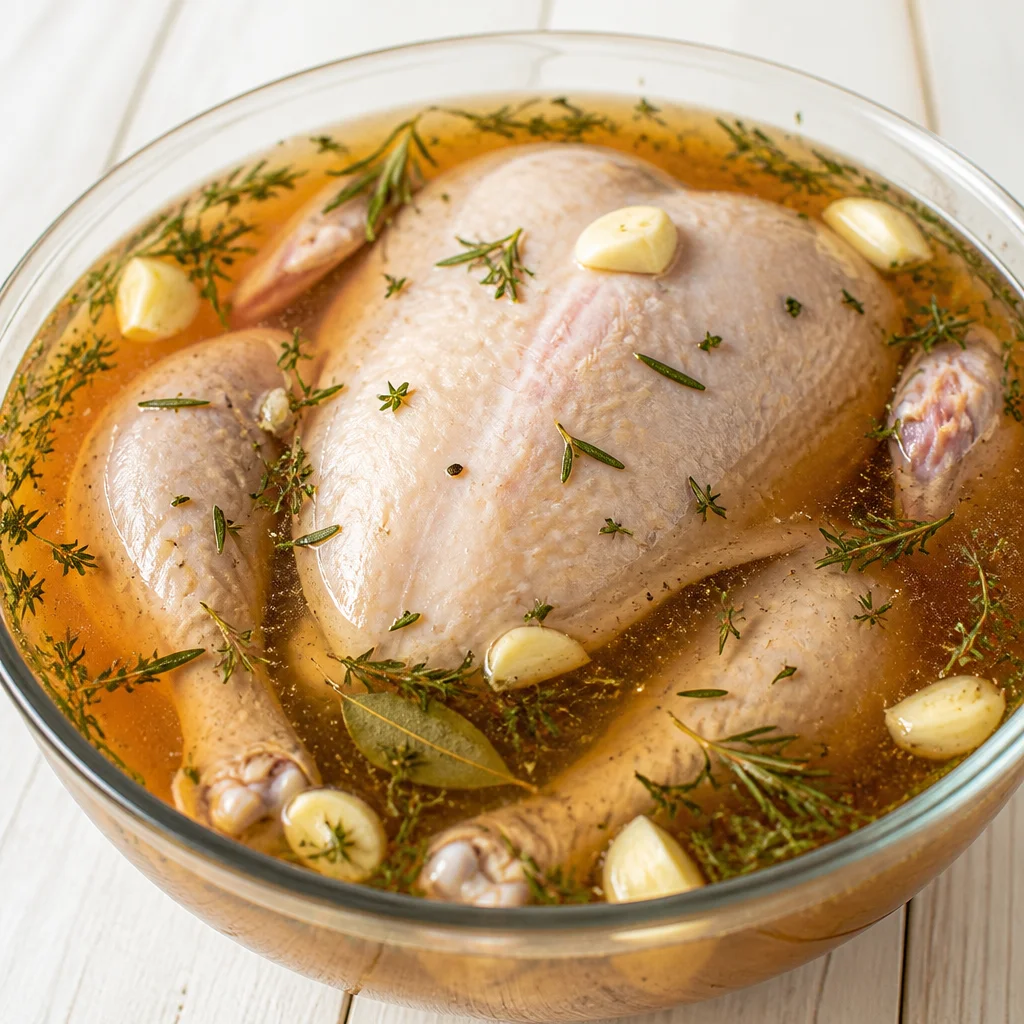
A Few Good Reasons to Make This
Let me keep it real. A good brine is like insurance. You still have to cook the turkey safely, but brining helps a lot with texture and flavor.
Here is why I come back to this turkey brine recipe every year:
- Juicier meat, especially the breast, which loves to dry out.
- More flavor inside the turkey, not just on top.
- Better browning when you pat it dry and roast it.
- Less stress if the turkey goes a little longer than planned.
If you want a super simple overnight version, I bookmarked this one too: overnight turkey brine guide. Sometimes overnight is all you need.
Tips From My Kitchen
I have brined turkeys in a cooler, in a giant stockpot, and once in a clean bucket that was definitely not cute, but it worked. The point is, you do not need fancy tools, but you do need a little planning.
What you need before you start
Here is what I always check before I even pull out the salt:
- A container big enough: stockpot, food safe bucket, or a brining bag inside a roasting pan
- Space in the fridge, or a cooler with plenty of ice
- A way to keep it cold: ice packs, ice, or fridge space
- Paper towels for drying the turkey well after brining
My biggest tip is temperature. Keep the turkey under 40 F the whole time. If your fridge is packed, a cooler works great, just keep topping up the ice and make sure the turkey stays surrounded by cold.
Also, if you are thinking of frying your bird this year, please read safety info first. Hot oil is not the time to wing it. This is a solid resource: deep fried turkey safety tips.
“I tried your brine timing and the tip about drying the skin, and my turkey was honestly the juiciest I have ever made. Even the leftovers stayed tender the next day.”
The Formula for Turkey Brine
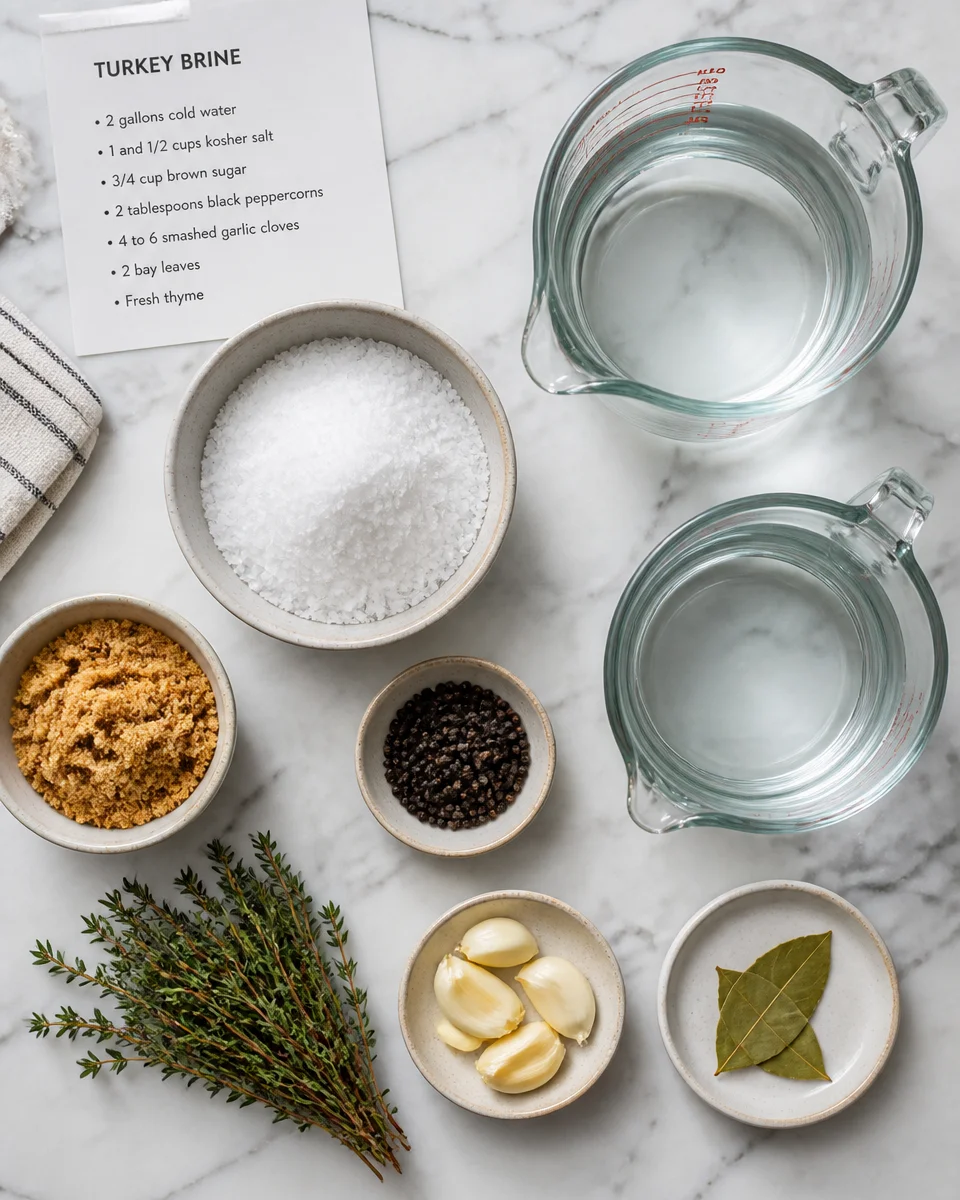
This is the part that makes brining feel simple instead of mysterious. Think of it as a basic salty, lightly sweet, nicely seasoned bath. You can adjust the aromatics based on what you like, but keep the salt to water ratio in a reasonable range.
The basic ingredient list I use
For a 12 to 16 pound turkey, this is my go to:
- 2 gallons cold water (more if needed to fully cover)
- 1 and 1/2 cups kosher salt (or 1 cup table salt)
- 3/4 cup brown sugar or white sugar
- 2 tablespoons black peppercorns
- 4 to 6 garlic cloves, smashed
- 2 bay leaves
- 1 tablespoon dried thyme, or a few fresh sprigs
- Optional: peel of 1 orange, a few lemon slices, or a small handful of fresh rosemary
How I mix it: I dissolve the salt and sugar in a smaller amount of warm water first, then add the rest as cold water. This way, you are not waiting forever for the grains to disappear, and you are not warming up your turkey bath.
One more important thing: check your turkey label. If it says “pre brined” or “contains a solution,” you can still brine, but you should cut the salt down a lot or switch to a low salt soak. Otherwise it can come out too salty. This is where a lot of people get burned.
And because it comes up every year, yes, this turkey brine recipe works whether you roast, spatchcock, or smoke. If spatchcocking is on your list, this walkthrough is helpful: spatchcock turkey recipe.
Step-by-Step: How to Brine a Turkey
Once you do it once, it feels easy. The key is keeping it cold and not brining for too long.
My simple brining routine
- Thaw the turkey fully. If it is even a little frozen inside, the brine will not get in evenly.
- Remove the giblets and neck. Pat the turkey quickly with paper towels.
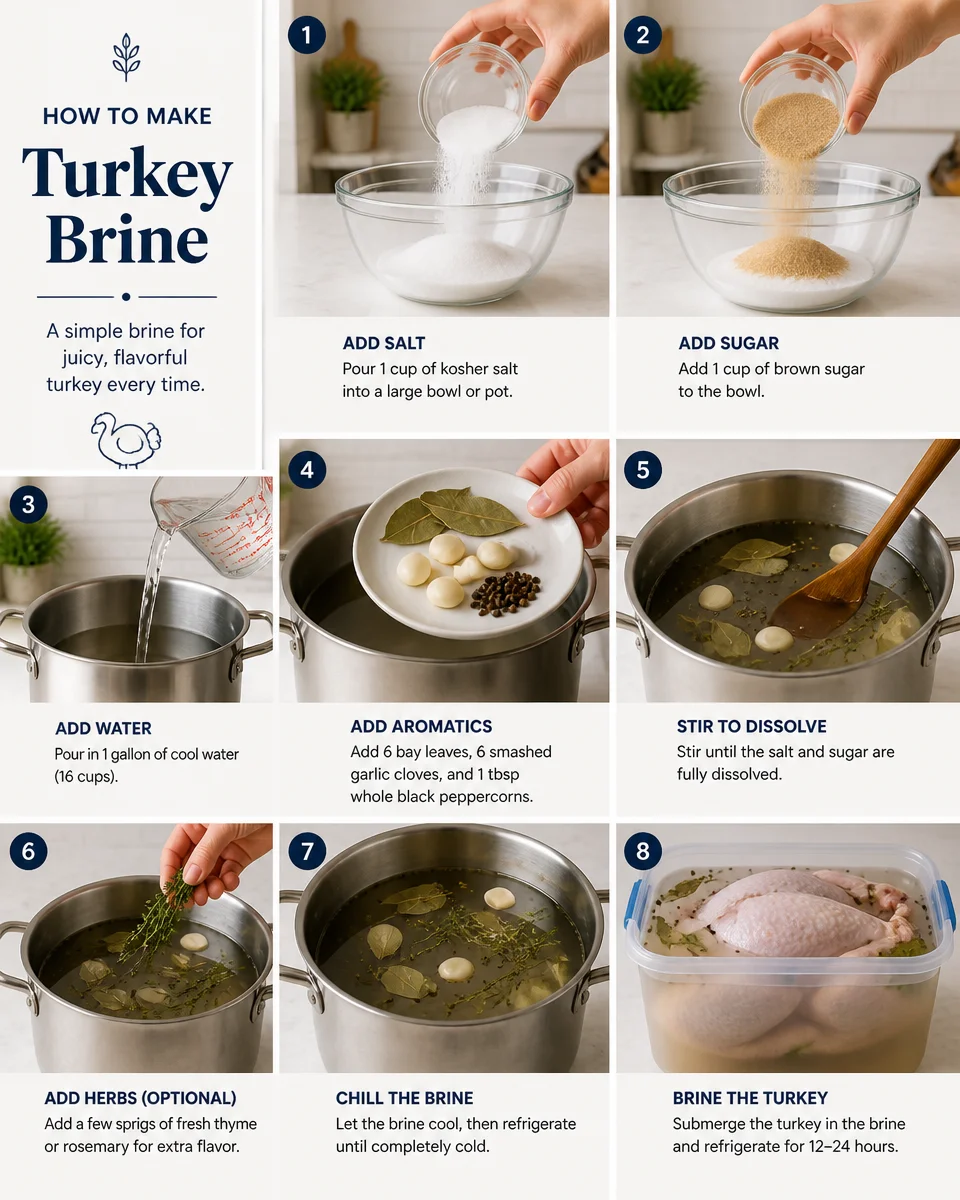
- Make the brine. Dissolve salt and sugar first, then cool it down with cold water.
- Submerge the turkey breast side down if possible. If it floats a bit, weigh it down with a clean plate.
- Keep it cold. Fridge is easiest. Cooler works if you keep plenty of ice around it.
- Brine time: 8 to 12 hours for most turkeys. Up to 24 hours is okay, but I try not to go past that.
- Rinse or not: I usually do a quick rinse if I used a full strength brine, then pat very dry.
- Dry the skin: Let it sit uncovered in the fridge for 4 to 12 hours if you can. This helps crisp the skin.
After brining, go lighter on extra salt. I still use butter, herbs, pepper, garlic, and maybe a little paprika, but I do not salt aggressively.
And do not toss that brine into gravy or anything. It has had raw turkey in it. When in doubt, throw it out.
If you are already thinking about what to do with the extra meat, I have made this cozy option so many times after the holiday: leftover turkey soup recipe. It is the kind of dinner that makes you happy you cooked a big bird in the first place.
Substitutions & Variations
This is where you can make the flavor feel like you. The main structure stays the same, but the add ins are flexible.
Here are a few easy swaps I have tried:
- Apple twist: swap 2 cups of the water for cold apple juice. Cozy and slightly sweet.
- Citrus herb: add lemon and orange slices plus rosemary and thyme.
- Spice vibe: add 1 teaspoon smoked paprika and a pinch of chili flakes for subtle warmth.
- Maple: replace sugar with maple syrup, about 1/2 cup. Very holiday.
If you have guests who love cheesy comfort food and you end up with extra ground turkey in the fridge, this is a fun weeknight spin that is not turkey sandwich number four: cheesy turkey meatball skillet.
One more note about salt: if you only have table salt, use less. Table salt is finer and packs more into a cup. That is why I listed two measurements above. It matters.

Common Questions
1) How long should I brine my turkey?
Most 12 to 16 pound turkeys do great with 8 to 12 hours. If you go longer, the texture can get a bit too soft and the meat can taste overly seasoned.
2) Do I have to rinse the turkey after brining?
Not everyone does. I usually give it a quick rinse if I used full salt, then I dry it really well. The drying part matters more than the rinsing part for crispy skin.
3) Can I use this turkey brine recipe for a smaller turkey breast?
Yes. Just scale down and brine for less time, usually 4 to 6 hours for a bone in breast, less for boneless.
4) What if my turkey is labeled “contains a solution”?
That means it is already somewhat salted. You can still brine, but I would reduce the salt a lot, or do a lighter soak with more herbs and less salt to avoid an overly salty bird.
5) Can I stuff the turkey after brining?
You can, but I usually do not. Stuffing slows cooking and can get tricky for food safety. I prefer baking stuffing in a dish and letting the turkey cook freely.
My final pep talk before you cook
If you have been nervous to try a turkey brine recipe, I hope this made it feel doable. Keep it cold, do not over brine, and dry the skin well before cooking, and you will be in great shape. If you want to compare styles, I like browsing How to Make Turkey Brine from Scratch – The Pioneer Woman and Out of This World Turkey Brine Recipe – Allrecipes when I am in the mood to tweak flavors. The best part is that once you nail your brine, you can keep the rest of the meal simple and still serve a turkey people talk about. Let me know how yours turns out, and do not be surprised if you become the new designated turkey person in the family. 
Turkey Brine
Ingredients
Method
- Thaw the turkey fully. If it is even a little frozen inside, the brine will not get in evenly.
- Remove the giblets and neck. Pat the turkey quickly with paper towels.
- Make the brine by dissolving salt and sugar in a smaller amount of warm water first, then cool it down with cold water.
- Submerge the turkey breast side down if possible. Weigh it down with a clean plate if it floats.
- Keep the turkey cold. The fridge is easiest, but a cooler works if you keep plenty of ice around it.
- Brine the turkey for 8 to 12 hours, up to 24 hours but preferably not more.
- Rinse the turkey briefly after brining if using a full strength brine, then pat it very dry.
- Let the turkey sit uncovered in the fridge for 4 to 12 hours to help crisp the skin.