
sourdough discard recipes have saved me from that guilty moment when I open the fridge, see a jar of bubbly discard, and think, “Please don’t make me throw you away.” If you keep a sourdough starter, you know the routine: feed it, wait, discard some, repeat. The discard adds up fast, and it feels wasteful even though it is totally normal. The good news is that discard is basically a shortcut to flavor, especially in quick bakes. Today I’m sharing the way I actually use it at home, with my go to pancakes and a bunch of other easy ideas.
Sourdough Discard Recipes 101: Best Sourdough Breakfast Pancakes
If you only make one thing from your jar, make pancakes. This is the easiest “I need breakfast now” win, and it’s the recipe that made me fall in love with sourdough discard recipes in the first place. The batter comes together in one bowl, and you get that little tang that makes plain pancakes taste like you tried harder than you did.
My go to pancake method (simple and forgiving)
Here’s what I use most mornings. I’m not precious about it, and you do not have to be either. Your discard can be thick or runny. Both work, you just adjust the milk a splash.
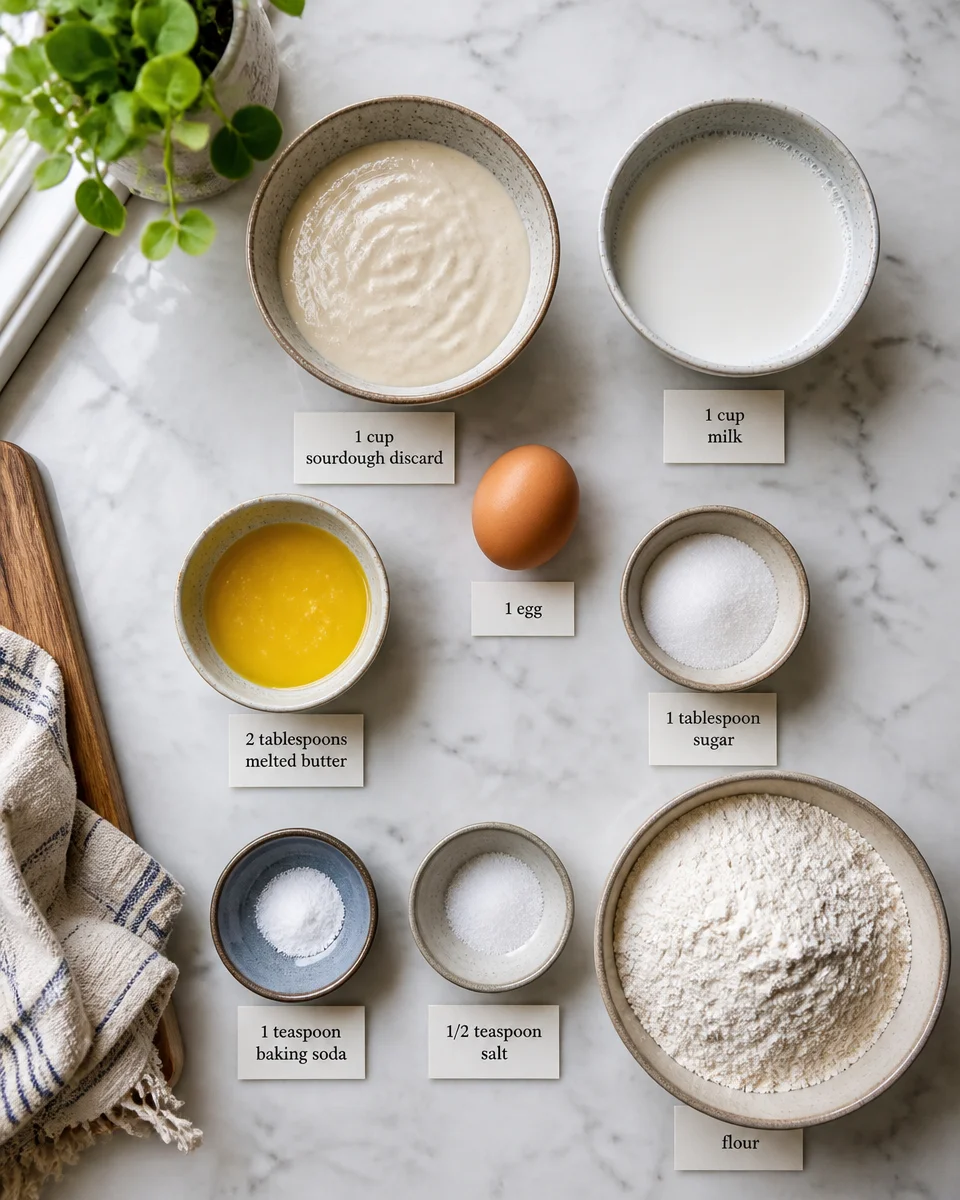
What you will need
- 1 cup sourdough discard (unfed is fine)
- 1 cup milk (plus a little more if your discard is thick)
- 1 egg
- 2 tablespoons melted butter or neutral oil
- 1 tablespoon sugar or honey (optional, but I like it)
- 1 teaspoon baking soda
- 1/2 teaspoon salt
- 1 to 1 1/4 cups flour (start with 1 cup and see how it looks)
Directions
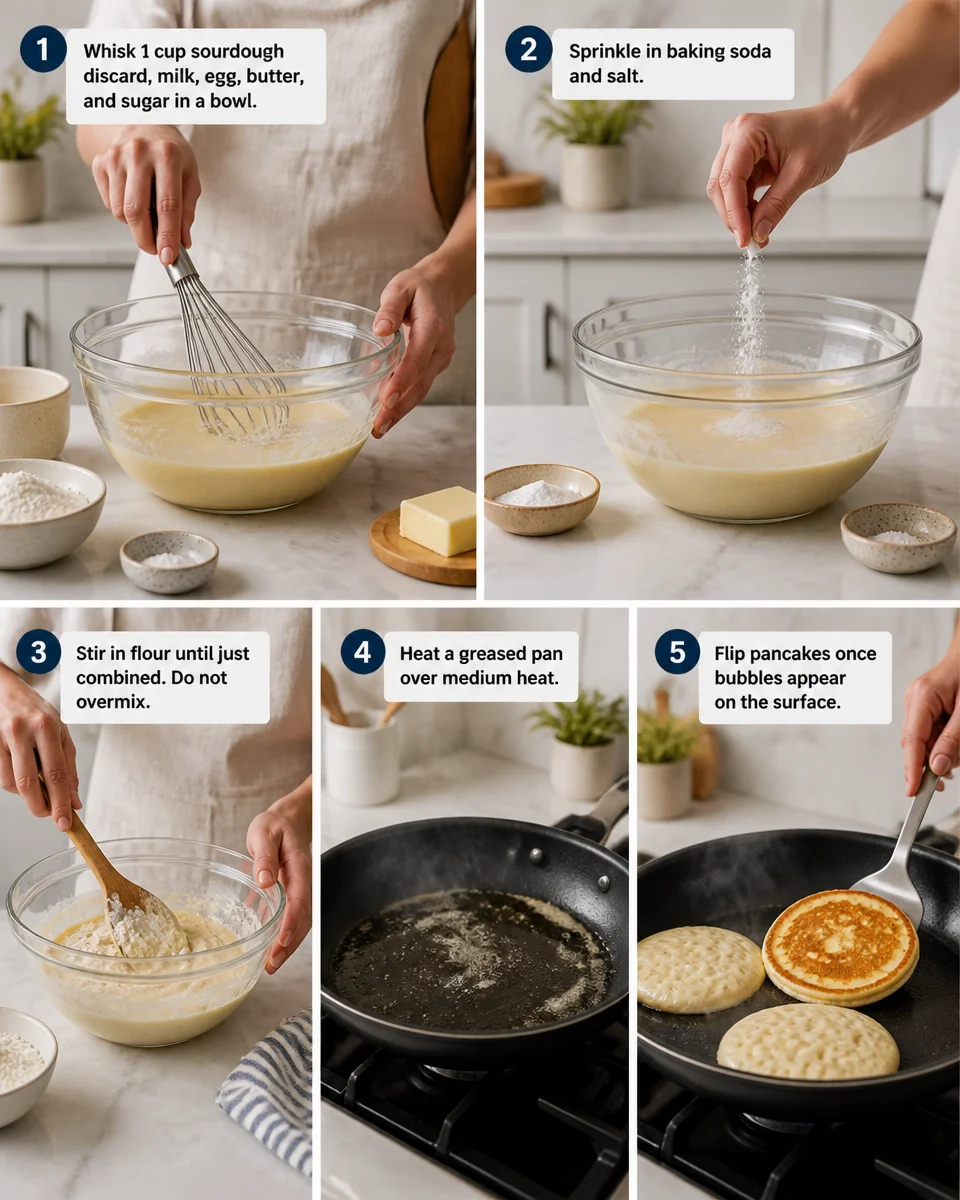
- Whisk discard, milk, egg, butter, and sugar in a bowl.
- Sprinkle in baking soda and salt, then whisk again. You’ll see it foam a little. That’s a good sign.
- Stir in flour until the batter is thick but still pourable.
- Heat a lightly greased pan over medium heat.
- Cook until bubbles show on top and the edges look set, then flip and cook the other side.
My biggest tip is to keep the heat medium, not high. Discard pancakes brown a bit faster than basic pancakes, and medium heat gives you a soft middle without scorching. If you want a very clear step by step version, I keep a dedicated post bookmarked for busy mornings: easy sourdough discard pancakes.
Serving ideas I actually use: peanut butter and banana, yogurt and jam, or just butter and a pinch of flaky salt. If you like a cozy savory breakfast, serve them with crispy eggs and a spoon of something saucy. I even do leftover stew vibes sometimes, which sounds odd but tastes great.
Creative Ways to Use Sourdough Discard in Baking
Once you realize discard is basically a flavor booster, you start seeing places to tuck it in. The key is to use it in recipes that can handle a little extra moisture and tang. This is where sourdough discard recipes get fun, because you’re not limited to “bread stuff.”
Easy favorites beyond pancakes
Banana bread is my top pick when I have spotty bananas and a jar of discard begging for attention. The crumb turns out tender, and the flavor is deeper, kind of caramel like. If you want a tested version, this one is great: sourdough banana bread with discard.
Quick muffins work too. I swap in about 1/2 cup discard and reduce other liquids slightly. Blueberry, chocolate chip, or cinnamon streusel all play nicely with the tang.
Cookies and brownies are surprisingly good with discard. You do not add it for rise here, just for chew and flavor. Start small, like 1/4 cup, and see what you think.
Savory baking is where I use discard when I’m tired of sweets. Think soft dinner rolls, scallion biscuits, or a quick flatbread. If you’re making a snack board, a discard flatbread plus hummus is a full plan.
One more thing: if you’re planning a big meal with friends, discard bakes can help you fill out the table without spending a ton. When I’m putting together a holiday spread, I pull ideas from this list and add a discard option like pancakes for brunch the next day: Friendsgiving menu ideas and recipes.
Nutritional Benefits of Sourdough Discard
I’m not going to pretend pancakes are health food, but discard does bring a few nice things to the party. Since it comes from a fermented starter, it has acids and byproducts from that fermentation that can make baked goods taste more complex. And when you use discard, you also cut down on food waste, which honestly makes me feel better about baking “just because.”
Here are a few realistic, non hype benefits:
1) More flavor with less sugar
That gentle tang can make sweet bakes taste balanced, so you might not feel the need to over sweeten.
2) Fermentation compounds
Discard contains the results of fermentation, which is why it smells a little tangy or fruity. You’re not getting probiotic benefits the way you would from raw fermented foods because most discard recipes are cooked, but you still get that fermented character and depth.
3) Stretching ingredients
Using discard can reduce how much flour you need in some recipes, and it helps you turn “extra starter” into actual food instead of trash.
And just to keep it real, I’m mostly here for the taste and texture. Discard makes bakes feel a little more special, like they came from a neighborhood bakery, even when you mixed them half asleep.
“I started saving my discard for pancakes after reading your tips, and now my kids ask for them every weekend. The batter is so easy and it actually tastes better than the box mix.”
Tips for Storing and Handling Sourdough Discard
This is the part that made discard click for me. Once you store it in a way that fits your routine, you stop feeling behind on starter maintenance. I keep it simple and safe, because nobody wants mystery jar science in the back of the fridge.
My everyday storage routine
I use a clean jar with a lid, label it with the date using tape, and keep it in the fridge. Every time I feed my starter, I add the new discard to that jar. When it gets to about 2 cups, I plan a bake within the next day or two.
Quick handling tips
Keep it cold: Refrigeration slows fermentation so it does not get overly sharp too fast.
Stir before measuring: Liquid can separate on top, especially with wetter starters.
Smell check: Tangy, yeasty, a little vinegary is normal. If you see pink or orange streaks, fuzzy mold, or it smells rotten, toss it.
Can you freeze it? Yes. I freeze discard in 1/2 cup portions. Thaw in the fridge overnight. The texture might look odd, but it works fine in most sourdough discard recipes like muffins, pancakes, and quick breads.
Also, do not forget you can use discard in savory meals too. On nights when I’m making comfort food, I’ll do a discard flatbread and serve it alongside something simple like potatoes. If you need cozy dinner inspiration, I’ve cooked my way through this post more than once: deliciously simple stewed potatoes recipes.
Common Mistakes to Avoid When Using Sourdough Discard
I made all of these mistakes so you don’t have to. None of them are tragic, but a couple can ruin your batch fast.
1) Using discard that’s gone bad
If you’re unsure, trust your senses. A normal sour smell is fine. Visible mold or weird colors are not. When in doubt, throw it out.
2) Forgetting the baking soda in pancakes
This one matters. Baking soda reacts with the acids in the discard and gives lift. Without it, pancakes can turn out dense and a little gummy.
3) Overmixing the batter
Stir until combined and stop. Overmixing makes pancakes and muffins tough.
4) Assuming discard replaces yeast in every recipe
Discard is not the same as active starter. Some recipes are designed for discard and rely on baking powder or baking soda for rise. If you want a true naturally leavened loaf, you need an active starter plan.
5) Making everything too sour
Older discard gets sharper. If yours is very acidic, use it in chocolate or banana recipes where that tang tastes intentional, or mix it with fresher discard.
And if you’re baking for a crowd and want an easy dessert angle, I’ve played with a few sweet combinations inspired by this fun post: Dubai chocolate variations cottage cheese recipes. Chocolate is very forgiving with tangy discard, trust me.
Common Questions
Q: Is sourdough discard the same as active starter?
A: Not exactly. Discard is the portion you remove before feeding. It can still be bubbly, but it is not always strong enough to raise bread on its own.
Q: How long does discard last in the fridge?
A: I try to use it within 1 to 2 weeks for the best flavor. It can last longer, but it gets more sour over time and you need to be extra careful with smell and mold checks.
Q: Can I use discard straight from the fridge?
A: Yes. For pancakes and quick breads, cold is fine. If your batter looks too thick, add a splash of milk.
Q: Why did my pancakes turn out flat?
A: Usually it’s old baking soda, or you forgot it. Also, if the pan is too hot, the outside sets before the inside can puff.
Q: What is the easiest recipe for a beginner?
A: Pancakes, no contest. They are fast, forgiving, and you learn how discard behaves without stress.
Wrap up and get your discard working for you
If you’ve been collecting discard and feeling stuck, start with pancakes and build from there. Once you get a feel for the flavor, you’ll see how easy it is to fold discard into quick breads, muffins, and cozy savory bakes. I keep coming back to sourdough discard recipes because they taste great, save waste, and make my kitchen feel busy in the best way. If you want even more inspiration, these roundups are worth a scroll: sourdough discard recipes – Wild Thistle Kitchen and Sourdough Discard Recipes – Sugar Spun Run. Now go grab that jar from the fridge and make something you’ll actually be excited to eat tomorrow morning. 
Sourdough Discard Pancakes
Ingredients
Method
- Whisk together the sourdough discard, milk, egg, melted butter, and sugar in a bowl.
- Sprinkle in baking soda and salt, then whisk again until foamy.
- Stir in flour until the batter is thick but still pourable.
- Heat a lightly greased pan over medium heat.
- Pour the batter onto the pan and cook until bubbles show on top and the edges look set, then flip and cook the other side.