

A good pot of gumbo provides more than just dinner. The kitchen is full of the aroma and it smells like savoury seasonings, smoky sausage, and a deeply flavoured broth that feels especially comforting on a cool evening. This Shrimp and Sausage Gumbo is a mix of those classic Louisiana-inspired flavours in a hearty dish meant to be eaten over time.
The tender shrimp and sausage seasoned generously make a wonderful contrast. The sausage adds smoke and savoriness, the shrimp a lighter seafood note that helps keep the gumbo from becoming too heavy.
But what makes gumbo memorable is the foundation. A well-developed roux, flavorful vegetables, and balanced seasoning establish the character of the dish long before the finished bowl is placed on the table. Each spoonful is rich and satisfying when those elements come together.
Shrimp and Sausage Gumbo vs Traditional Chicken Gumbo
In the traditions of Louisiana cooking, shrimp and sausage gumbo and chicken gumbo have a lot in common but different flavours and textures.
Chicken gumbo is often mild and savoury, allowing the flavour of the roux, vegetables, and seasonings to shine through. Chicken provides body, but not the particular flavour of seafood.
There is something of a one-two punch in shrimp and sausage gumbo. Smoked sausage adds a rich, spicy taste and shrimp adds a sweet, subtle touch of the sea.
The way we cook is different too. Chicken and shrimp are different and if you over cook shrimp they become rubbery.
Neither of these is the more authentic version. Louisiana gumbo traditions vary by region, household and family history with a variety of meat, seafood and vegetables.
Your best choice depends on what flavour you like. When you’re craving a bowl that’s smoky and seafood-forward, shrimp and sausage gumbo is especially appealing.
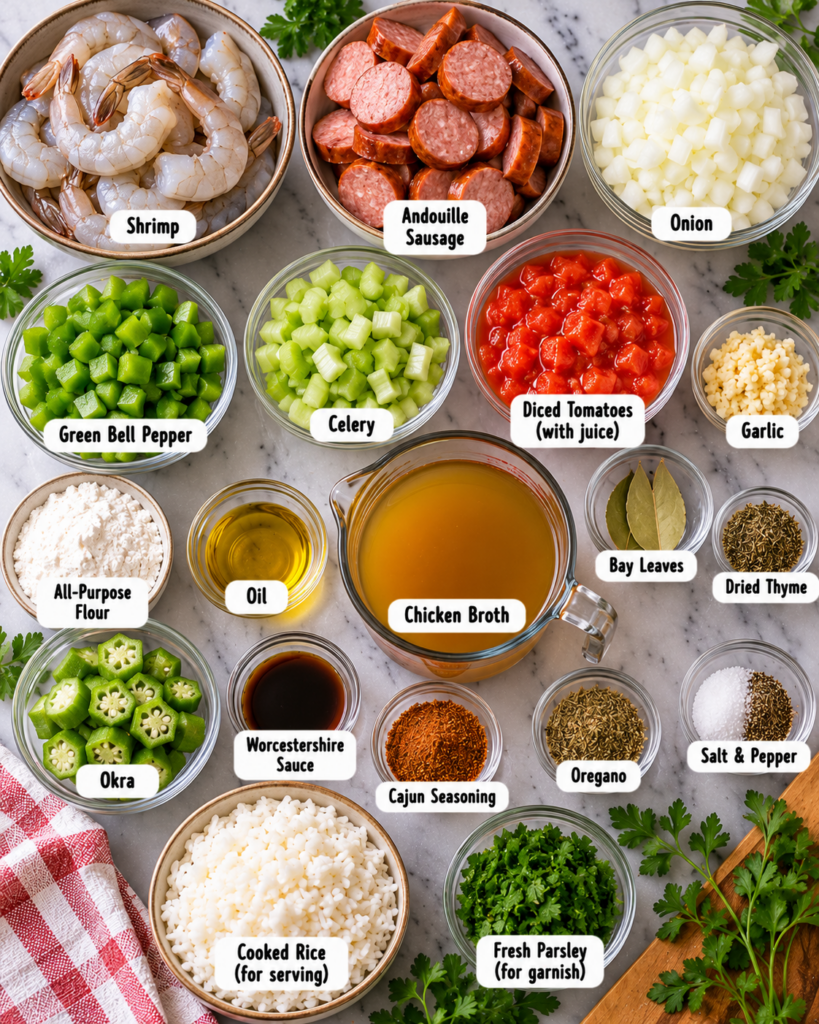
Andouille vs Smoked Sausage: Which Reigns Supreme in Gumbo?
Andouille is a common ingredient in many gumbo recipes from Louisiana. Its smoky, seasoned flavour adds depth and can add a good bit of heat.
Depending on the recipe, you can also use other smoked sausages. They may be less spicy flavoured (milder, sweeter) than andouille.
The fat and seasoning from the sausage permeate the whole pot. A heavily seasoned sausage will add lots of flavour, while a mild sausage can let the roux and vegetables shine through.
Texture is also a factor. Some sausages hold their shape as they cook. Others get softer or release more fat.
Andouille is a natural for a gumbo with a true smoky character. If you want something a little less spicy, you may find a different smoked sausage a little more to your liking.
Use the type your recipe card calls for to achieve the flavour balance you want.
How To Make Dark & Rich Roux From Scratch
Many gumbo recipes are defined, in part, by the presence of a roux. Traditionally, it’s made with flour and fat, and the flavour and colour develop as it cooks.
A darker roux adds a deep, toasted flavour that imparts much of the gumbo’s signature richness. Dark roux, however, generally does not thicken as well as a lighter roux.
Control of temperature is important as flour can burn. A burned roux will have an unpleasant bitter flavour that can taint an entire pot.
Colour alone doesn’t tell the whole story. The smell should develop into a nice toasty character, not a harsh burned smell.
The finished roux should have the flavour and consistency of the recipe. Not all gumbos are the same colour and families have very different traditions.
Hot roux is potentially dangerous and needs careful handling and suitable cookware. Prepare the roux as directed, rather than thinking of the roux as interchangeable between dishes.
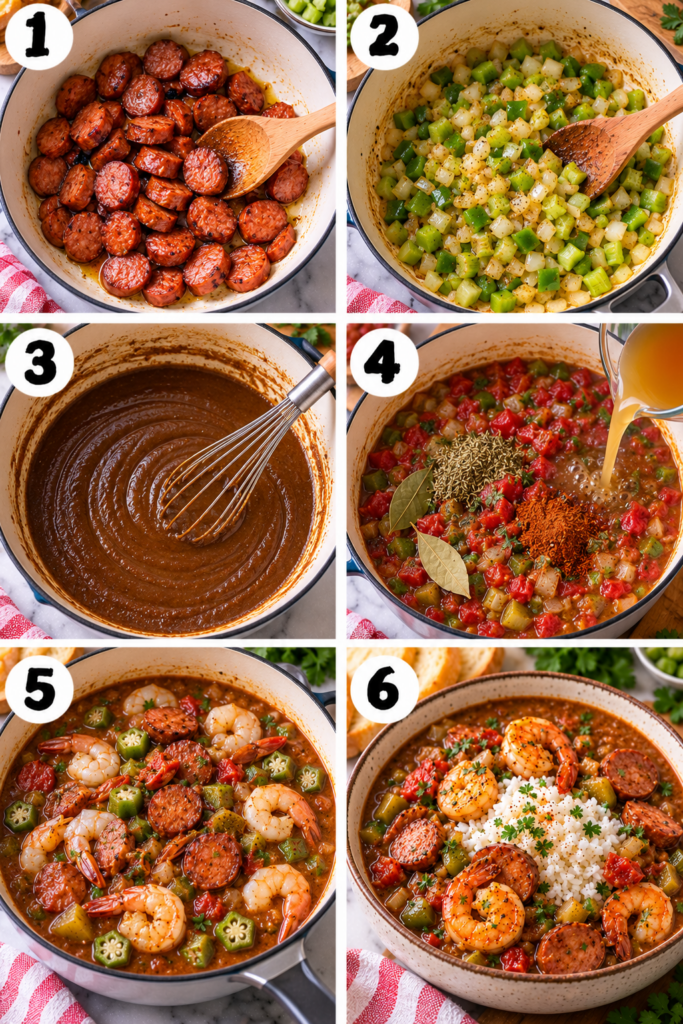
The Holy Trinity (or, Why Celery, Onion and Bell Pepper Matter)
Celery, onion, and bell pepper are often referred to as the holy trinity in Louisiana cuisine. Together, they form a fragrant base for gumbo and many other dishes of the region.
Onion brings the savoury sweetness, celery imparts a signature herbal note. The bell pepper brings another layer of flavour that helps complete the mix.
The vegetables work together, not in competition for attention. Their combined aroma is part of what makes gumbo smell so inviting while cooking.
Some recipes for gumbo also include garlic and other seasonings, but the trinity is still a recognisable starting point in many versions.

The vegetables should compliment the roux and proteins. A good gumbo tastes like a whole meal, not broth with recognisable pieces of meat and vegetables.
Fresh or Frozen Shrimp – Which is Better?
“Fresh” shrimp can be excellent when they are very fresh and handled properly. Their mild sweetness makes them a good match for smoky sausage and a boldly flavoured gumbo base.
Frozen shrimp are convenient as well. Indeed, when fresh shrimp is not readily available, properly frozen shrimp can offer a consistent product.
The size affects the eating experience. Larger shrimp make more substantial bites, and smaller shrimp spread more evenly through the gumbo.
Shrimp are delicate and if overcooked will get tough. That’s especially important in a dish where the roux and vegetables could possibly require much more cooking time than the seafood.
Food safety is also important. Shrimp should be cooked until the flesh is firm and pearly or opaque. Seafood should be handled according to safe storage and cooking guidance.
Sometimes fresh, frozen, peeled and shell-on shrimp need different preparation, so choose what your recipe card calls for.
Can You Make Shrimp and Sausage Gumbo Ahead of Time and Freeze It?
Gumbo is a good meal to prepare ahead of time, as the broth and seasonings tend to develop a more integrated flavour during storage. But shrimp need a little extra love.
Cooked shrimp can become firm or rubbery if re-heated repeatedly. That means the texture of a shrimp-based gumbo might not be precisely the same after refrigeration or freezing.
The broth based on a roux could also change in consistency as it cools. If your gumbo is a little thin when hot, it may thicken up in the fridge.
Leftovers should be refrigerated in shallow containers and used within three to four days. Reheat to an internal temperature of 165°F (74°C) or higher.
You can freeze many gumbo recipes, although the seafood may change texture when thawed. Store as directed in the recipe for best results.
Shrimp and Sausage Gumbo Frequently Asked Questions
Is Shrimp and Sausage Gumbo Cajun or Creole?
Gumbo is a common dish in both Cajun and Creole food. Ingredients and methods depend on region, household to household, so one recipe doesn’t necessarily describe every version.
Is okra important in gumbo?
Not every gumbo has okra. Some recipes call for a roux for body, others okra or filé powder. The choice depends on the recipe and on regional or family tradition.
Why does my gumbo taste bitter?
Bitterness can be caused by a burned roux. Overcooking spices or other ingredients can also play a role. The dark roux should taste dark toasted, not burned.
Can I Use Cooked Shrimp?
Some recipes will work with precooked shrimp, but they may lose some texture if they are cooked too long. A recipe developed for raw shrimp may require different handling.
What To Serve With Shrimp and Sausage Gumbo
Steamed white rice: A classic accompaniment. Some Louisiana traditions also serve gumbo with potato salad, or other simple sides, depending on family preference.
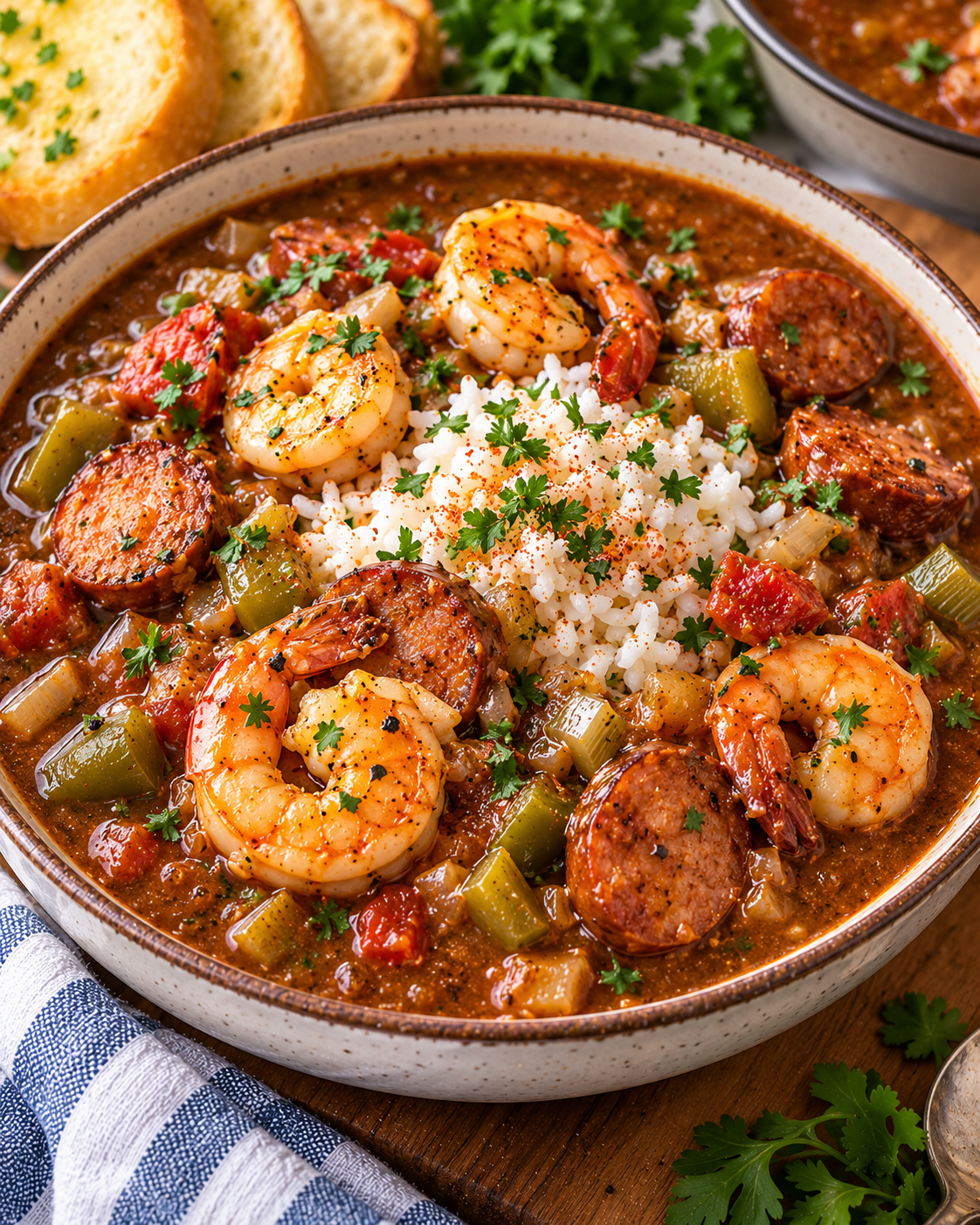
Shrimp and Sausage Gumbo
Ingredients
Method
- In a large pot, heat the vegetable oil over medium heat.
- Slowly whisk in the flour, stirring constantly until the mixture becomes a dark brown color, about 20-30 minutes.
- Remove from heat if it starts to smell burned.
- Add the chopped onions, bell peppers, and celery to the pot and cook until softened.
- Stir in the garlic and cook for another minute.
- Slowly pour in the chicken stock while stirring to combine.
- Add the cajun seasoning, salt, black pepper, and cayenne pepper.
- Bring to a simmer and let cook for 30 minutes.
- Add the sliced sausage to the pot and cook for an additional 10 minutes.
- Stir in the shrimp and cook until they turn pink, about 5 minutes.
- Serve the gumbo hot over steamed white rice or with potato salad.