
German chocolate cake has a way of standing out on a dessert table. It doesn’t rely on thick swirls of chocolate buttercream or a glossy ganache finish. Instead, its signature coconut pecan frosting sits between tender chocolate cake layers, creating a dessert with a texture and flavor all its own.
If you grew up seeing this cake at birthdays, Sunday dinners, or holiday gatherings, the combination probably feels familiar. The chocolate cake is generally milder than a dark chocolate fudge cake, while the frosting brings a rich, buttery sweetness with plenty of texture from the coconut and pecans.
Making a homemade German chocolate cake is especially rewarding because the different parts of the dessert complement each other. The cake needs to be tender enough to balance the chewy, nutty frosting, and the frosting needs enough body to sit between the layers without sliding off.
What Makes German Chocolate Cake Special?
The defining feature of German chocolate cake is its coconut pecan frosting. Unlike a smooth buttercream, this frosting has a textured consistency, with coconut and nuts giving every bite a little chew and crunch.
The chocolate cake itself also has a distinctive character. Traditional versions use German’s Sweet Chocolate, which produces a sweeter, milder chocolate flavor than many modern dark chocolate cakes. Not every homemade version uses that exact chocolate, but the classic flavor profile is generally less intense than a deeply fudgy chocolate cake.
That balance is important. The frosting is already rich and sweet, so an extremely heavy cake can make the finished dessert feel overwhelming. Tender layers give the frosting room to stand out.
German chocolate cake is also recognizable for its rustic appearance. It often has frosting between the layers and across the top, with some versions leaving the sides exposed. That presentation makes the coconut pecan mixture the star.
Why You’ll Love This Homemade Cake
A homemade German chocolate cake feels like a special-occasion dessert without needing elaborate decorating skills. The frosting’s natural texture creates an attractive finish, so perfectly smooth sides aren’t necessary.
It’s also a good choice for anyone who enjoys desserts with contrasting textures. The cake is soft, while the coconut and pecans give the frosting a more substantial bite.
The flavor is different from an ordinary chocolate layer cake. Instead of relying entirely on cocoa intensity, it combines chocolate, caramel-like sweetness, coconut, and toasted nut notes.
Another advantage is that the cake can be served simply. It doesn’t need ice cream, sauce, or a complicated garnish to feel complete. A modest slice already offers plenty of flavor.
Understanding German Chocolate Cake Layers
The cake layers are the foundation of the dessert, and their texture matters. A good German chocolate cake should be moist and tender, with enough structure to support the frosting.
A cake that’s too dry can make the coconut pecan frosting feel heavy by comparison. One that’s overly delicate may break when layered or sliced.
Even layers also help with presentation. When the cake is assembled, the frosting should sit comfortably between the layers rather than collecting unevenly on one side.
The chocolate flavor should be noticeable without completely dominating the filling. That’s part of what distinguishes this cake from a dark chocolate layer cake with a generic nut topping.
If you’re adapting an existing recipe, remember that cake flour, all-purpose flour, different chocolates, and various dairy products can change the crumb. Those substitutions aren’t always interchangeable.
What Makes Coconut Pecan Frosting Different?
Coconut pecan frosting has a character closer to a rich, textured filling than a fluffy buttercream. Its sweetness is balanced by the nuttiness of pecans and the chew of coconut.
The consistency is especially important. A frosting that’s too thin can slide between the layers, while one that’s excessively thick may be difficult to spread without disturbing the cake.
The pecans contribute more than crunch. Their buttery, slightly earthy flavor keeps the frosting from tasting like plain sugar, especially when paired with the chocolate cake.
Coconut brings its own texture and sweetness. The finished frosting should feel cohesive, with the coconut and pecans distributed throughout rather than separating from the creamy base.
Because this frosting is quite distinctive, replacing it with ordinary chocolate buttercream changes the dessert substantially. The coconut pecan topping is what makes German chocolate cake recognizable.
Tips for a Moist German Chocolate Cake
Moist cake depends on ingredient balance, baking conditions, and proper handling after baking. Even a good recipe can produce dry layers when they’re exposed to too much heat.
The size and material of the cake pans also affect baking. A thin metal pan may behave differently from a heavier one, and the depth of the batter changes how heat reaches the center.
The cake should be fully baked without becoming unnecessarily firm. Once the layers cool, they need enough structure to support the frosting without crumbling.
How to Avoid Dry Cake Layers
Overbaking is a common cause of dry chocolate cake. The edges may become firm before the center is ready, particularly when the oven temperature is uneven.

Ingredient substitutions can also affect moisture. Changing the type of chocolate or dairy product may alter the crumb even when the recipe otherwise appears unchanged.
Follow the doneness cues in the recipe card rather than relying only on the clock.
How to Get the Right Frosting Consistency
Coconut pecan frosting changes as it cools, and its finished consistency may differ from how it looks while warm. A frosting that seems loose initially may become thicker as it settles.
The goal is a spreadable mixture that holds its position between the cake layers. It should remain creamy enough to enjoy but not so fluid that the cake becomes unstable.
Cake Decorating and Serving Ideas
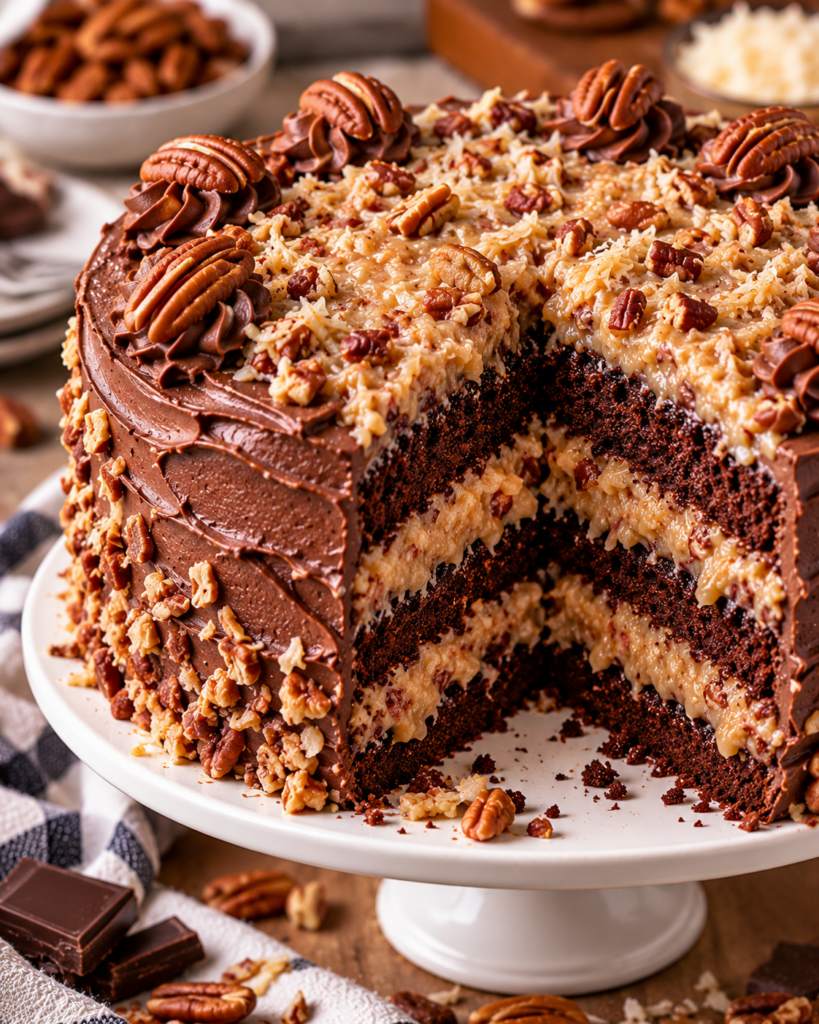
German chocolate cake doesn’t need a perfectly smooth exterior. In fact, the textured coconut pecan frosting is part of its charm, and leaving the sides of the cake visible can make the layers look especially inviting.
For a more traditional presentation, allow the frosting to be the main decoration. The pecans and coconut already provide visual interest without extra piping.
If you prefer a more polished finish, a simple border or restrained chocolate accent can work, provided it doesn’t overwhelm the cake’s signature topping.
Serve slices at a temperature that allows the frosting to taste creamy rather than excessively firm. The appropriate serving temperature depends on the frosting’s ingredients and storage requirements.
A cup of coffee is a lovely accompaniment because its slight bitterness contrasts with the sweetness of the cake. Smaller slices are often enough for such a rich dessert.
Make-Ahead and Storage Tips
German chocolate cake can be a useful make-ahead dessert, but the best storage method depends on the frosting and filling. Coconut pecan frosting often contains perishable ingredients, so refrigeration may be necessary.
Keep the cake covered to prevent the layers from drying out and the frosting from absorbing refrigerator odors. The texture of the frosting may become firmer when chilled.
Some cake layers freeze well before assembly, although the finished cake may behave differently. Coconut and nuts can change texture after freezing and thawing, particularly when combined with a moist frosting.
For the best results, follow the recipe’s storage guidance and consider whether you’re storing plain cake layers or a fully assembled dessert.
Frequently Asked Questions About German Chocolate Cake
Is German Chocolate Cake Actually German?
No. Despite its name, German chocolate cake is an American dessert. Its name comes from Samuel German, who developed a type of sweet baking chocolate for Baker’s Chocolate in the nineteenth century.
What Is the Difference Between German Chocolate Cake and Chocolate Cake?
German chocolate cake is known for its coconut pecan frosting and traditionally milder chocolate layers. A standard chocolate cake can use many different frostings and may have a much stronger cocoa flavor.
Can You Make the Frosting Ahead?
Many coconut pecan frosting recipes can be prepared in advance, but the texture may thicken during refrigeration. Follow the recipe’s storage instructions and use the consistency intended for assembly.
Can You Freeze German Chocolate Cake?
Cake layers can often be frozen successfully, while a fully frosted cake may change texture. The coconut pecan frosting can become firmer or behave differently after thawing.
Final Thoughts
Homemade German chocolate cake is memorable because of the way its flavors and textures come together. Tender chocolate layers, buttery pecans, and sweet coconut frosting create something quite different from an ordinary chocolate cake.
The frosting deserves as much attention as the cake itself. When both have the right texture, the finished dessert has the familiar, comforting character that makes German chocolate cake a favorite for celebrations.
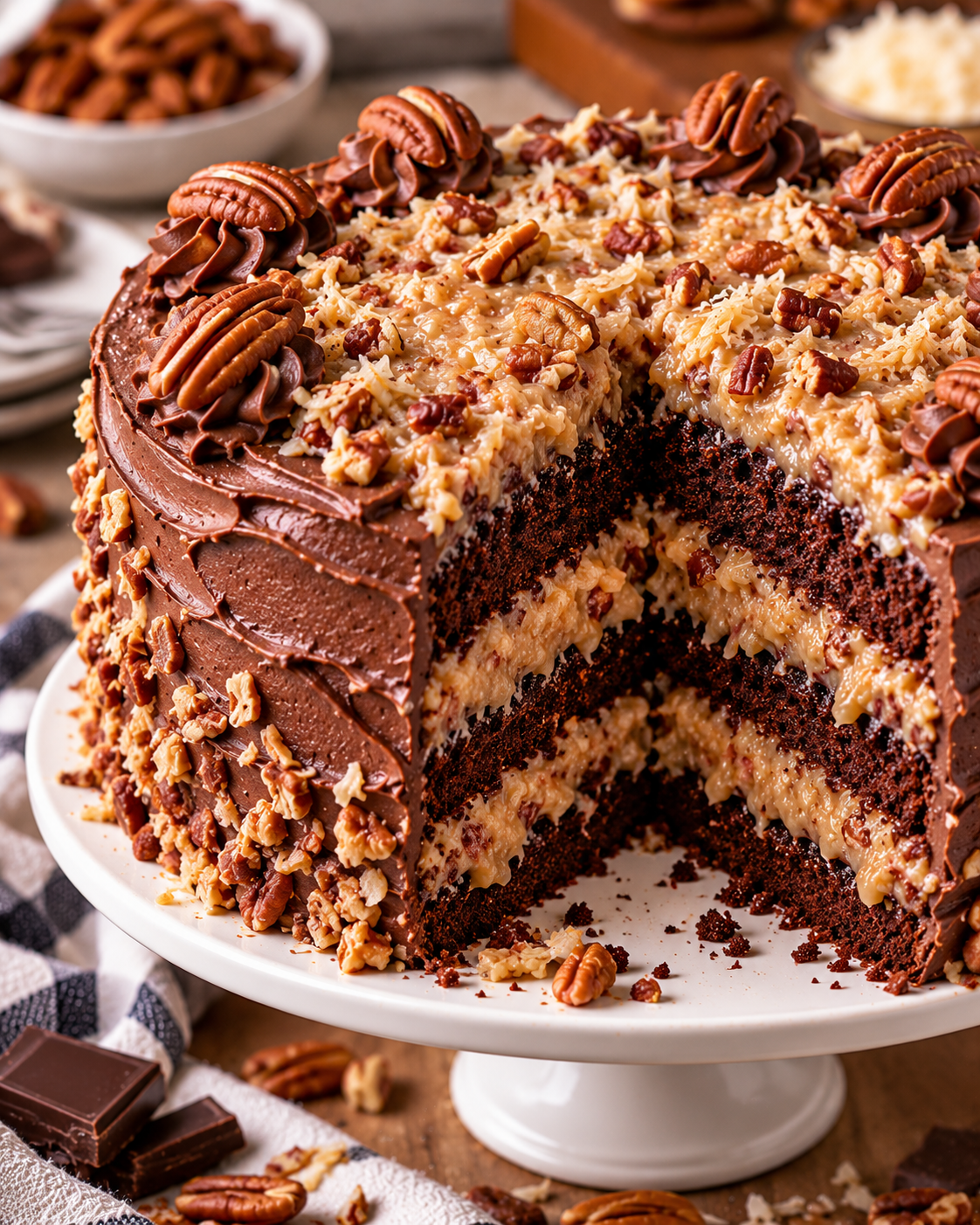
German Chocolate Cake
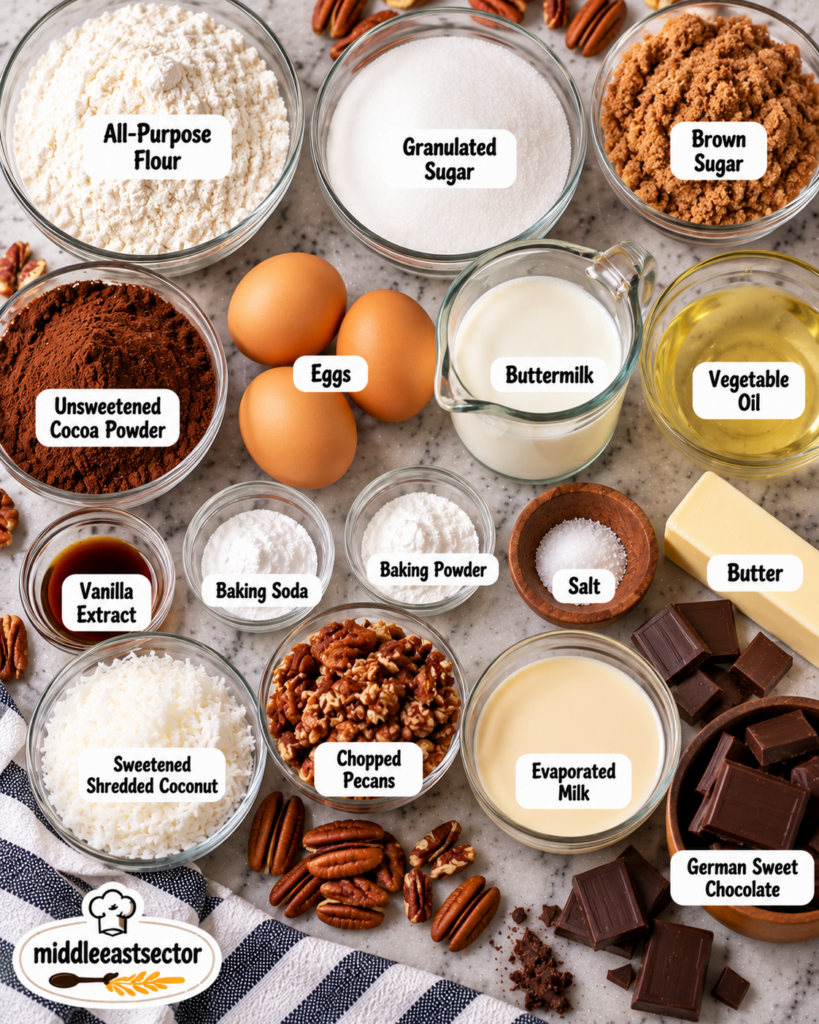
Ingredients
Method
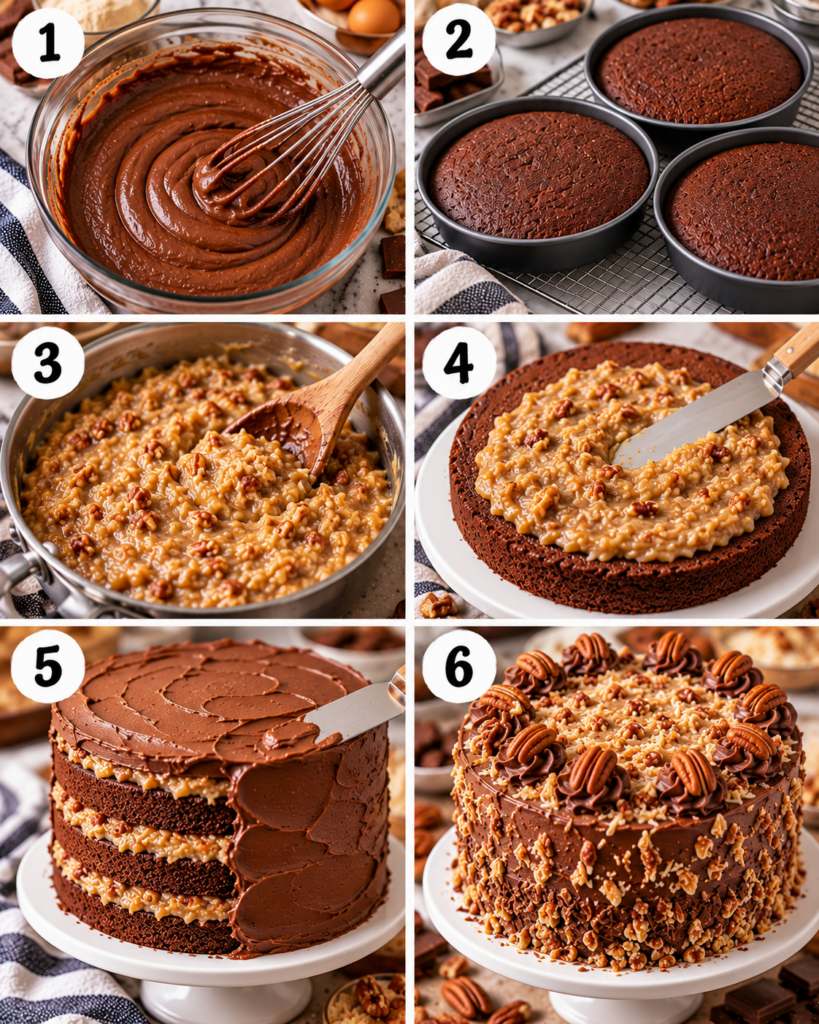
- Preheat your oven to 350°F (175°C) and grease and flour two 9-inch round cake pans.
- In a large bowl, combine the flour, sugar, cocoa powder, baking powder, baking soda, and salt.
- Add milk, vegetable oil, eggs, and vanilla extract, and mix until well combined.
- Finally, stir in the boiling water until fully incorporated. The batter will be thin.
- Divide the batter evenly between the prepared pans.
- Bake for 30-35 minutes or until a toothpick inserted into the center comes out clean.
- Let the cakes cool in pans for 10 minutes, then remove from pans and cool completely on wire racks.
- In a saucepan, combine the sugar, evaporated milk, butter, and egg yolks.
- Cook over medium heat, stirring constantly until the mixture thickens (about 10-12 minutes).
- Remove from heat and stir in the vanilla, coconut, and pecans.
- Allow frosting to cool to room temperature before using.
- Place one cake layer on a serving plate, and spread a generous amount of frosting on top.
- Top with the second cake layer and frost the top and sides with the remaining frosting.
- Allow the cake to set for a while before slicing.