

You don’t have to have toast, pancakes or a bowl of cereal for breakfast. Bell peppers are a surprisingly good base for a savoury morning meal, especially with eggs. They are colourful, of course, and sweet naturally and big enough to give breakfast a little more character.
These breakfast stuffed peppers with eggs are especially appealing when you want a change from regular scrambled eggs. The pepper gives a subtle vegetable base, and the egg adds a familiar richness that makes the dish satisfying.
The problem is, eggs and peppers don’t cook at the same speed. Bell peppers need enough heat to soften, and eggs can become rubbery if overcooked. A successful version balances the two, so that neither feels like an afterthought.
stuffed bell peppers a great breakfast idea
Bell peppers add colour and freshness to the breakfast table. Red, yellow and orange peppers tend to have a sweeter character than many green peppers, making them especially nice with savoury eggs.
They also make for a natural serving vessel. The pepper is not mixed into the omelette with the vegetables, but is part of the presentation, giving each serving a recognisable shape.
The other plus is versatility. Breakfast stuffed peppers can be part of a more relaxed weekend brunch or a more practical meal-prep routine, depending on the recipe.
The combination is satisfying without the need for a heavy pastry or bread base. The eggs are a source of protein and the pepper adds vegetable flavour and texture.
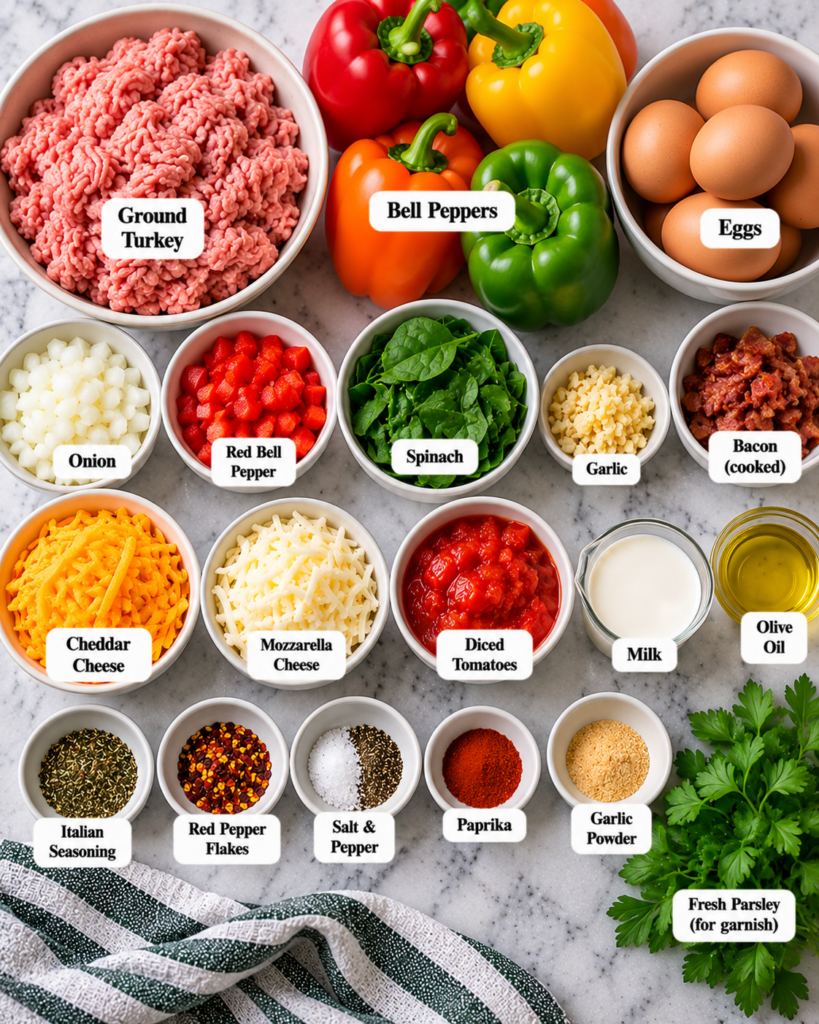
How to Pick the Best Bell Peppers
When making stuffed peppers, it’s usually easier to work with large, firm bell peppers than small ones that are oddly shaped. The shape will affect their ability to hold the filling, as well as how they look when they are served.
Taste changes colour. Green bell peppers tend to have a more grassy, slightly bitter taste, and red peppers are usually sweeter. Yellow and orange peppers are somewhere in between.
Freshness counts, too. “If the skin is firm and there are no soft spots, it’s more likely to hold a good texture when you cook it.
The wall thickness of peppers may vary. Even if they are similar in size, a thicker-walled pepper may take longer to soften than a thinner one.
Harvest peppers of a similar size for a more uniform outcome. It also looks more balanced on the plate when breakfast is done.
Tips # Tender Peppers and Perfectly Cooked Eggs
The hardest part about egg-stuffed peppers is the difference between the two ingredients. The bell peppers become sweeter and softer as they cook, and the eggs go from liquid to set and then increasingly firm.
A pepper that is still a little crisp can be awkward to eat with a fork. Overcooked eggs, in contrast, can be dry or rubbery.
The exact result depends on the size of the peppers and the cooking of the recipe. A small pepper with thin walls won’t behave exactly like a big thick-walled one.
Egg doneness is also important for safety reasons. Generally, egg dishes should be cooked to 160°F (71°C); and recipes with other ingredients may have other relevant safety considerations.
The best finished breakfast has peppers that are soft enough to eat and eggs that have reached the intended safe doneness without becoming unpleasantly firm.
How to Prevent Watery Breakfast Peppers
Bell peppers contain a lot of water and when they’re cooked they can release some of that water. The pepper shape can be such that a deep cavity is created, and that liquid can pool there.
Moisture can be added from eggs and other fillings. Eggs might not set evenly if the ingredient has a high water content.
The watery end product pepper can be hard to serve neatly. The liquid can also water out the seasoning, and the texture becomes less appealing.
The method of the recipe should consider the moisture of the pepper and the other ingredients used. Extra vegetables or a different filling can throw off that balance.
The idea is to have a soft pepper with a cohesive egg filling, not one swimming in excess liquid.
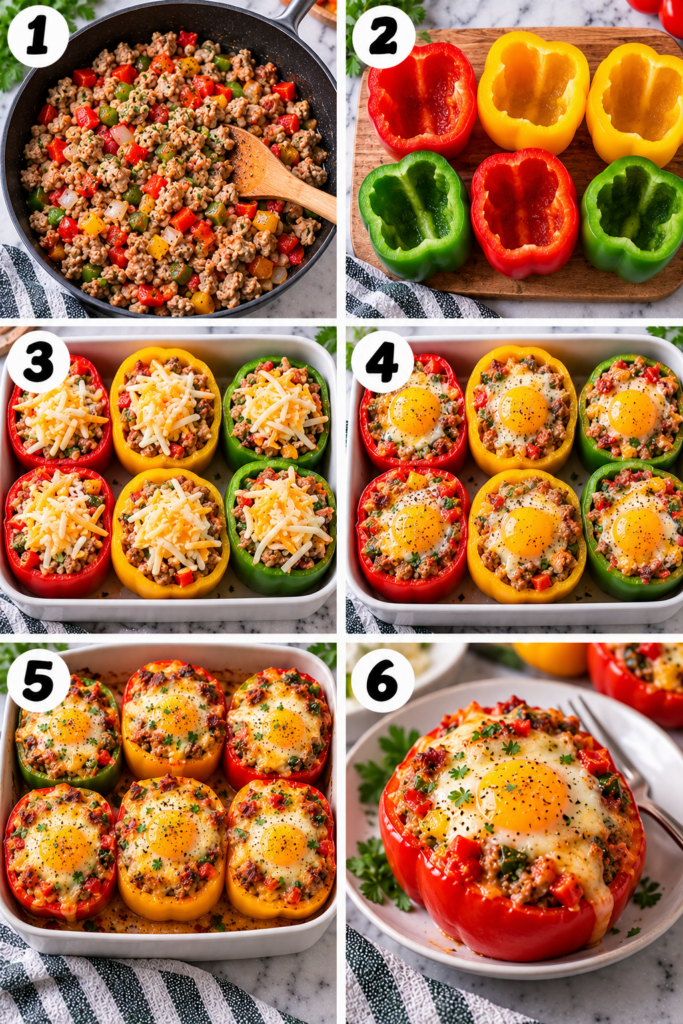
Breakfast Stuffed Pepper Options
Stuffed peppers for breakfast can taste a lot of different ways. One that’s cheese-forward could seem richer, while one that’s vegetable-forward could taste lighter, and fresher.
Some variations have meat, but not all egg stuffed pepper recipes have it. Bacon, sausage and other breakfast meats alter the saltiness and fat content, so add them only when the recipe calls for it.
You can build freshness with herbs. A more heavily seasoned version may seem appropriate for brunch, while a mild version can be easier to pair with other breakfast foods.

You can also get an easy variation by using different coloured peppers, without changing the basic idea. Red, yellow and orange peppers mixed together make a cheerful platter.
The best variation should get the balance of tender pepper and cooked egg right.
What to Eat with Stuffed Peppers for Breakfast
Toast is a familiar accompaniment, providing a contrasting texture. Crispy bread is a good match for soft pepper and eggs.
The meal can be lightened up with fresh fruit, particularly if the stuffed peppers are rich or cheesy. Fresh berries, citrus or melon offer a refreshing contrast.
Roasted breakfast potatoes are another good option for a heartier brunch. They have a savoury flavour that goes with the peppers without a fancy sauce.
The peppers may be satisfying on their own for a lighter breakfast. How filling the meal feels will depend on the amount of extra fillings and the size of the portion.
Tips for Make-Ahead and Meal Prep
Stuffed pepper breakfast is great for meal prepping, but eggs will change texture when refrigerated and reheated. Freshly cooked egg filling may become firmer when reheated.
Peppers can also release moisture during storage which can affect the finished texture. This is especially evident in dishes with other vegetables.
Refrigerate cooked egg dishes at 40°F (4°C) or lower. Leftovers are generally best used within three to four days if stored properly.
If you’re making several breakfasts ahead of time, follow the meal-prep directions in the recipe instead of assuming each version will stay fresh for a few days.
Storing and Reheating
Place leftover stuffed peppers in covered containers. Because they contain cooked eggs, treat them like perishable prepared food.
Reheating can firm up the eggs, particularly if the portions are heated unevenly. Also, the peppers could get softer as they heat up.
Reheat leftovers until steaming hot to 165°F (74°C). Cooked egg dishes should not be kept at room temperature for long periods of time.
You can freeze them but cooked eggs and peppers can be a different texture when thawed. When texture is a concern, make-ahead refrigerated methods are often more predictable.
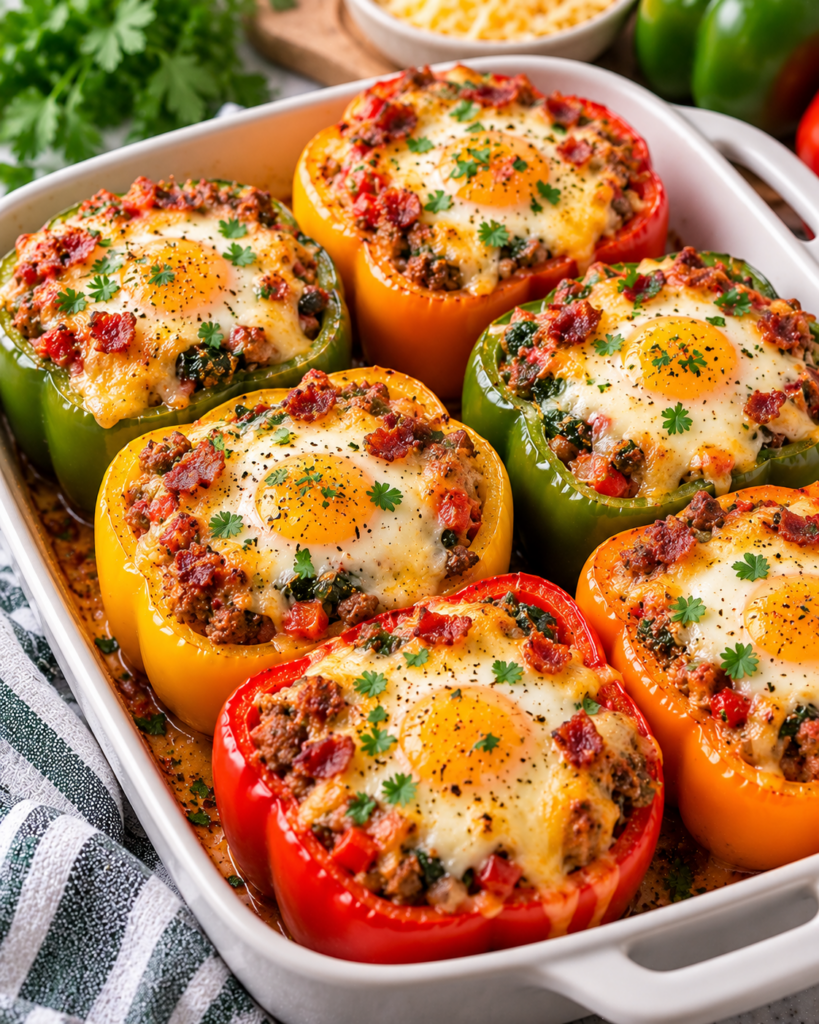
Breakfast Stuffed Peppers FAQs
Can You Make Stuffed Peppers Ahead Of Time?
Yes, some versions are good for making ahead. However, cooked eggs may become firmer after reheating and the peppers may release additional moisture during storage.
Can I Use Bell Peppers of Different Colours?
Yes, of course. Suitable recipes can be made using green, red, yellow or orange bell peppers. They differ in sweetness and wall thickness so the final flavour and texture may vary.
Is it Possible to Freeze Egg-Stuffed Peppers?
Maybe you can freeze it but cooked eggs may become rubbery or watery after thawing. Bell peppers also can lose their firmness so the end product may be different than fresh made portions.
How to avoid overcooking your eggs?
The method needs to consider the thickness of the pepper and the egg filling. Eggs should reach a safe temperature without extra cooking, which can make them dry or rubbery.
Closing Remarks
Breakfast Stuffed Peppers with Eggs make a colourful change to your normal egg breakfast. They use familiar ingredients in a presentation that is cheerful and satisfying.
The trick is to get both parts right – tender bell peppers and properly cooked eggs. If the textures play well together, it makes a lovely breakfast or brunch option.

Breakfast Stuffed Peppers with Eggs
Ingredients
Method
- Preheat your oven to 375°F (190°C).
- Slice the tops off the bell peppers and remove the seeds.
- In a mixing bowl, whisk together the eggs, adding salt, pepper, and any desired vegetables.
- If using cheese, mix it into the egg mixture or keep it aside for topping.
- Place the bell peppers upright in a baking dish.
- Fill each pepper with the egg mixture, leaving some space for expansion.
- Top with additional cheese if desired.
- Cover the baking dish with foil and bake for 25-30 minutes.
- Remove the foil for the last 5-10 minutes to brown the tops if desired.
- Carefully remove from the oven and let cool slightly before serving.
- Enjoy your stuffed peppers warm, optionally with toast and fruit.