

Buttermilk Chess Pie is the kind of dessert I make when I want something that feels homey but still gets a little gasp when you slice into it. You know those days when you want pie, but you do not want to fuss with peeling fruit, thickening fillings, or babysitting a complicated custard? This is that pie. It is sweet, tangy, buttery, and the top bakes up with that thin crackly layer that makes you want to “just taste” a sliver before dinner. If you have buttermilk hanging out in the fridge after pancakes, this is your sign to use it up. 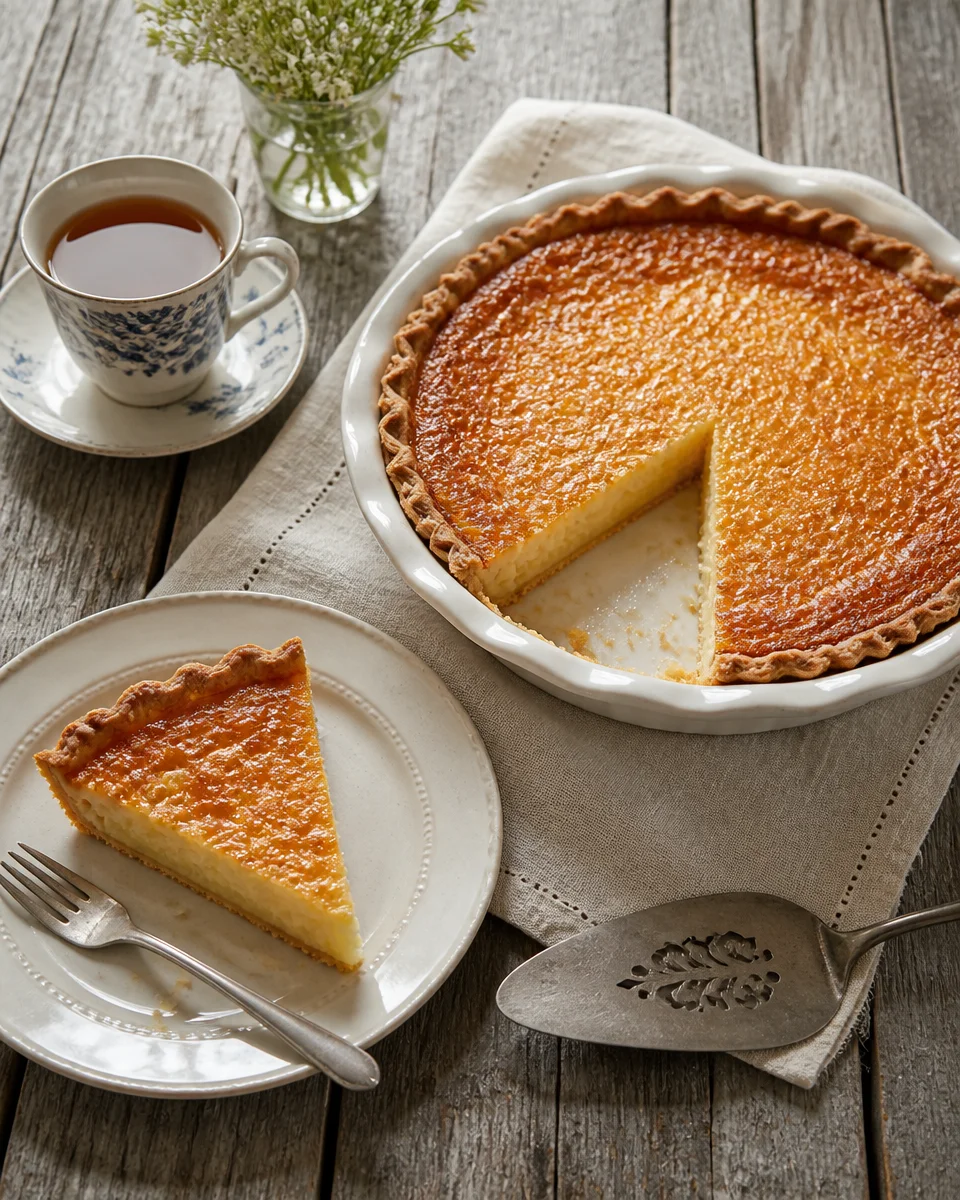
Historical Background of Buttermilk Chess Pie
Chess pie has deep roots in the American South, and it has always felt like a “make do” dessert in the best way. The classic idea is simple: pantry ingredients, a basic pie crust, and a filling that bakes into a soft set custard. Nobody needed fancy tools or hard to find items, and that is probably why it stuck around for so long.
The word “chess” has a few theories behind it, but most home bakers I know do not stress about the name. They care that it is easy, reliable, and tastes like something your aunt would bring to a potluck in a foil pie pan. The buttermilk version is especially loved because it adds a gentle tang that balances the sugar.
If you are into the whole chess pie family tree, you might also like this one for a richer chocolate spin: Southern Chocolate Chess Pie. It is a fun comparison because the method is similar, but the vibe is totally different.
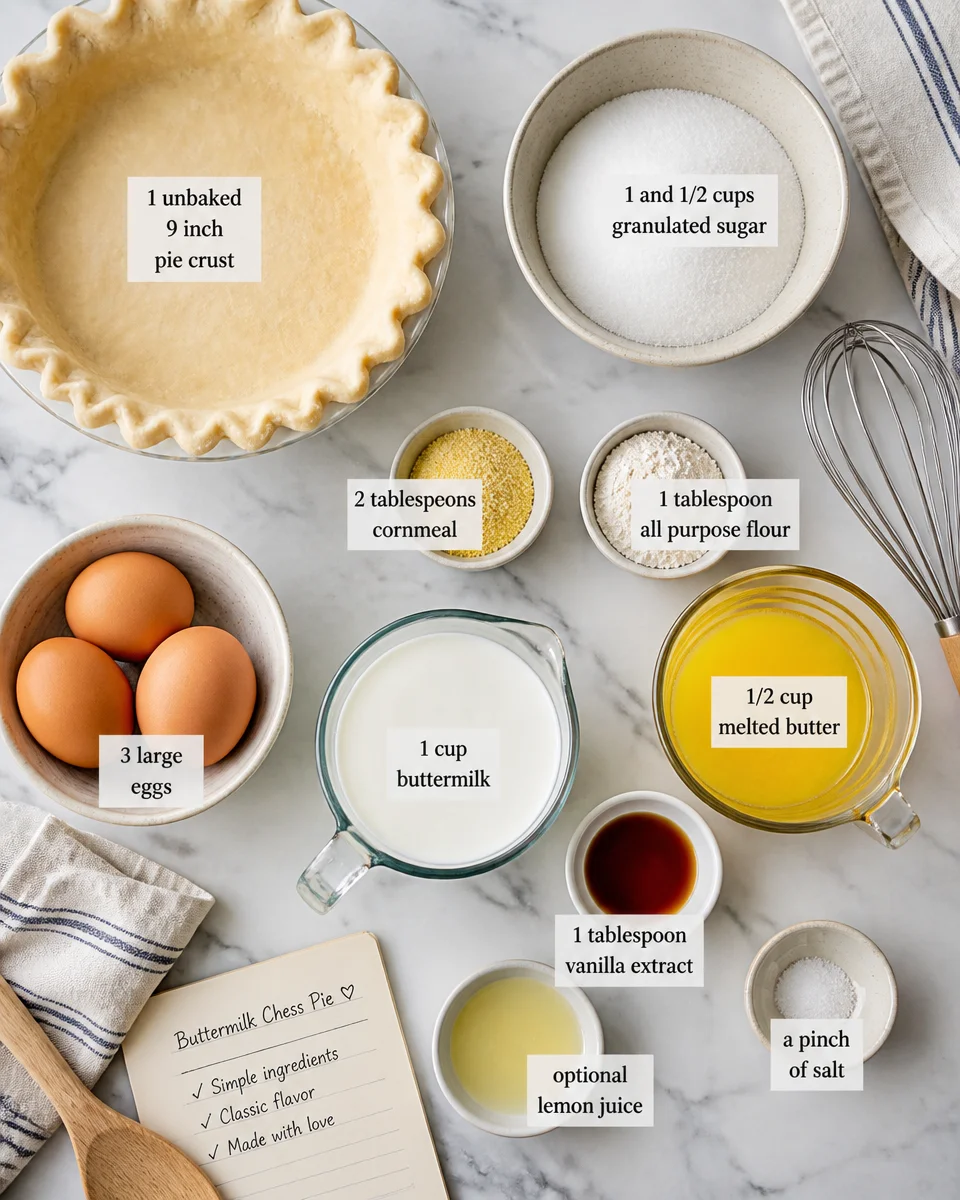
Key Ingredients and Their Roles in the Recipe
This pie is not trying to be complicated, so each ingredient has a clear job. When people tell me their chess pie came out runny, gritty, or overly eggy, it is usually because one of these pieces got rushed. Here is what matters and why.
- Buttermilk: The star. It brings tang and keeps the filling from tasting flat sweet.
- Eggs: They set the pie. Think of them as the “structure” that turns the filling into a sliceable custard.
- Sugar: This is a sweet pie, no pretending. Sugar also helps that thin shiny top form.
- Butter: Adds richness and makes the texture feel silky instead of bouncy.
- Cornmeal (just a little): Helps with texture and gives the pie that subtle, classic chess pie bite. Not gritty, just pleasantly sturdy.
- Vanilla: Rounds out the flavor so it tastes warm and bakery like.
- Vinegar or lemon juice (optional in some versions): A tiny splash can brighten the filling. Buttermilk already does this, so I keep it minimal.
- Pie crust: Store bought is totally fine. Homemade is great too. The filling is the main event.
One quick ingredient note: if your buttermilk is very thick, that is fine. If it is watery, also fine. Just make sure it smells fresh and tangy, not funky.
And if you are in a pie mood and want a totally different kind of cozy, this little dessert is a fun one to read about later: Apple Pie Filling Coffee Cake. Not a pie, but it scratches the same comfort food itch.
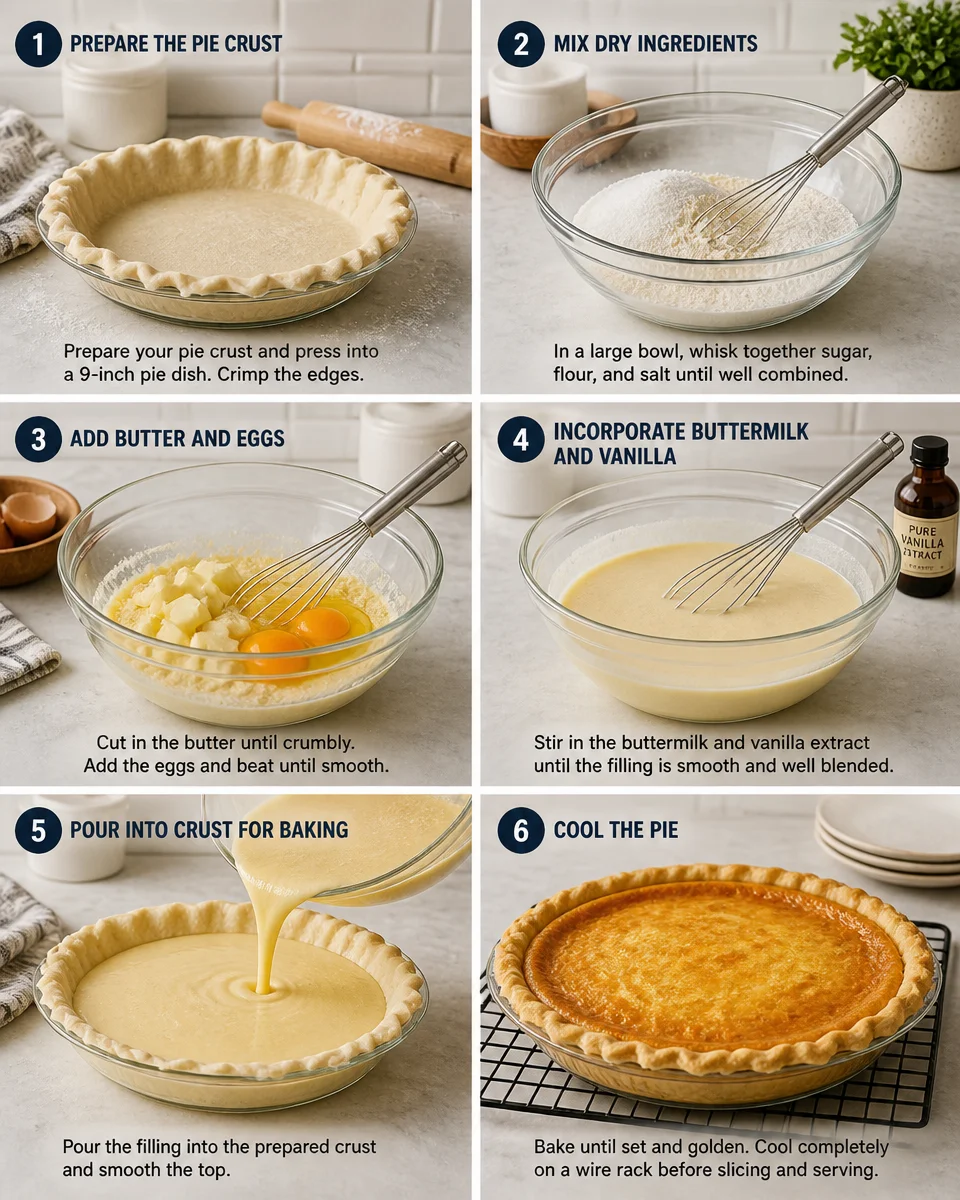
Step-by-Step Instructions for Making Buttermilk Chess Pie
I make Buttermilk Chess Pie when I want a dessert that feels old school, but I do not want to spend all afternoon in the kitchen. It is basically stir, pour, bake, cool. The hardest part is waiting long enough to slice it cleanly.
What you will need
- 1 unbaked 9 inch pie crust
- 1 and 1/2 cups granulated sugar
- 2 tablespoons cornmeal
- 1 tablespoon all purpose flour
- 1/2 cup melted butter, cooled a bit
- 3 large eggs
- 1 cup buttermilk
- 1 tablespoon vanilla extract
- Pinch of salt
- Optional: 1 teaspoon lemon juice or white vinegar for extra tang
How I make it
1) Preheat and prep. Heat your oven to 350 F. Place your pie crust into a 9 inch pie dish and crimp the edge. Set it on a baking sheet so it is easy to move in and out of the oven without spilling.
2) Mix the dry stuff first. In a large bowl, whisk sugar, cornmeal, flour, and salt. This helps prevent little cornmeal lumps later.
3) Add butter and eggs. Stir in the melted butter until it looks like wet sand. Then add the eggs one at a time, mixing after each. Do not go wild with whipping, just mix until smooth.
4) Add buttermilk and vanilla. Pour in the buttermilk and vanilla and stir until everything looks evenly combined. If you want that extra bright note, add the lemon juice or vinegar here.
5) Pour and bake. Pour filling into the unbaked crust. Bake 45 to 55 minutes. You want the edges set and the center to still have a gentle jiggle, like set gelatin. It will finish setting as it cools.
6) Cool, then chill if you can. Cool at room temp for at least 2 hours. For the cleanest slices, refrigerate another hour or two. I know, it is hard to wait. But it is worth it.
Little personal habit: I always do the “tap test” by lightly tapping the pie dish with an oven mitt. If the whole center ripples like soup, it needs more time. If it jiggles like soft custard, it is done.
If you love easy custardy bakes, you might also get a kick out of these cute mini versions: Baby Blueberry Lemon Impossible Pies. Totally different flavor, same easy spirit.
“I tried your Buttermilk Chess Pie exactly as written and it came out perfect. The top was lightly crackly and the filling sliced clean after chilling. My family asked for it again the next weekend.”
Common Variations and Substitutions
The classic is classic for a reason, but I am not precious about it. I have made Buttermilk Chess Pie a few different ways depending on what I had on hand, and it is still a friendly, forgiving recipe.
Easy swaps that work
Buttermilk substitute: If you do not have buttermilk, you can make a quick stand in. Add 1 tablespoon lemon juice or white vinegar to a measuring cup, then fill to 1 cup with milk. Stir and let it sit for 5 to 10 minutes. Is it exactly the same? Not quite. Will it still make a really good pie? Yes.
Butter: Use real butter if you can. Margarine changes the flavor and texture.
Cornmeal: If you hate the idea of cornmeal, reduce it to 1 tablespoon. I would not skip it entirely, but you can make it subtler.
Add ins: A pinch of nutmeg, a little lemon zest, or even a tablespoon of bourbon can be really nice. Keep it light so it still tastes like chess pie.
Crust options: Regular pie crust is traditional. A graham crust is tasty but makes it feel more like a cheesecake pie. Not wrong, just different.
And if you are baking for a crowd that loves chocolate, these minis are a fun side project: Baby Chocolate Impossible Pies. I like having options on the table, especially at holidays.

For something totally different that still has that cozy dessert vibe, I also love this playful layered treat: Apple Pie Cheesecake Trifles. It is great when you want individual servings.
Tips for Perfecting Your Chess Pie
This is the section I wish someone had told me the first time I made it. These small things make a big difference.
Do not overbake it. The number one mistake. Overbaked chess pie can taste eggy and the texture gets dry. Pull it when the center still has a gentle jiggle.
Cool it longer than you think. If you slice while it is warm, it will look loose even if it is baked correctly. Let it set. Patience pays off here.
Mix calmly. You do not need a mixer. Too much air can make the top puff and crack in a dramatic way. A whisk and a bowl is enough.
Use a baking sheet. Not glamorous, but it saves you from accidental spills and helps the crust bake more evenly.
Want a crispier crust? If your oven runs cool or you struggle with soggy crust, place the baking sheet on the lower rack and bake there. You can also brush the crust lightly with egg white before filling.
Once you make this a couple times, you will get a feel for your oven and your preferred level of tang. That is when Buttermilk Chess Pie turns into one of those recipes you can make without thinking, and those are the best recipes to have.
Common Questions
Why is my Buttermilk Chess Pie runny in the middle?
It probably needed a little more bake time, or it was sliced too soon. The center should jiggle softly, not slosh. And it really needs time to cool and set.
Do I have to refrigerate it?
I recommend it after it cools, especially if your kitchen is warm. Chilling also makes cleaner slices.
Can I make it a day ahead?
Yes, it is actually better the next day. The flavor settles and the texture firms up nicely.
Can I freeze Buttermilk Chess Pie?
You can. Wrap it well, freeze, then thaw in the fridge overnight. The texture may be slightly softer, but it still tastes great.
How do I know when it is done?
Edges set, center slightly jiggly, and the top looks glossy and lightly golden. If you see it getting too brown, tent loosely with foil.
A sweet ending and a little push to try it
If you have never baked Buttermilk Chess Pie, I hope you try it at least once, because it is one of those simple recipes that feels like it has always belonged in your kitchen. Keep it easy, let it cool properly, and you will get that creamy tangy slice that disappears fast. If you want to compare methods or read other home cook notes, check out Buttermilk Chess Pie Recipe – Allrecipes and Buttermilk Chess Pie – Food52. Then come back and make it your own, because this is absolutely a “second slice” kind of pie.
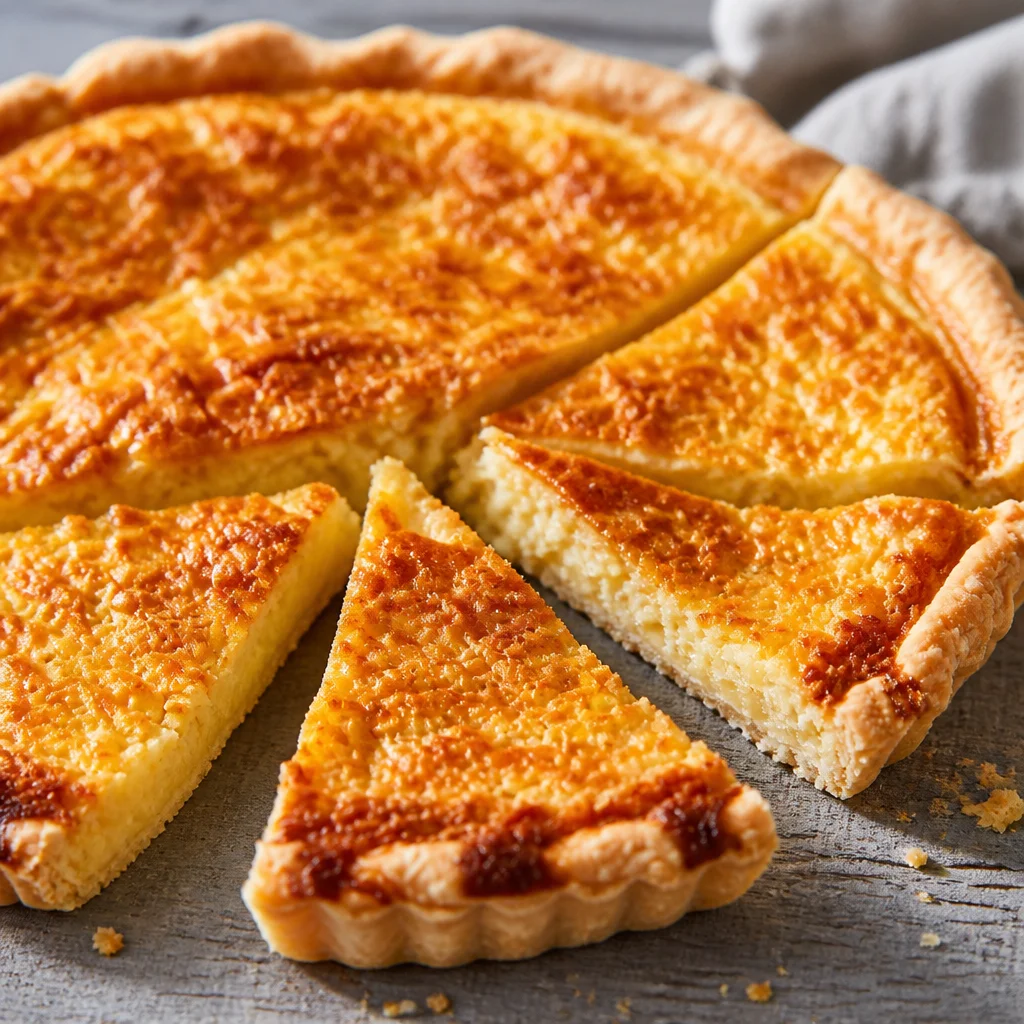
Buttermilk Chess Pie
Ingredients
Method
- Preheat the oven to 350°F and place your pie crust into a 9 inch pie dish, crimping the edge. Set it on a baking sheet.
- In a large bowl, whisk together sugar, cornmeal, flour, and salt, ensuring to avoid lumps.
- Stir in the melted butter until it resembles wet sand. Then add the eggs one at a time, mixing until smooth.
- Pour in the buttermilk and vanilla extract, stirring until fully combined. Add lemon juice or vinegar if desired.
- Pour the filling into the unbaked crust and bake for 45 to 55 minutes, until the edges are set with a gently jiggly center.
- Cool at room temperature for at least 2 hours. For cleaner slices, refrigerate for another hour or two before serving.