
There’s something about peach pie that makes it feel like summer, even when it’s served long after peach season has ended. The sweet fruit, the buttery crust, and the warm aroma are enough to make a homemade pie feel like the highlight of the meal.
A good Southern peach pie recipe should have peaches that taste bright and sweet, a crust that holds together, and a filling that’s juicy without running all over the plate. The fruit should remain the star, with enough seasoning to bring out its natural flavor.
Peach pie can be a little tricky because peaches release plenty of juice as they bake. A beautiful golden crust doesn’t guarantee that the filling underneath has the right consistency. The best pie strikes a balance between tender fruit, flavorful juices, and a crust that stays pleasantly flaky.
What Makes This Pie Southern-Style?
Southern peach pie is closely associated with the region’s long tradition of fruit desserts and summer baking. Peaches are especially celebrated in parts of the South, where fresh fruit is a familiar ingredient in pies, cobblers, and preserves.
There isn’t one single definition of a Southern peach pie. Some versions use a double crust, while others have a lattice top or a different finishing style.
The defining appeal is the peach flavor. A Southern-style pie should taste like ripe fruit, with a sweet, comforting character that doesn’t depend on excessive spice.
It’s the sort of dessert that feels right at a family gathering, church supper, or summer cookout.
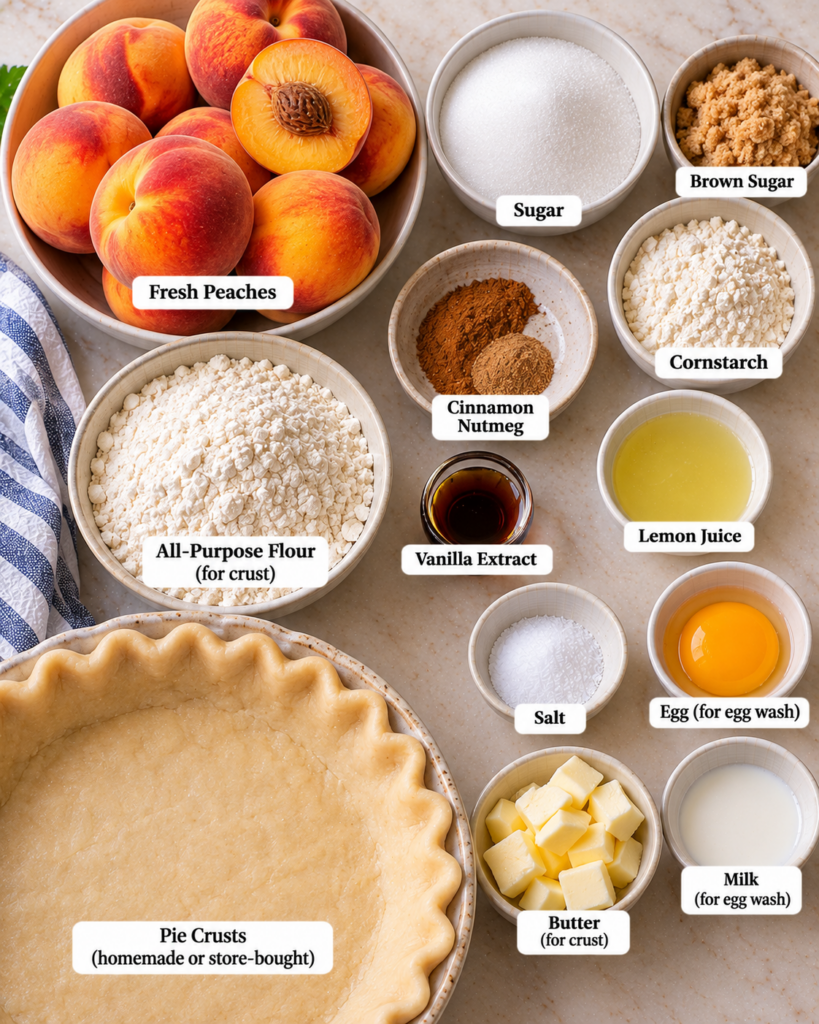
Choosing Ripe Peaches
The quality of the peaches has a major influence on the finished pie. Ripe peaches have a sweet fragrance and give slightly when gently pressed, although their color varies by variety.
Firm, underripe peaches may lack the sweetness and aroma that make peach pie appealing. Very soft peaches can be delicious, but they may release more juice and lose their shape.
The best fruit has enough flavor to remain noticeable after baking. A peach pie shouldn’t taste mainly of sugar and crust.
White and yellow peaches also differ. Yellow peaches generally have a brighter acidity, while white peaches tend to taste milder and sweeter.
Fresh vs. Frozen vs. Canned Peaches
Fresh peaches are a wonderful choice when they’re in season and full of flavor. Their natural sweetness and texture can make a homemade peach pie especially memorable.
Frozen peaches offer convenience when fresh fruit isn’t available. They can work well in many recipes, but freezing changes the fruit’s structure and may affect how much liquid it releases.
Canned peaches are softer and may be packed in juice or syrup. That makes them quite different from fresh fruit in both sweetness and moisture.
The recipe should be designed for the type of peaches used. Switching between fresh, frozen, and canned fruit without accounting for those differences can change the filling considerably.
Tips for Flaky Crust and Juicy Filling
A good peach pie needs a crust that complements the fruit rather than competing with it. The pastry should be tender and flaky enough to provide contrast to the soft filling.
The filling should taste juicy but not watery. Peaches naturally release liquid, and the amount can vary depending on ripeness and variety.
The crust and filling also affect each other. Excess moisture can soften the pastry, while an overly thick filling may hide the fresh peach texture.
A satisfying slice should hold together reasonably well while still feeling like a fruit pie, not a firm gelatin dessert.
Preventing a Soggy Bottom
A soggy bottom crust is one of the most common problems with fruit pies. Moisture from the peaches can collect near the base before the pastry develops its intended texture.
The type of pie dish, crust, and filling all influence the result. A very juicy filling may behave differently from one made with firmer fruit.
The finished bottom crust should feel baked and substantial enough to support the filling. It doesn’t need to be perfectly crisp, but it shouldn’t taste raw or gummy.
Avoiding Runny Filling
Runny peach pie filling can make serving difficult. The slices may collapse, leaving fruit and juice spreading across the plate.
Peaches vary in moisture content, so the same recipe may behave slightly differently with different fruit. The thickening ingredients in the recipe are intended to account for that natural juice.
Cooling also matters because many fruit fillings continue to set as they lose heat. A pie that’s cut while very hot may appear much runnier than the same pie after it has cooled.

The goal is a juicy filling that still holds the fruit together in a recognizable slice.
How to Recognize Doneness
A golden crust is appealing, but color alone doesn’t tell the whole story. The filling needs to reach the consistency intended by the recipe, and the bottom pastry should be properly baked.
A pie can look beautiful on top while the filling remains overly loose underneath. The baking dish and fruit moisture both influence the result.
The best finished pie has a well-baked crust and tender peaches surrounded by a filling that isn’t excessively watery.
Serving Ideas and Variations
Warm peach pie with vanilla ice cream is a classic combination. The cold, creamy ice cream contrasts with the sweet fruit and flaky pastry.
Whipped cream is another simple option, especially when you want something lighter. A plain slice is equally enjoyable when the peaches have plenty of flavor.
A little cinnamon or nutmeg can complement peaches, but strong spices shouldn’t overpower them. Some versions also include a hint of citrus for brightness.
The best variations keep the fruit at the center of the dessert.
Make-Ahead and Freezing
Peach pie can be a convenient dessert for gatherings because it doesn’t have to be served straight from the oven. In fact, allowing the filling to settle can make the pie easier to slice.
Storage depends on the recipe and its ingredients. Refrigeration is the safest choice for pies containing perishable additions, and homemade fruit pies should not be left at room temperature indefinitely.
Many peach pies can be frozen, although the fruit and crust may change texture after thawing. The best approach depends on whether the pie is baked or unbaked and how the recipe was developed.
Frequently Asked Questions About Southern Peach Pie
Do I Need to Peel Peaches?
Some peach pie recipes use peeled peaches for a smoother filling, while others leave the skins on for color and texture. The best choice depends on the recipe and your preference.
Can I Use Frozen Peaches?
Yes, frozen peaches can work in many peach pie recipes. They may release a different amount of liquid than fresh peaches, so follow instructions intended for frozen fruit.
Why Is My Pie Watery?
Peaches naturally contain plenty of juice, and very ripe fruit can release even more during baking. The filling’s thickening ingredients and cooling time both affect how well a slice holds together.
How Long Should It Cool?
The appropriate cooling time depends on the recipe and filling. Many fruit pies need several hours to settle enough for clean slices, and cutting them while very hot can make the filling appear runnier.
Final Thoughts
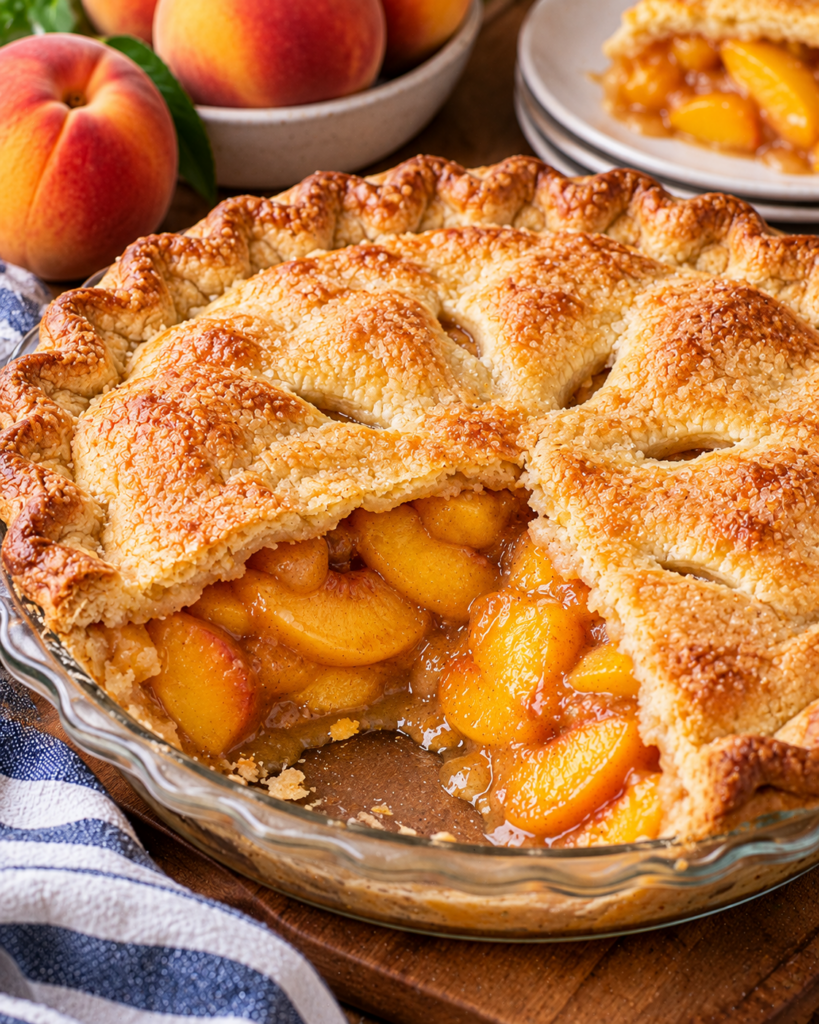
Southern Peach Pie Recipe is a classic fruit dessert that makes the most of peaches’ natural sweetness and fragrance. With a flaky crust and a filling that holds together without losing its juiciness, it feels special without being complicated.
The best peach pie tastes unmistakably of peaches. Serve it plain or with a scoop of vanilla ice cream, and it’s the kind of dessert that makes people look forward to another slice.
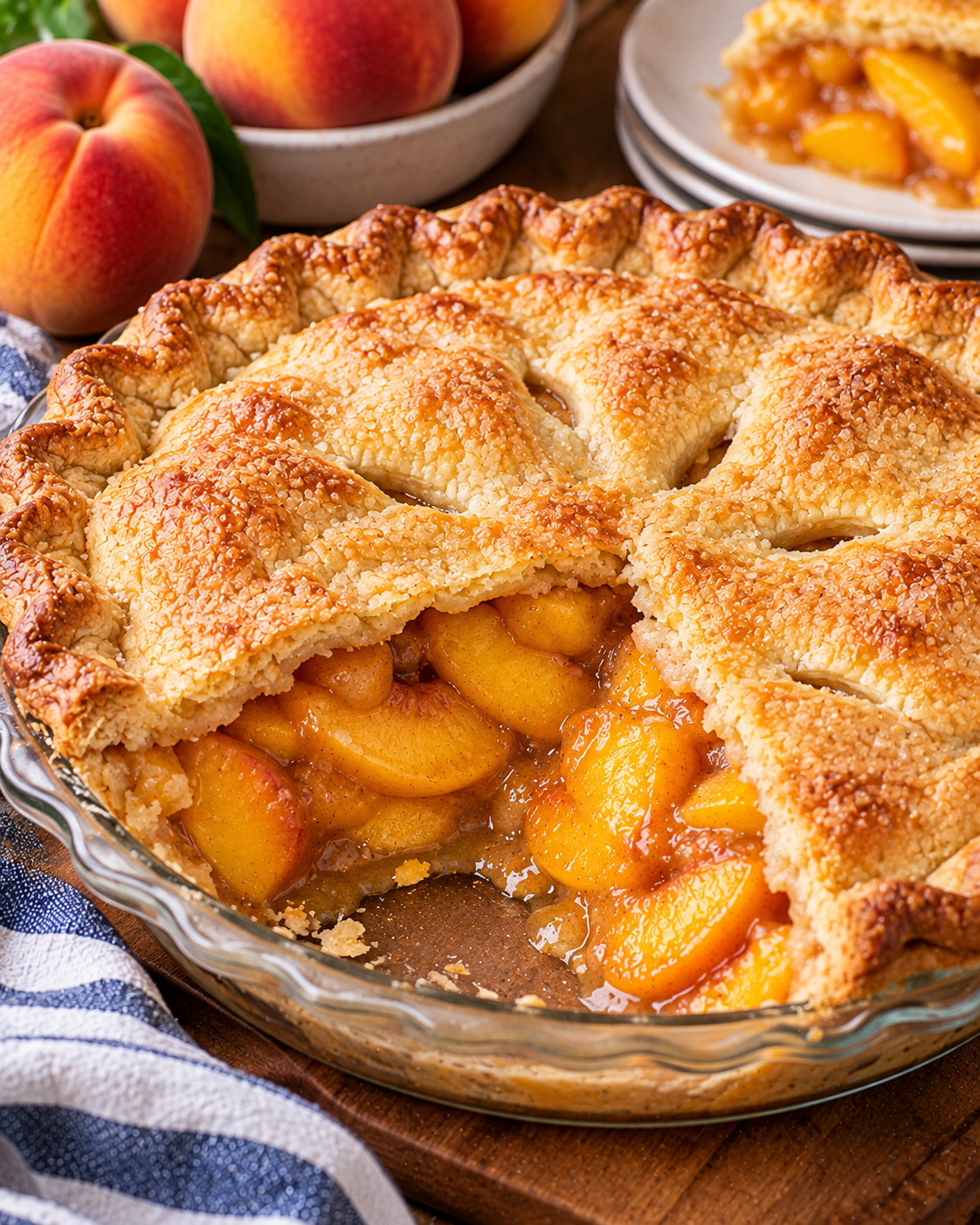
Southern Peach Pie
Ingredients
Method
- In a large bowl, combine the flour and sugar. Cut in the butter until the mixture resembles coarse crumbs.
- Stir in the ice water, a tablespoon at a time, until the mixture forms a ball.
- Wrap in plastic wrap and refrigerate for at least 30 minutes.
- Preheat the oven to 425°F (220°C).
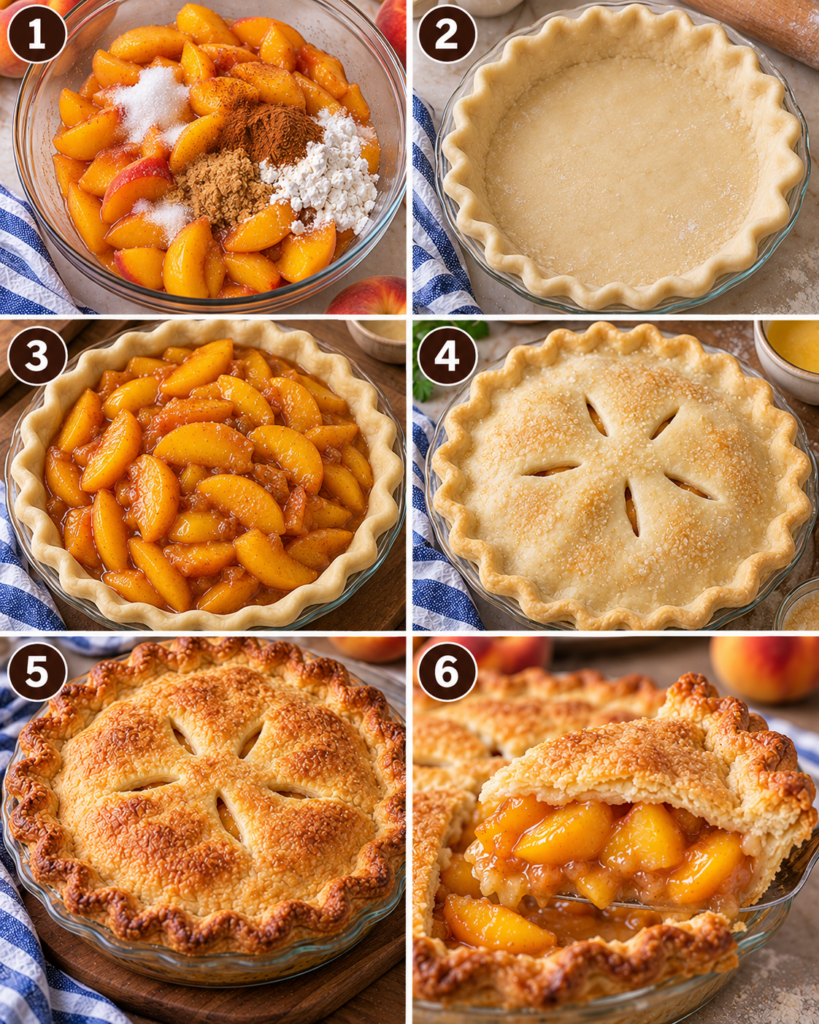
- In a mixing bowl, combine the sliced peaches, sugar, flour, cinnamon, and lemon juice. Toss until evenly coated.
- Roll out the chilled dough on a floured surface and place into a pie dish.
- Fill the crust with the peach mixture and dot with small pieces of butter.
- Cover with another layer of dough, if desired, or create a lattice top.
- Bake in the preheated oven for 45-50 minutes or until the top is golden and the filling is bubbling.
- Allow to cool before serving to let the filling set.