

Anyone who loves spinach artichoke dip will recognize the appeal of this soup. It has that familiar combination of tender greens, slightly tangy artichokes, and a creamy base, but it’s served as a warm, comforting bowl instead of something to scoop up with crackers.
Creamy spinach artichoke soup is particularly good on a chilly evening, when you want a meal that feels cozy without relying on a heavy meat-based stew. The vegetables bring plenty of character to the bowl, and the creamy texture makes it satisfying enough to enjoy with a piece of crusty bread.
The trick is finding the right balance. Artichokes have a distinctive flavor that can disappear beneath too much cream or cheese, while spinach releases moisture that can thin the soup. A good version lets you taste both vegetables and keeps the broth smooth without making it excessively thick.
Why You’ll Love This Creamy Soup
Spinach and artichokes are a familiar pairing, but they take on a different personality in soup. The artichokes provide tender, slightly firm pieces, while spinach becomes soft and silky. Together, they make the bowl feel more interesting than a plain cream soup.
It’s also a nice alternative to the usual rotation of chicken noodle, tomato, and potato soups. The flavor is savory with a little tang, and it pairs well with simple sides that don’t require much additional preparation.
Another advantage is that the soup can be adapted to different preferences. Some versions are very rich and cheese-forward, while others keep the vegetables more prominent. Neither approach is automatically better, although the best result should taste like spinach and artichokes rather than just warm cream.
What Gives Spinach Artichoke Soup Its Creamy Texture?
Creaminess can come from several different ingredients, depending on the recipe. Some spinach artichoke soups use cream cheese, while others rely on cream, milk, a thickened broth, or a combination of dairy products. Each produces a slightly different mouthfeel.
Cream cheese gives a soup more body and a gentle tang. Heavy cream tends to produce a smoother, richer finish, while lighter dairy options may create a thinner consistency. That’s why swapping one dairy ingredient for another isn’t always straightforward.
Temperature also affects texture. Dairy-based soups can become grainy or separate when the ingredients aren’t suited to the heating conditions. The soup should feel smooth and cohesive, with the vegetables suspended in the creamy base rather than sitting beneath a layer of separated fat.
Choosing the Best Spinach and Artichokes
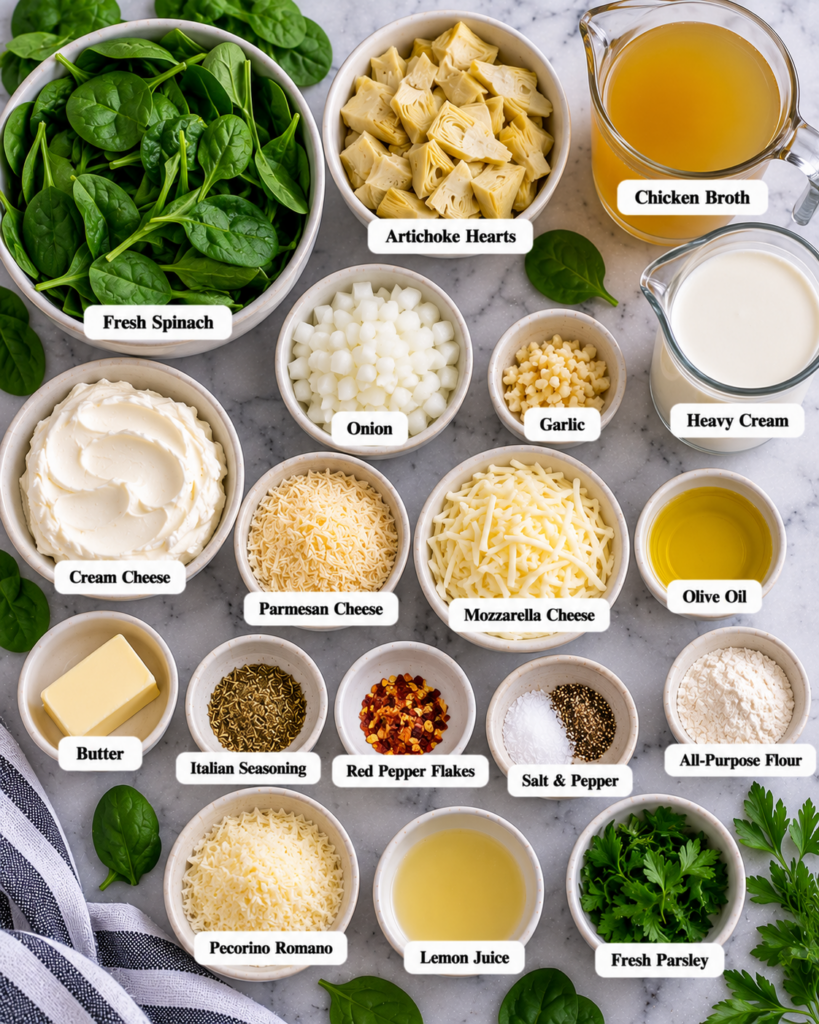
Fresh spinach has a mild flavor and wilts considerably as it cooks. Frozen spinach is convenient and can work beautifully, although it often releases a surprising amount of water after thawing. That moisture matters in a soup where the goal is a creamy rather than watery texture.
Artichokes require a little more attention when shopping. Canned artichoke hearts, frozen artichokes, and marinated artichokes aren’t identical products. Marinated hearts may carry oil, vinegar, and seasonings that noticeably change the soup.
For a mild, creamy version, the artichoke flavor should be present without becoming aggressively acidic. If a recipe specifies a particular type, it’s worth following that recommendation rather than assuming any jar or can will produce the same result.
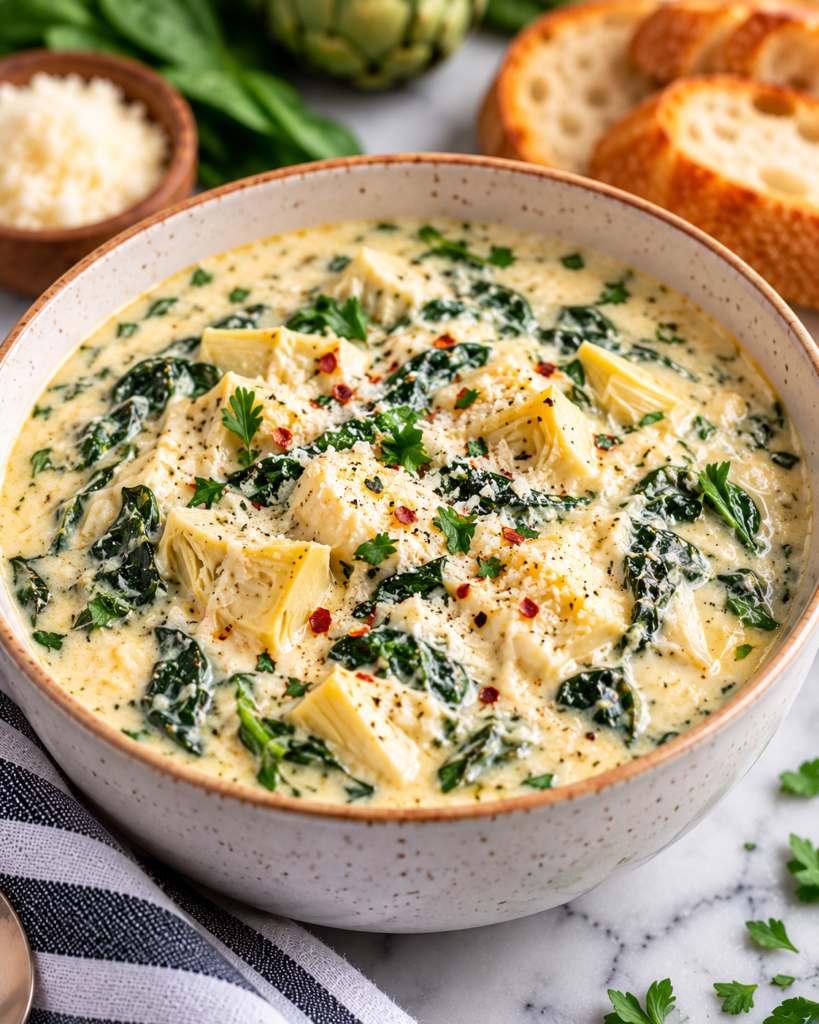
The vegetables should also have some recognizable texture. A soup with artichoke pieces gives you something to bite into, while a completely smooth version creates a different experience.
Tips for a Smooth, Creamy Soup
Creamy soup can be surprisingly easy to overcomplicate. Adding more cheese doesn’t always improve it, and an excessively thick base can make the spinach and artichokes feel lost. The goal is a texture that’s rich enough to coat a spoon but still comfortable to eat as soup.
The seasoning needs restraint, too. Cheese, prepared broth, and packaged artichokes may already contain salt, so their combined effect matters. A bowl that’s too salty will taste heavier and less balanced, no matter how creamy it is.

How to Prevent a Watery Soup
Spinach and artichokes both contribute moisture, especially when they’ve been frozen or packed in liquid. That water can dilute the creamy base and make the finished soup feel thinner than intended.
The recipe’s proportions should account for the vegetables being used. Adding extra liquid or substituting a wetter product can change the consistency considerably, even when the flavors remain similar.
How to Balance the Artichoke Flavor
Artichokes have a slightly earthy, tangy taste that works beautifully with dairy. However, heavily marinated artichokes can introduce more acidity than a creamy soup needs.
A good balance lets the artichoke flavor remain noticeable alongside the spinach. If the soup tastes primarily of cheese or cream, it may be missing the character that makes this combination special.
Delicious Variations
A spinach artichoke chicken soup is one possible variation, but chicken shouldn’t be assumed to be part of every recipe. Adding cooked chicken changes the dish from a vegetable-forward soup into a more substantial meal and requires a recipe that accounts for the extra protein.
A more vegetable-focused version might include additional greens or mild vegetables. That can make the soup feel lighter, although the added moisture may affect its thickness.
For people who enjoy a little heat, a spicy variation can be appealing. The important thing is not to overpower the artichokes, which have a gentler flavor than many strongly seasoned ingredients.
A dairy-free variation is also possible with a recipe designed around suitable alternatives. However, plant-based creams and cheeses don’t always melt or thicken like their dairy counterparts.
What to Serve with Spinach Artichoke Soup
Crusty bread is one of the easiest choices. It complements the creamy broth and makes a bowl of soup feel like a complete lunch, especially when the soup is served in a generous portion.
A crisp green salad provides a different kind of contrast. Its fresh texture helps balance the richness of the soup, particularly if the recipe includes plenty of cheese.

For dinner, roasted vegetables or a simple sandwich can work well. The soup already has a distinctive flavor, so the side dish doesn’t need a complicated dressing or heavy sauce.
If you’re serving it as a starter, smaller bowls are a good idea. A creamy soup can be filling, and modest portions leave room for the main course.
How to Store and Reheat
Cream-based soups often thicken during refrigeration, so leftovers may look different the next day. That doesn’t necessarily mean anything has gone wrong. The dairy, vegetables, and any thickening ingredients can change consistency as the soup cools.
Store leftovers promptly in covered containers at 40°F (4°C) or below. Properly refrigerated cooked soup is generally best used within three to four days. Reheat thoroughly to 165°F (74°C).
Freezing can be less predictable with creamy soups. Some dairy-based mixtures separate after thawing, leaving a grainier texture than the original bowl. The flavor may still be pleasant, but the consistency can change noticeably.
Frequently Asked Questions About Spinach Artichoke Soup
Can You Use Frozen Spinach?
Yes, frozen spinach is used in many spinach artichoke soup recipes. It can release more moisture than expected, so the recipe needs to account for that. Fresh and frozen spinach may produce slightly different textures.
Can You Make Spinach Artichoke Soup Ahead?
Many versions can be prepared ahead and refrigerated. The soup may thicken as it cools, and dairy-based mixtures sometimes change consistency during reheating. Follow the storage and reheating guidance for your particular recipe.
Can You Freeze Creamy Spinach Artichoke Soup?
Freezing may be possible, but creamy soups can separate after thawing. The result depends on the dairy ingredients and any thickeners used. A recipe specifically developed for freezing will provide more predictable results.
How Do You Thicken Spinach Artichoke Soup?
Different recipes use different methods to create body, including dairy ingredients or starch-based thickeners. Adding an untested thickener can change the flavor and texture, so it’s best to follow the approach intended for the recipe.
Final Thoughts
Creamy spinach artichoke soup is a comforting way to enjoy a familiar flavor combination in a different form. The mild greens, tangy artichokes, and rich broth make it feel satisfying without needing an elaborate presentation.
The best bowl keeps the vegetables recognizable and the texture pleasantly creamy. That’s what turns it from a simple vegetable soup into something you’ll look forward to serving again.
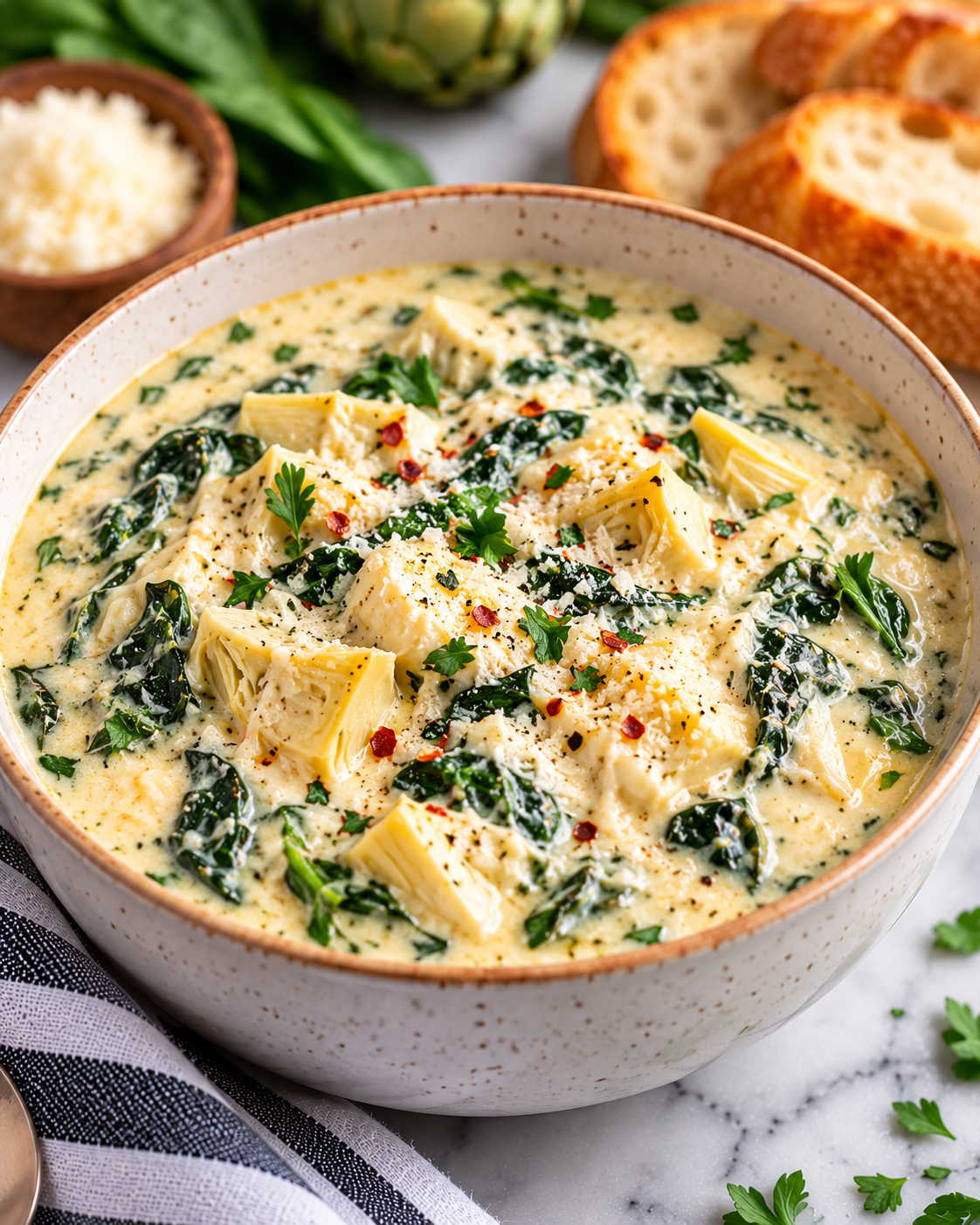
Creamy Spinach Artichoke Soup
Ingredients
Method
- Chop the fresh spinach and drain the artichoke hearts.
- In a pot, combine vegetable broth and bring to a simmer.
- Add the chopped spinach and artichokes to the simmering broth.
- Stir in the cream cheese and continue to simmer until fully melted and incorporated.
- Season with garlic powder, onion powder, salt, and black pepper.
- Blend the soup if a smoother texture is desired, then serve warm.