
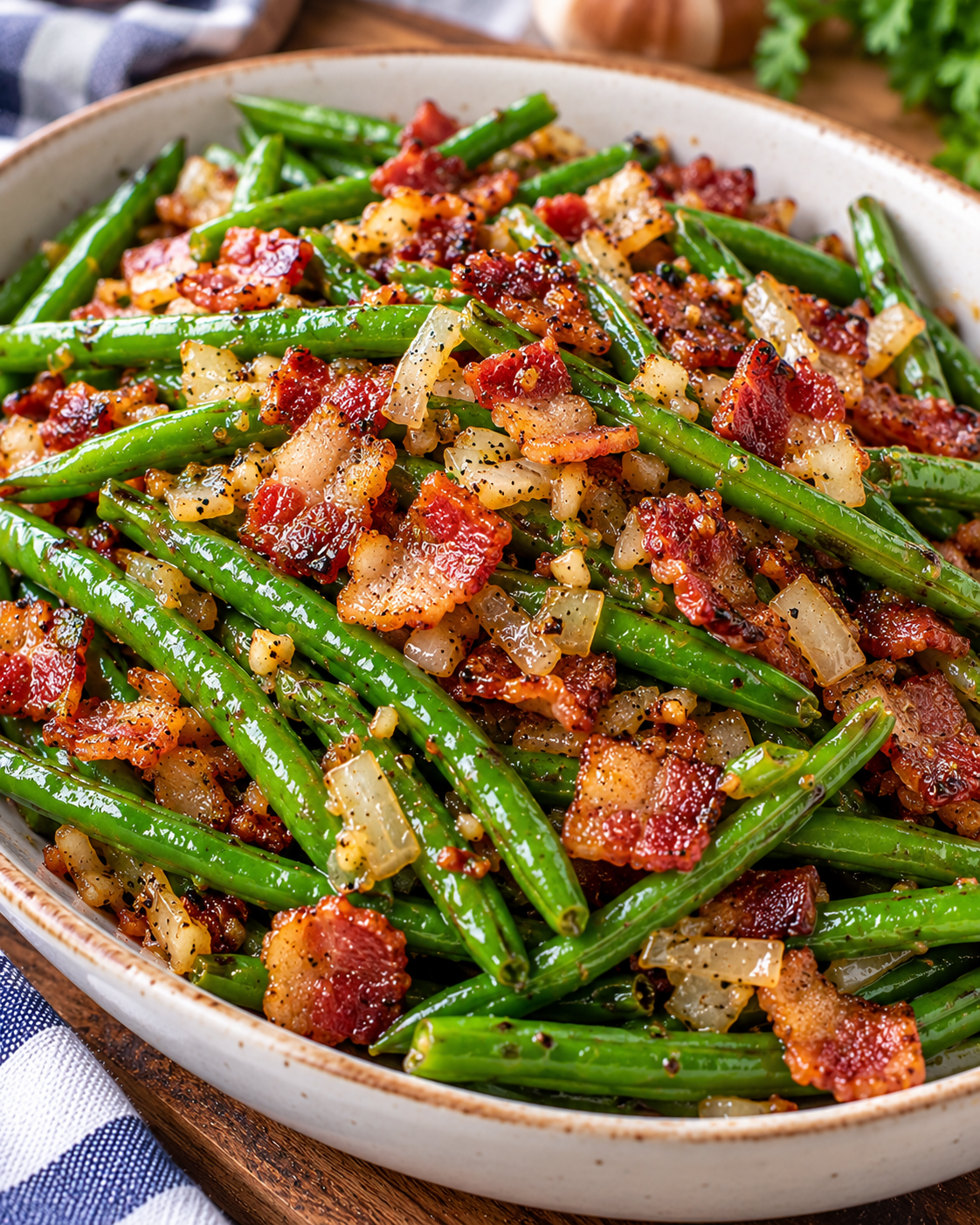

Green beans don’t need much dressing up to be a good side dish, but bacon certainly gives them something extra. The smoky, salty flavor turns an everyday vegetable into something people are happy to see next to their mashed potatoes or Sunday roast.
This green beans with bacon recipe is all about getting that balance right. The beans should be tender without losing their character, and the bacon should bring plenty of flavor without making the whole dish greasy. It’s a simple combination, but the difference between a good batch and a disappointing one often comes down to texture.
Whether you’re planning a holiday dinner or just trying to make vegetables more interesting on a weeknight, green beans and bacon fit right in. They’re familiar, satisfying, and easy to pair with almost anything.
Why This Side Dish Works
Green beans have a fresh, slightly grassy flavor that works especially well with savory ingredients. Bacon adds a smoky richness, giving the vegetables more depth without covering up their natural taste.
There’s also a nice contrast between the beans and the bacon. When the beans are tender and the bacon has a little bite, each forkful feels more interesting than a plain vegetable side.
Southern green beans with bacon are often associated with a softer, more deeply seasoned style. Other versions keep the beans firmer and put more emphasis on the bacon’s crisp texture. Both can be delicious, but the recipe’s intended style should guide your expectations.
Choosing Fresh, Frozen, or Canned Green Beans
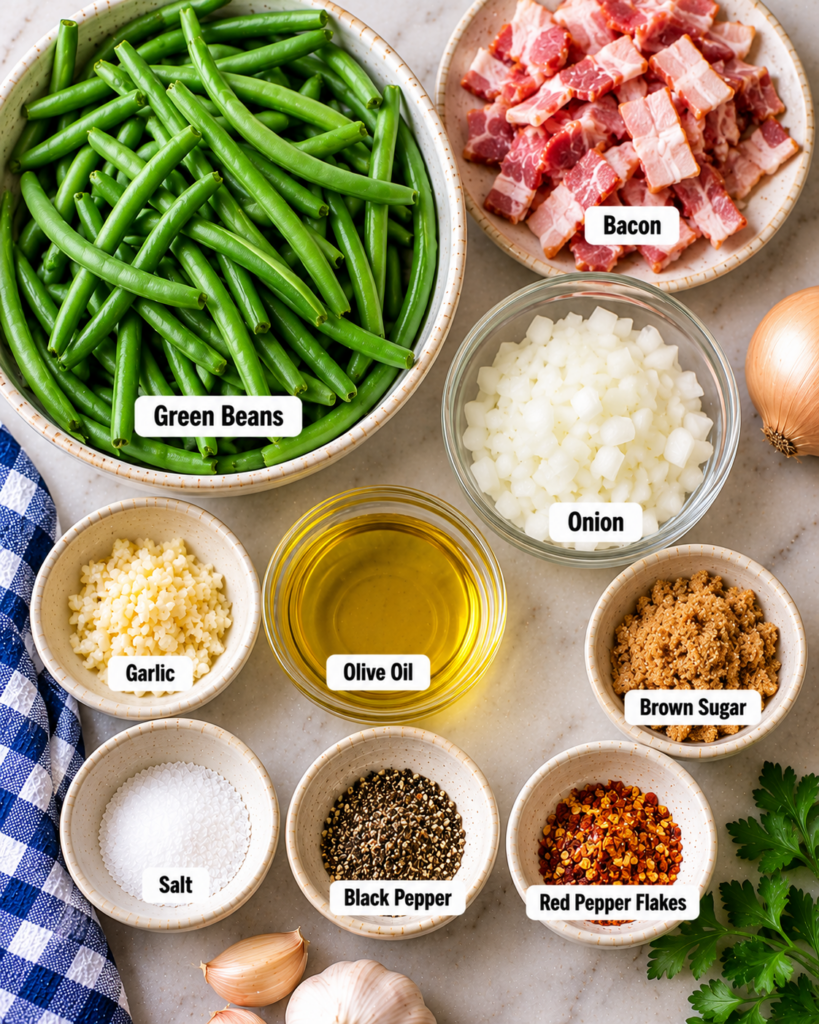
Fresh green beans are a good choice when you want a distinct vegetable texture. They should look firm and vibrant rather than limp or heavily spotted, and they usually offer the freshest flavor.
Frozen green beans are convenient and can work well in a bacon-flavored side dish. Their texture may be slightly softer than fresh beans, particularly after they’ve been stored for a long time.
Canned green beans are already cooked, so they have a much softer texture. They’re common in some old-fashioned Southern recipes, where tenderness and savory flavor matter more than a crisp bite.
The best option depends on the result you’re after. Fresh beans suit a firmer style, while canned beans are better suited to a soft, traditional presentation.
Selecting Bacon and Flavorings
Bacon brings most of the dish’s savory character, so its flavor matters. Hickory-smoked bacon has a stronger smoky profile, while milder varieties allow more of the green bean flavor to come through.
Thick-cut bacon offers a meatier bite, although it won’t have exactly the same texture as thinner strips. The salt level can vary considerably between brands, which is worth remembering when evaluating the finished dish.
Onions are a familiar partner for green beans with bacon. Their mild sweetness can balance the bacon’s saltiness, while garlic adds another layer of savory flavor.
The most enjoyable version tastes like green beans first, with bacon providing a rich, smoky accent. Too much salt or heavy seasoning can make the dish feel overwhelming.
Tips for Tender Beans and Crispy Bacon
The texture of the beans makes a big difference. Some people prefer green beans with a little snap, while others enjoy them very soft, especially in Southern-style recipes.
Neither preference is wrong, but the finished beans should have a deliberate texture. Firm beans shouldn’t taste raw, and soft beans shouldn’t fall apart into an unappealing mash.
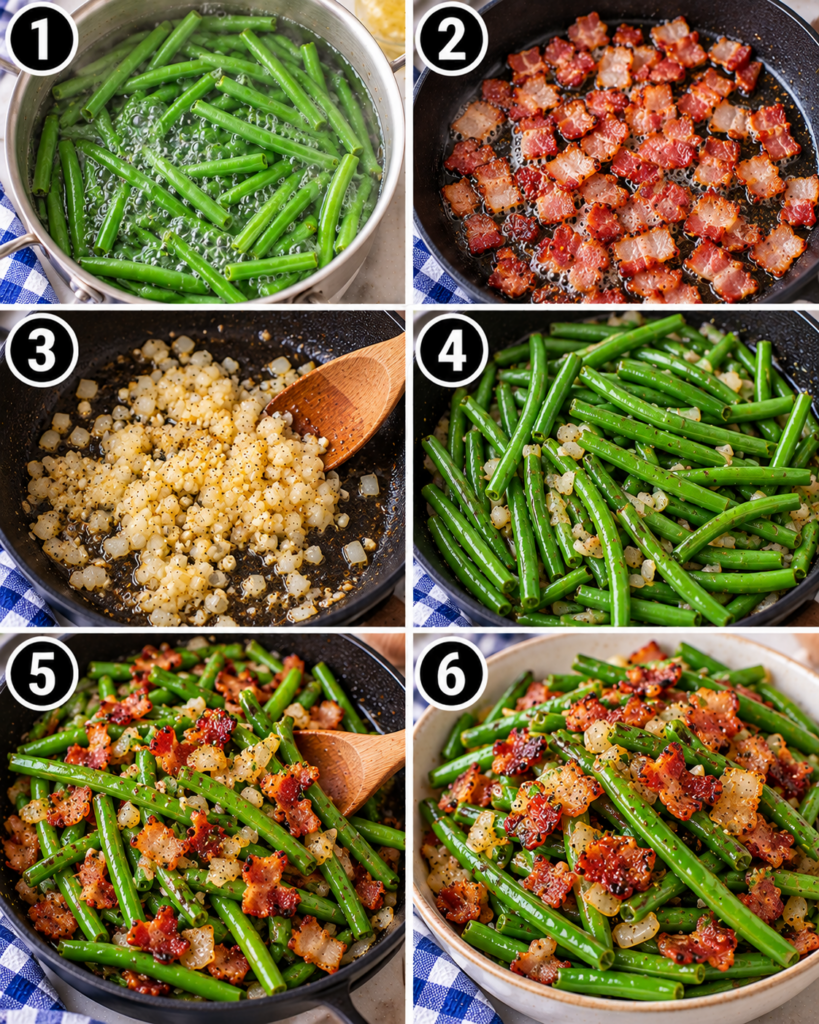
Bacon presents a different challenge because it can lose its crispness when surrounded by moisture. The more liquid in the finished dish, the softer the bacon is likely to become.
Avoiding Soggy Bacon
Bacon that starts out crisp can soften after sitting with warm, moist vegetables. That’s normal, but it changes the contrast that makes some versions of this dish so appealing.
If your recipe is designed around crispy bacon, the final texture should reflect that. For a long-cooked Southern green bean dish, softer bacon may be part of the intended result instead.
The important thing is not to promise a crispy finish when the recipe actually produces a tender, savory bacon texture.
Variations and Substitutions
Green beans with bacon and onions are a classic combination, but the dish can take on different flavors with small changes. A little acidity can balance the richness, while herbs can make the finished side feel fresher.
Turkey bacon offers a different flavor and fat content from traditional pork bacon. It may work in some versions, although the smoky richness and texture won’t be identical.
If you’re adapting the dish for a meat-free meal, a smoky seasoning can provide some of the familiar character. The result won’t taste exactly like bacon, but it can still be a satisfying green bean side.
What to Serve with Green Beans and Bacon
These green beans are especially good alongside roast chicken, pork chops, or meatloaf. Their savory flavor complements hearty main dishes without competing for attention.
For holiday meals, serve them with turkey, ham, mashed potatoes, or baked sweet potatoes. The green color also adds welcome contrast to a table filled with rich casseroles.

A simple dinner of green beans with bacon, roasted potatoes, and a protein can feel complete without needing several additional sides.
Storage and Reheating
Refrigerate leftovers promptly in a covered container at 40°F or below. Properly stored cooked green beans with bacon are generally best enjoyed within three to four days.
The beans may soften during storage, and the bacon can lose any remaining crispness. That’s especially noticeable in versions that start with fresh, firmer green beans.
Reheat leftovers thoroughly to 165°F. Freezing is possible, but the vegetables may become softer after thawing.
Frequently Asked Questions About Green Beans with Bacon
Can I Make It Ahead?
Yes, green beans with bacon can often be prepared ahead, although the texture may change. The beans can soften and the bacon may lose its crispness during refrigeration.
Can I Use Frozen Green Beans?
Frozen green beans are a practical alternative to fresh ones. Expect a slightly softer texture, and follow the recipe’s guidance for the type of beans being used.
How Do I Reheat Leftovers?
Reheat refrigerated leftovers until thoroughly hot, reaching 165°F. The bacon may not regain its original crispness, but the savory flavor should still be enjoyable.
Final Thoughts
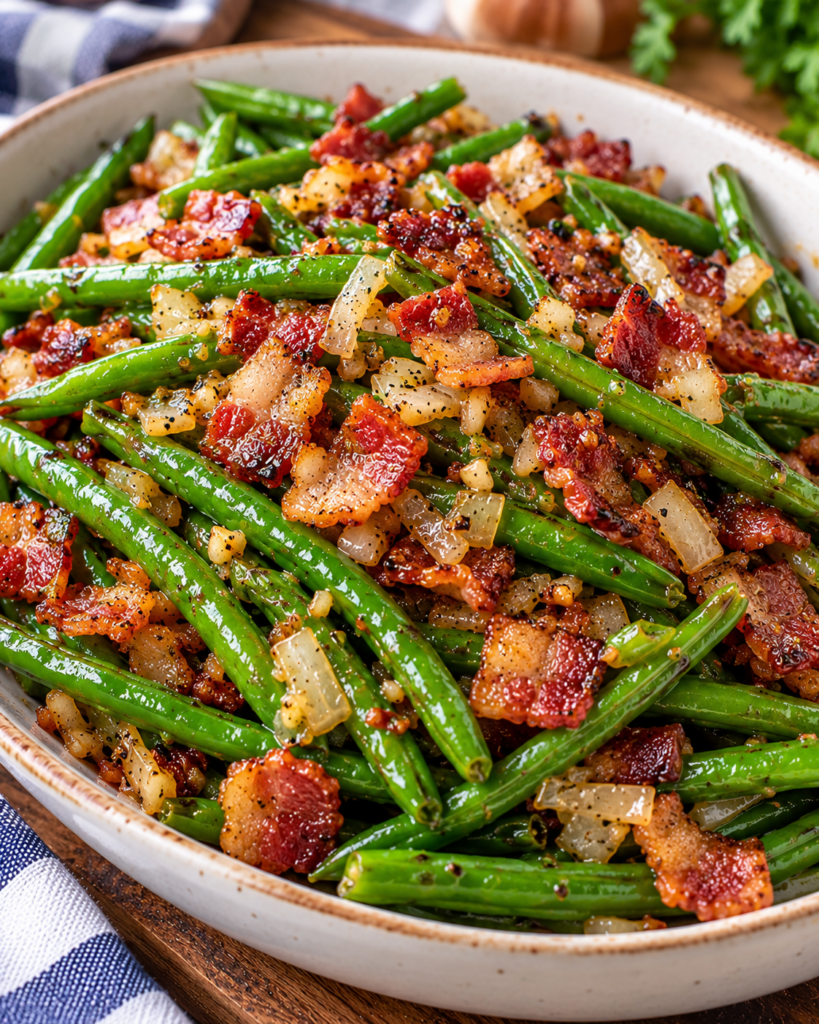
Green Beans with Bacon Recipe is proof that a familiar vegetable side can be full of flavor without becoming complicated. Smoky bacon, well-seasoned beans, and a little attention to texture are what make the combination work.
It’s just as welcome at a holiday table as it is beside an ordinary weeknight dinner. When the beans and bacon are balanced, there isn’t much else the dish needs.