

Coconut cake has a soft, sweet flavor that feels right at home at birthdays, Easter gatherings, and spring celebrations. Add a raspberry filling between the layers, and the cake becomes a little more interesting. The berries bring a tart contrast that keeps the coconut from tasting overly sweet.
A good coconut cake with raspberry filling should have tender layers, a filling that tastes clearly of raspberries, and frosting that complements both. When you cut into the cake, the raspberry center adds a beautiful ribbon of color against the pale crumb.
The difficult part is keeping everything balanced. Raspberry filling can be loose, and soft cake layers may shift if the filling doesn’t have enough structure. The best coconut raspberry cake looks lovely when sliced, but more importantly, every layer should taste good together.
Why Coconut and Raspberry Work Together
Coconut has a mellow, slightly nutty sweetness that pairs naturally with tart fruit. Raspberries provide the acidity that coconut sometimes needs, especially in a cake with a rich frosting.
The contrast also works visually. A bright raspberry filling stands out against a pale coconut cake, making even a simply decorated layer cake look attractive.
Texture plays a role as well. Coconut can add a delicate chew, while raspberry filling brings moisture and a smoother fruit element.
The best result doesn’t let either flavor dominate. You should notice the coconut in the cake and the raspberry in the filling, with the frosting bringing the two together.
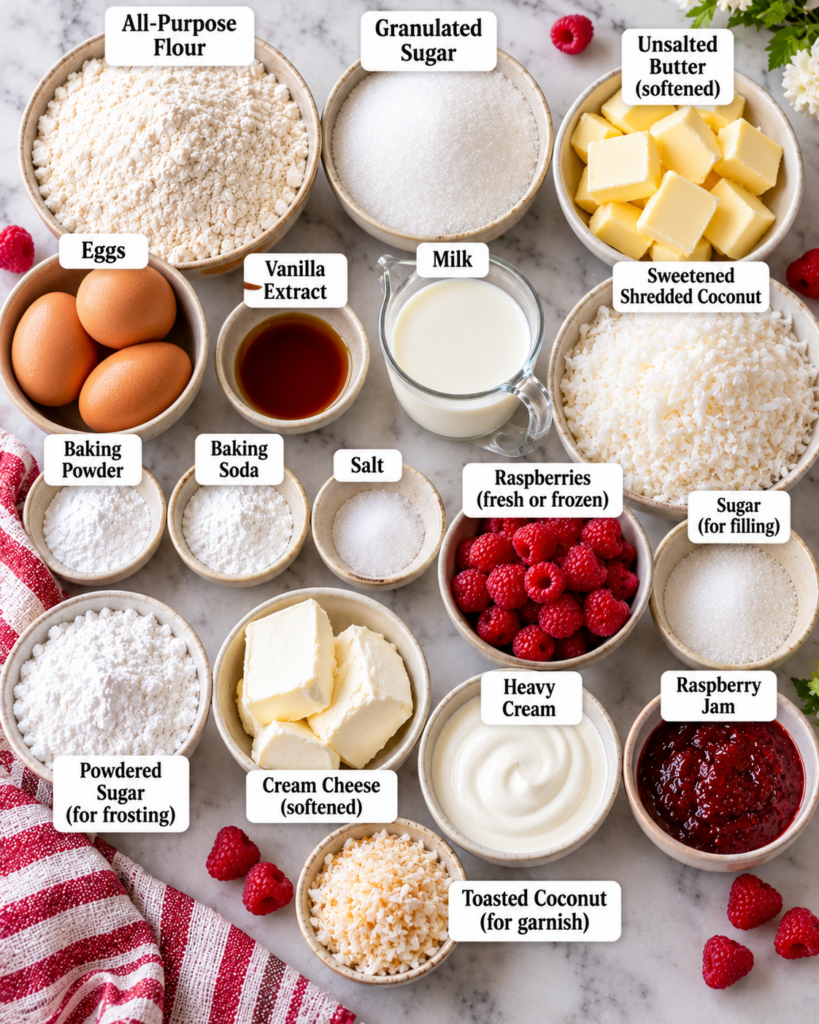
Choosing Coconut and Raspberry Filling
Coconut products vary in sweetness, texture, and moisture content. Sweetened shredded coconut behaves differently from unsweetened coconut, and coconut milk isn’t a direct substitute for shredded coconut in every cake.
The raspberry filling also makes a difference. Some cakes use raspberry preserves or jam, while others have a thicker fruit filling designed specifically for layer cakes.
A filling that’s too thin may soak into the cake or leak out between the layers. One that’s excessively thick can feel gummy and overwhelm the delicate crumb.
Seedless raspberry filling creates a smoother texture, while fillings containing seeds have a more rustic fruit character. Neither is automatically better; it depends on the recipe and personal preference.
Use the coconut and raspberry products specified in the recipe card. Their moisture and sweetness affect how the finished cake behaves.
Tips for Moist, Tender Cake Layers
A coconut layer cake should have a tender crumb that holds together when sliced. It needs enough structure to support the filling without becoming dry or dense.
Overbaking can cause moisture loss, particularly around the edges. A cake that looks beautifully golden may still become dry if it remains in the oven longer than necessary.
The flour, fat, and liquid ingredients also influence texture. Changing one ingredient can affect the crumb even when the rest of the recipe stays the same.
Cooling matters because warm cake layers are more fragile. They may crumble or shift when combined with frosting or filling before they’ve settled.
The best cake feels soft and moist but remains stable enough to serve in neat slices.
How to Prevent a Runny Raspberry Filling
Raspberries contain a lot of moisture, and that liquid needs to be managed in a layer cake. A filling that’s too loose can spread beyond the cake’s edges or soak into the crumb.
The consistency may change with temperature. Some fruit fillings appear thinner while warm and become firmer after cooling.
The amount of filling also affects stability. Even a well-thickened raspberry filling can cause problems when a cake has more filling than its layers can comfortably support.
The ideal texture is spreadable but stable. It should create a noticeable fruit layer without running down the sides when the cake is cut.
Keeping Cake Layers Stable
Layer cakes need a balance between soft crumb and firm filling. If either component is too delicate, the cake may lean or slide.
Uneven layers can contribute to the problem. A pronounced dome or irregular surface may make it difficult for the filling to sit evenly.
Frosting consistency also matters. A very soft frosting can allow layers to shift, while one that’s too stiff may damage a tender cake during assembly.
A cake doesn’t need perfectly straight bakery-style sides to be successful. It should simply hold together comfortably and allow the raspberry filling to remain between the layers.

Frosting and Decorating Ideas
Coconut cake is often finished with a pale frosting that allows the coconut flavor and texture to stand out. Cream cheese frosting, buttercream, and other styles create different levels of sweetness and richness.
The best frosting complements the raspberry filling. A very sweet frosting may make the fruit taste less noticeable, while a tangier one can emphasize its brightness.
Shredded coconut creates a familiar finish for a coconut layer cake. It adds texture and gives the cake a classic appearance without complicated piping.
Fresh raspberries can also look attractive as a decoration, although they may release moisture during storage. The recipe’s actual frosting and topping should guide the finished presentation.
Serving and Occasion Ideas
Coconut cake with raspberry filling is especially appealing for spring celebrations. The pale cake and bright fruit center feel festive without needing elaborate decorations.
It’s also a lovely birthday cake for someone who prefers fruit flavors over rich chocolate desserts.
A modest slice is often enough because the combination of cake, filling, and frosting can be quite sweet. Coffee or unsweetened tea provides a pleasant contrast.
For a special occasion, the visible raspberry layer does much of the decorating work. A clean slice looks attractive even when the outside of the cake is simple.
Make-Ahead, Storage and Freezing
Cake layers can often be prepared ahead, but the best approach depends on the recipe. Plain layers may store differently from a fully assembled cake with fruit filling and frosting.
Raspberry filling and certain frostings may require refrigeration. Keep the finished cake covered at 40°F (4°C) or below when it contains perishable components.
Refrigeration can make butter-based frostings firmer, while the cake crumb may feel different when cold. Follow the recipe’s serving guidance for the best texture.
Freezing plain cake layers is often more predictable than freezing a decorated cake. Fruit fillings and some frostings may change consistency after thawing.
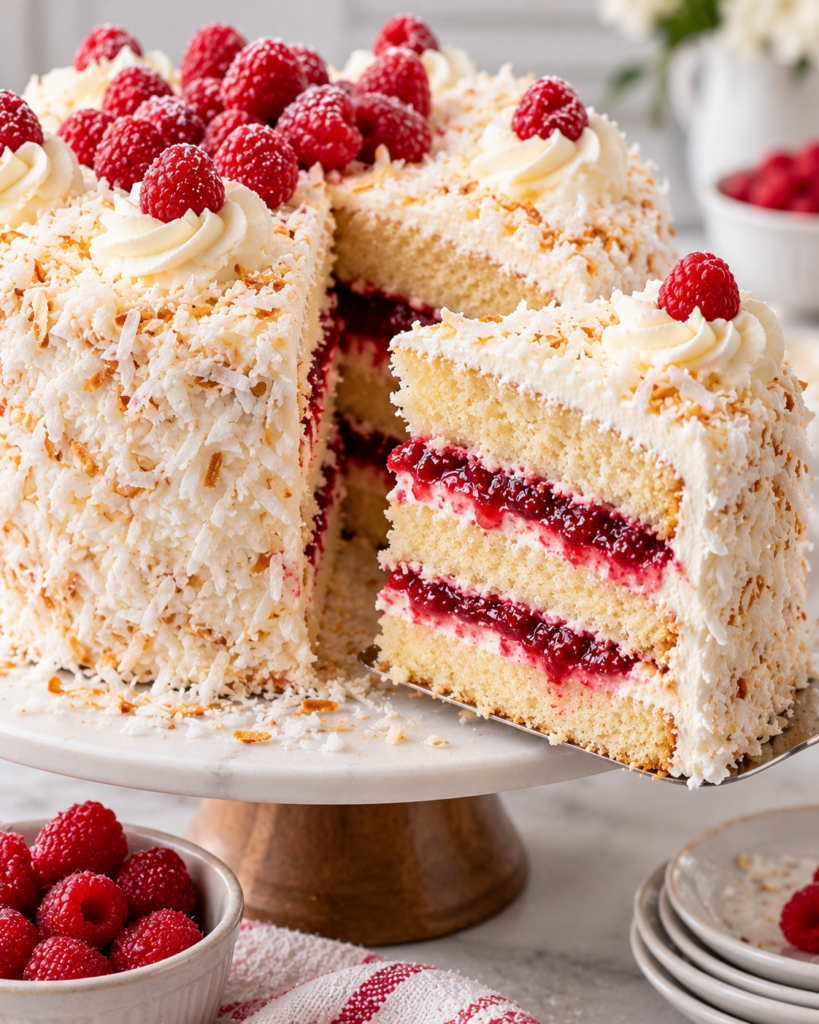
Frequently Asked Questions About Coconut Raspberry Cake
Can You Use Raspberry Jam?
Some coconut cakes use raspberry jam or preserves, but the consistency matters. A thin jam may leak between the layers, while a thicker filling may provide better stability. Use the filling specified in the recipe or a tested substitution.
Can You Make the Layers Ahead?
Yes, many cake layers can be prepared ahead and stored or frozen. Proper wrapping helps protect the crumb from drying out before assembly.
How Do You Keep Filling from Leaking?
The filling needs enough body to remain between the layers, and the cake must have adequate structure. Filling consistency, amount, and frosting stability all influence the result.
Does Coconut Cake Need Refrigeration?
It depends on the filling and frosting. Cakes containing perishable dairy or fruit components generally require refrigeration, so follow the storage guidance for your specific recipe.
Final Thoughts
Coconut Cake with Raspberry Filling is a lovely choice when you want a dessert that’s sweet but still has a little brightness. The coconut gives the cake its familiar character, while the raspberry center makes every slice more interesting.
The best result comes from tender layers and a fruit filling that stays where it belongs. When those details are right, the cake is as enjoyable to eat as it is to serve.
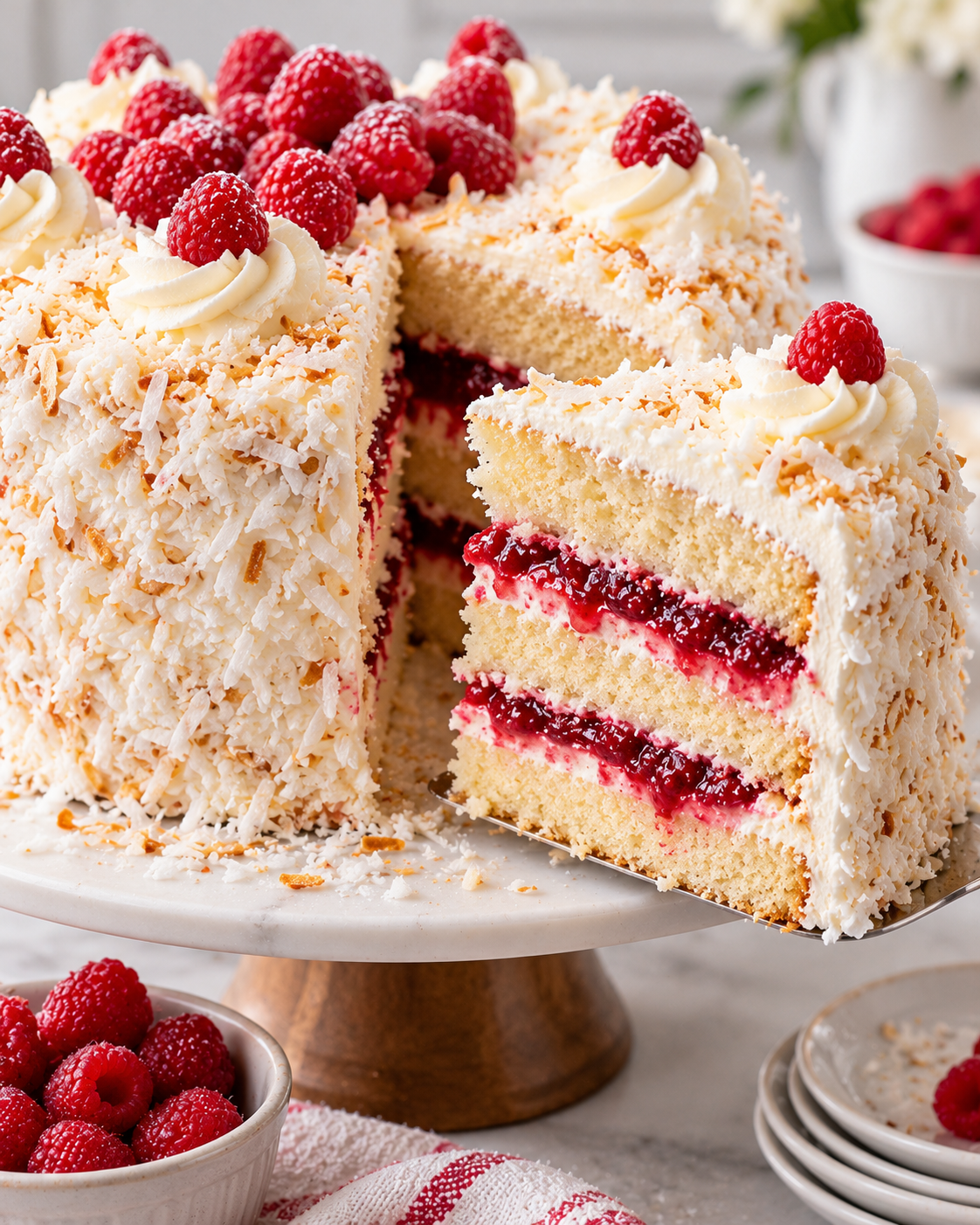
Coconut Cake with Raspberry Filling
Ingredients
Method
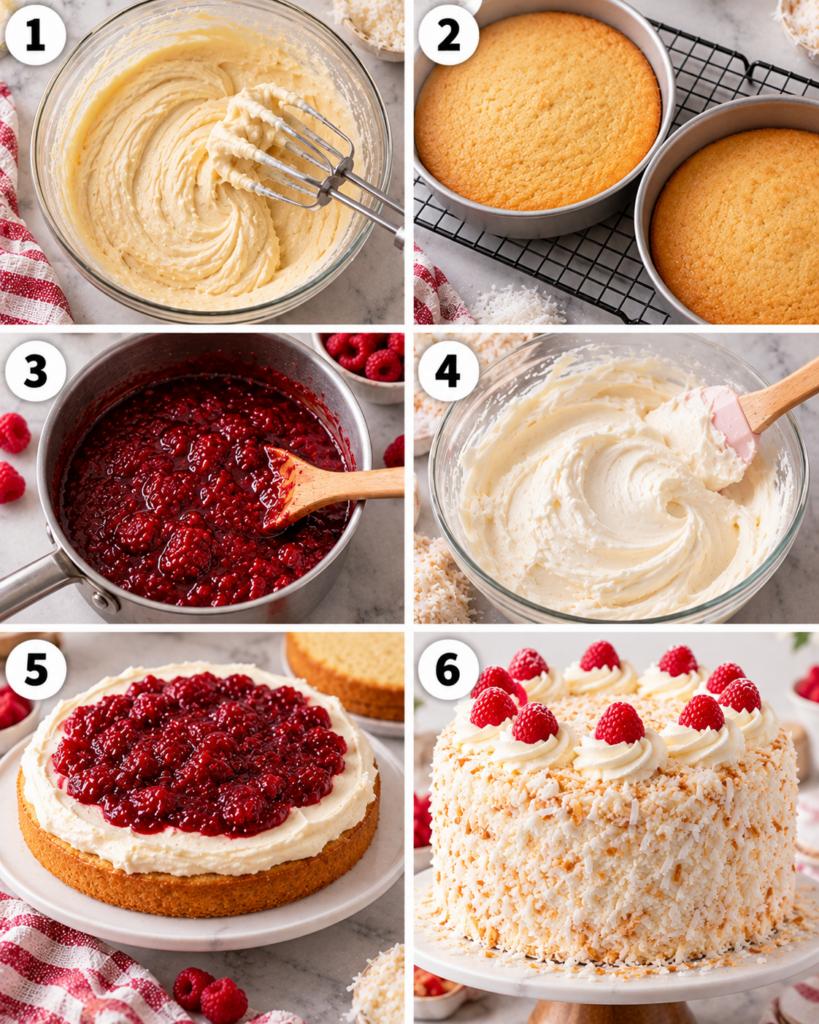
- Preheat the oven to 350°F (175°C). Grease and flour two 9-inch round cake pans.
- In a large bowl, beat the butter and sugar together until fluffy. Add the eggs one at a time, mixing well after each.
- In another bowl, combine the flour, baking powder, and salt. Gradually add to the butter mixture alternately with milk, starting and ending with dry ingredients.
- Fold in the shredded coconut.
- Divide the batter between prepared pans and smooth the tops. Bake for 25-30 minutes or until a toothpick inserted in the center comes out clean.
- Let the cakes cool in the pans for 10 minutes, then transfer to wire racks to cool completely.
- In a saucepan, combine raspberries, sugar, and cornstarch. Cook over medium heat, stirring until raspberries break down and the mixture thickens. Remove from heat and let cool.
- In a mixing bowl, beat together the cream cheese and butter until smooth.
- Gradually add powdered sugar and beat until combined. Stir in lemon juice.
- Place one cake layer on a serving plate. Spread a layer of raspberry filling on top of the cake.
- Top with the second cake layer and frost the top and sides of the cake with the cream cheese frosting.
- Decorate with extra shredded coconut and fresh raspberries if desired.