

There are mornings when a couple of eggs and a piece of toast just won’t do, especially if you’re feeding a houseful of people. A bacon egg and hash brown casserole brings the familiar parts of a big breakfast together in one dish, with smoky bacon, tender potatoes, and eggs that hold everything together.
It’s the sort of breakfast you can bring straight to the table and let everyone help themselves. That makes it particularly handy for holiday mornings, weekend guests, or a family brunch when you’d rather spend time with people than stand at the stove making individual plates.
A good hash brown breakfast casserole needs a little balance, though. The potatoes should be tender without leaving water in the bottom of the dish, and the eggs should be set without becoming rubbery. Those two details make the difference between a satisfying breakfast bake and a casserole that looks done around the edges but feels wet in the middle.
Why This Bacon and Hash Brown Breakfast Casserole Works
Bacon, eggs, and potatoes belong together on a breakfast plate, so it makes sense that they work well in a casserole. The bacon brings a smoky, salty flavor, the hash browns make it filling, and the eggs provide the structure that lets you cut it into portions.
The appeal goes beyond convenience. A casserole gives you a little of everything in each serving, rather than separate ingredients that cool at different rates while breakfast is being prepared.
It’s also a practical choice when guests have different appetites. Someone who wants a small breakfast can take a modest square, while hungrier family members can have a larger portion alongside fruit or toast.
The best version should still taste like a freshly made breakfast. The bacon needs to contribute flavor, the potatoes shouldn’t disappear into mush, and the egg mixture should stay pleasantly tender.
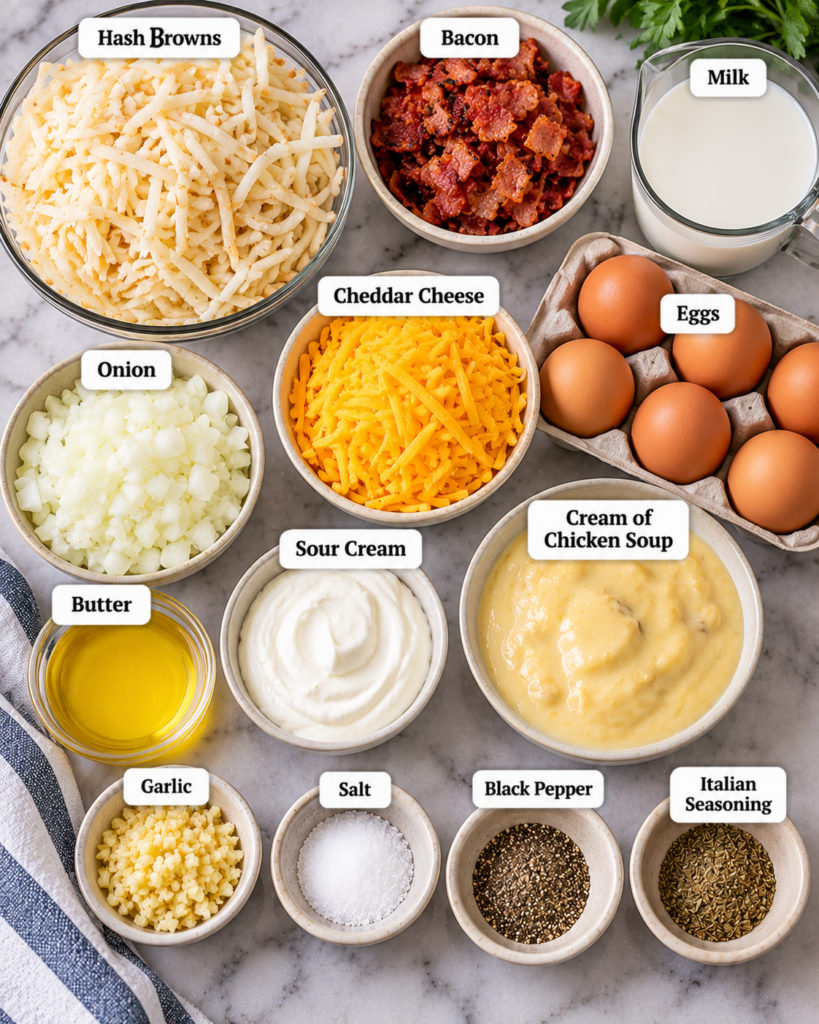
Choosing Hash Browns, Bacon and Eggs
Hash browns come in several forms, and they don’t all behave the same way in a casserole. Shredded potatoes create a different texture from diced breakfast potatoes, while frozen products may contain more surface moisture than expected.
Frozen hash browns are convenient and commonly used in breakfast casseroles. Their moisture content matters, however, because extra water can collect in the dish and interfere with the eggs setting evenly. The recipe card should determine whether a particular product needs to be thawed or handled differently.
Bacon brings a strong savory flavor, so its saltiness is worth considering alongside any cheese or seasoning included in the recipe. Thick-cut bacon may have a different bite from thinner slices, and the finished texture depends on the preparation specified in the card.
Eggs are what make the casserole hold together. They should create a soft, cohesive center rather than a dense layer that tastes like overcooked scrambled eggs.
How to Avoid a Watery or Soggy Casserole
A watery breakfast casserole usually comes down to excess moisture or an under-set center. Frozen potatoes can contribute liquid, and any vegetables or other additions may release moisture during baking.
The casserole dish also affects how the center cooks. A deep dish can take longer to heat through than a shallower one, even when the surface begins browning at the same time.
It’s tempting to judge doneness by the top alone, especially when the bacon and potatoes look golden. But a browned surface doesn’t necessarily mean the egg mixture in the middle has finished setting.
The best result is moist without being wet. The potatoes should have some definition, and the egg mixture should hold the ingredients together rather than pooling around them.
Tips for Even Baking and a Tender Center
The center of a breakfast casserole is usually the last part to finish cooking. That’s especially true when the dish is thick or goes into the oven cold.
Oven temperatures can vary, and baking dishes made from glass, ceramic, or metal transfer heat differently. That’s why the recipe’s doneness guidance matters more than treating the stated baking time as an absolute guarantee.
For food safety, egg casseroles should reach an internal temperature of 160°F (71°C). A food thermometer is particularly helpful because the top can look finished before the middle is safe to eat.
Texture matters alongside temperature. An overbaked casserole can become dry and rubbery around the edges, while an underbaked one may remain loose in the center.
Make-Ahead and Overnight Options
An overnight hash brown breakfast casserole can make hosting easier because much of the planning happens before the busy morning begins. However, not every casserole is designed to sit assembled in the refrigerator overnight.
Potatoes can release moisture while resting, and bacon may lose some of its crisp texture. Those changes don’t necessarily ruin the dish, but they can affect the finished consistency.
If your recipe card includes an overnight option, follow its specific refrigeration and baking guidance. A casserole that has been chilled may behave differently from one prepared and baked immediately.
Keep any assembled casserole containing raw eggs refrigerated at 40°F (4°C) or below. Avoid leaving it on the counter for an extended period before baking.
Serving Ideas for Breakfast and Brunch
This bacon hash brown breakfast casserole is substantial enough to be the main dish at breakfast. A bowl of fresh berries or sliced melon provides a refreshing contrast to the smoky bacon and potatoes.
For brunch, consider serving it alongside a simple green salad or a platter of fresh fruit. Those lighter choices help balance a meal that already includes eggs and a hearty potato component.

Toast, biscuits, or muffins can be welcome additions when you’re feeding a crowd, although the casserole itself may provide plenty of starch.
Coffee, tea, and fresh juice are all natural companions. The nice thing about this kind of breakfast is that the rest of the table can stay uncomplicated.
Storage, Freezing and Reheating
Leftover breakfast casserole should be refrigerated promptly in a covered container at 40°F (4°C) or below. Properly stored cooked egg dishes are generally best used within three to four days.
The texture may change after refrigeration. Hash browns can soften, and the eggs may become firmer when reheated, especially if the casserole was already baked thoroughly.
Reheat leftovers to 165°F (74°C). The center of a thick portion needs to reach that temperature, not just the outer edges.
Freezing is possible for many cooked breakfast casseroles, but potatoes and eggs can change texture after thawing. The result may be slightly softer or more watery than a freshly baked casserole.
Frequently Asked Questions About Bacon Egg Hash Brown Casserole
Can Frozen Hash Browns Be Used?
Yes, frozen hash browns are commonly used in breakfast casseroles. Their moisture content and whether they’re shredded or diced can affect the result, so follow the instructions for the specific product in your recipe.
Can You Assemble It the Night Before?
Some breakfast casseroles are designed for overnight assembly, but others are better baked soon after preparation. Use the make-ahead guidance in the recipe card, and keep the assembled dish properly refrigerated.
How Do You Know When the Center Is Set?
The middle should no longer have a loose, liquid egg consistency. For safety, an egg casserole should reach 160°F (71°C) at its center.
Can You Freeze Leftover Casserole?
Many cooked breakfast casseroles can be frozen, although the potatoes and eggs may change texture. Proper wrapping helps protect the casserole from freezer burn.
Final Thoughts
Bacon Egg and Hash Brown Casserole is a dependable choice when breakfast needs to feed more than one or two people. It has the familiar flavors of a hearty morning meal without requiring several separate dishes.
The best result comes from keeping the potatoes from becoming watery and baking the eggs until the center is properly set. Get those details right, and this casserole makes a satisfying addition to any breakfast or brunch table.
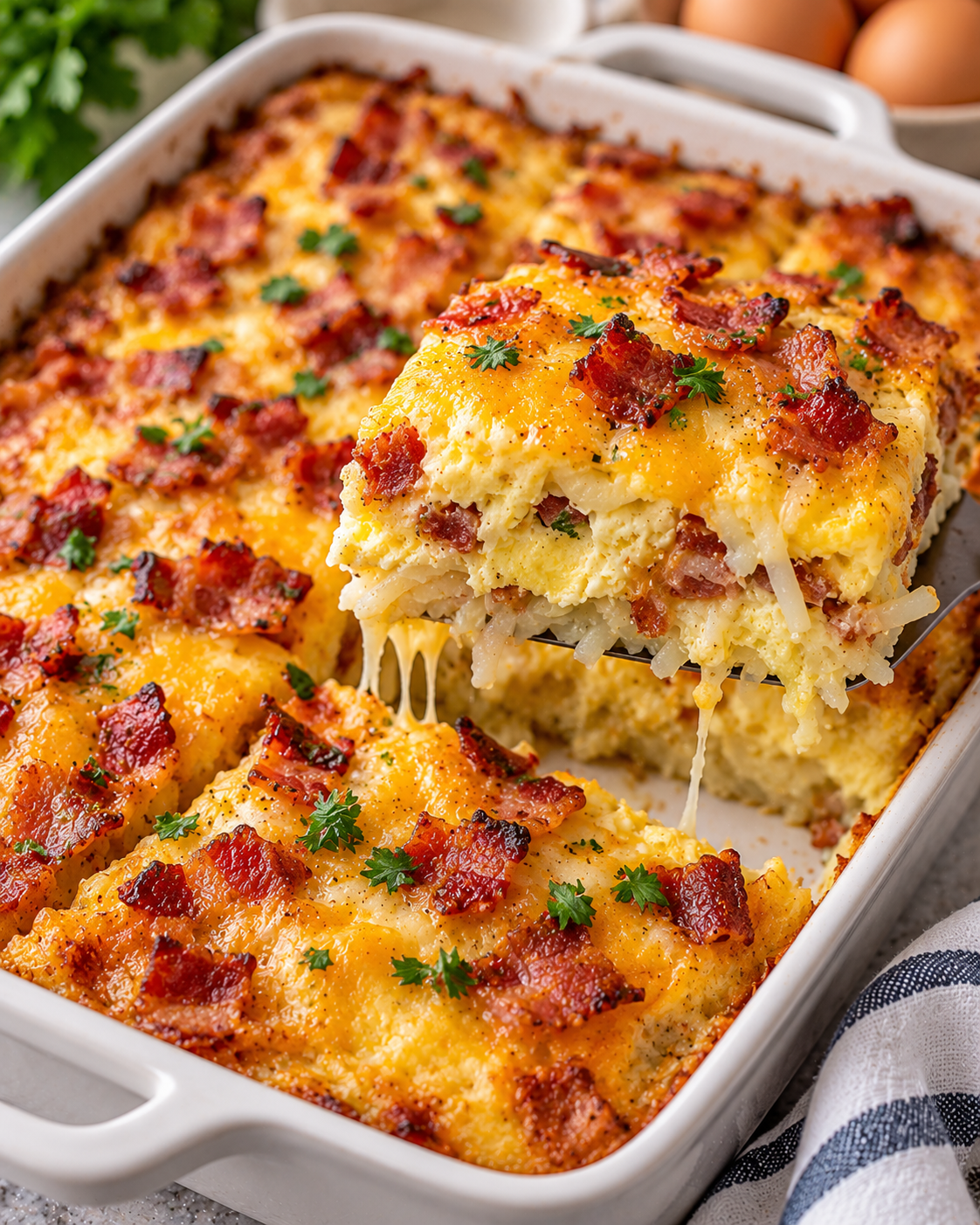
Bacon Egg and Hash Brown Casserole
Ingredients
Method
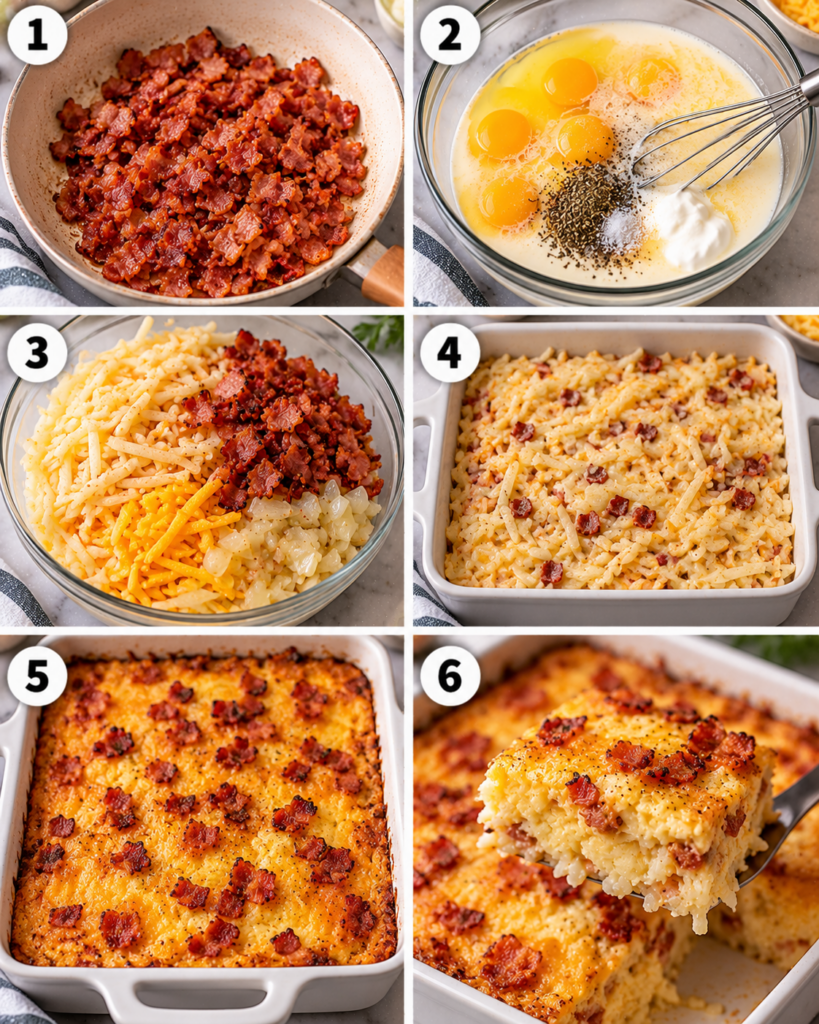
- Preheat the oven to 375°F (190°C).
- In a large skillet, cook the diced bacon over medium heat until crispy. Drain excess fat.
- In a large bowl, whisk together the eggs, salt, and pepper.
- Layer the hash browns, cooked bacon, and shredded cheese in a greased baking dish.
- Pour the egg mixture evenly over the layered ingredients.
- Bake in the preheated oven for 45 minutes, or until the center is set and the top is golden brown.
- Let cool for a few minutes before slicing and serving.