


fermented cabbage recipe days usually start the same way for me: I open the fridge, stare at a sad half head of cabbage, and promise myself I will not let it turn into a science experiment in the crisper drawer. If you have ever bought cabbage for one meal and then forgotten about it, you are in the right place. This is my go to method for turning that plain cabbage into something crunchy, tangy, and honestly kind of addictive. It is low effort, it lasts a long time, and it makes basic meals taste like you actually planned ahead. Plus, it feels a little magical watching a simple jar transform on your counter. 
Why You’ll Love This Recipe
I love this because it is one of those recipes that makes you feel like a kitchen genius without doing much. You are basically just slicing, salting, and waiting, but the payoff is huge.
Here is what makes it a keeper in my house:
It is budget friendly. Cabbage is cheap, and you only need salt and a jar.
It helps you waste less food. Instead of tossing leftover cabbage, you preserve it in the tastiest way.
It goes with everything. Eggs, sandwiches, rice bowls, soups, roasted meat, you name it.
It is a meal shortcut. When dinner feels boring, a spoonful of tangy fermented cabbage wakes it up.
And if you are already in a cabbage mood, you might also like this cozy, simple cabbage soup diet recipe for those weeks when you want something warm and light.
Ingredients & Substitutions
You do not need a long shopping list here. That is part of the charm. The key is using the right salt and giving the cabbage enough time to do its thing.
What you will need
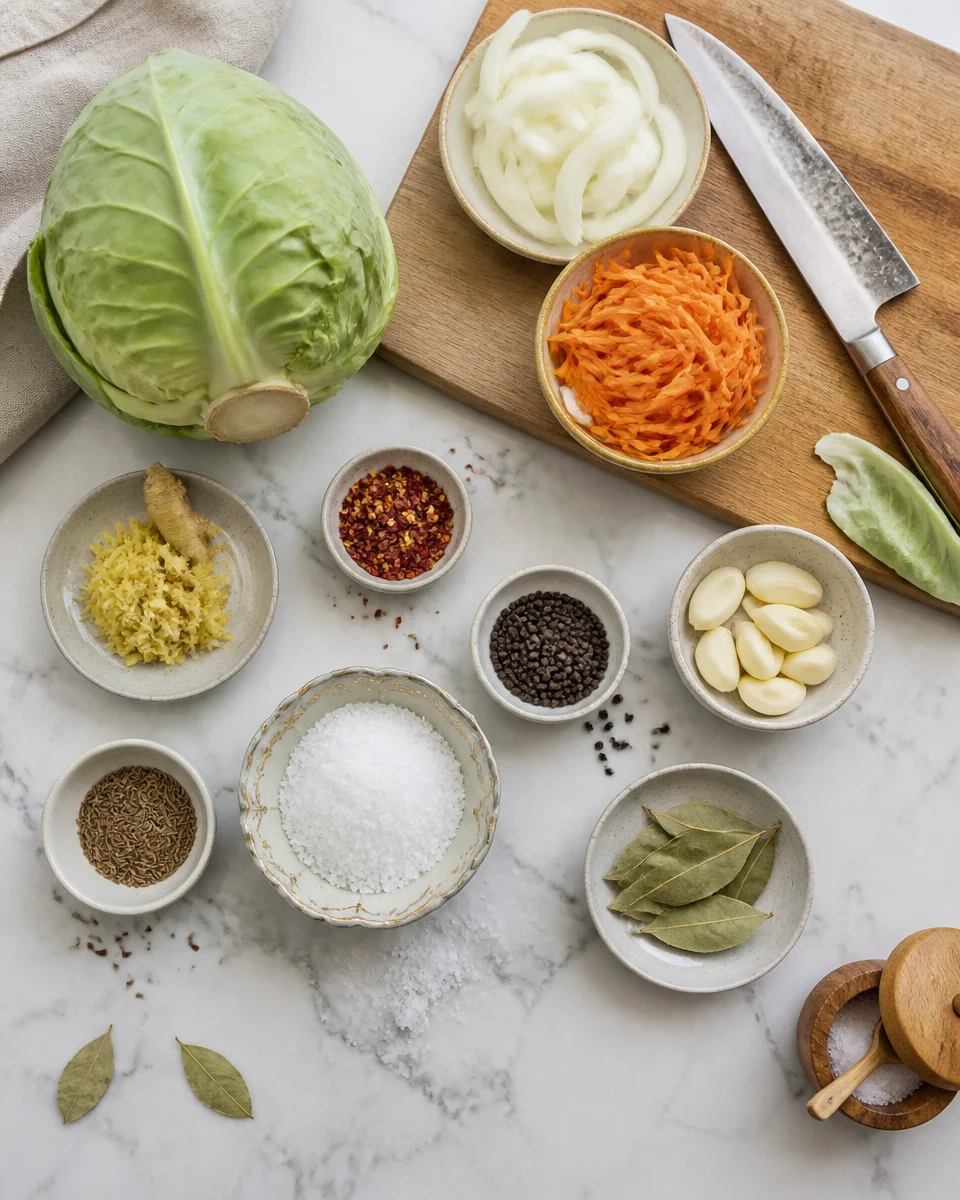
- Green cabbage: 1 medium head, or about 2 to 2.5 pounds. Red cabbage also works and looks gorgeous.
- Salt: 1.5 to 2 teaspoons of fine sea salt per pound of cabbage. If you only have kosher salt, that is fine, just measure by weight if possible since crystals vary.
- Optional flavor add ins: caraway seeds, garlic cloves, grated ginger, chili flakes, black peppercorns, bay leaf, shredded carrot, or a few slices of onion.
A quick salt note, because it matters: avoid iodized table salt if you can. It can make the brine cloudy and sometimes affects flavor. Sea salt or pickling salt is my preference.
Want a different vibe? Add grated carrot for a slightly sweet crunch, or toss in a few slices of jalapeno if you like a little heat. If you are serving this alongside party food, something like this fun 7 layer dip recipe is a surprisingly good match because the tang cuts through creamy and salty snacks.
How To Make This Recipe
This is the section where people think it is going to get complicated, but it really does not. I have made this when I am tired, distracted, and hungry, and it still turns out great. The main idea is simple: salt draws out water from the cabbage and creates a brine that keeps everything safely submerged while it ferments.
Step by step method
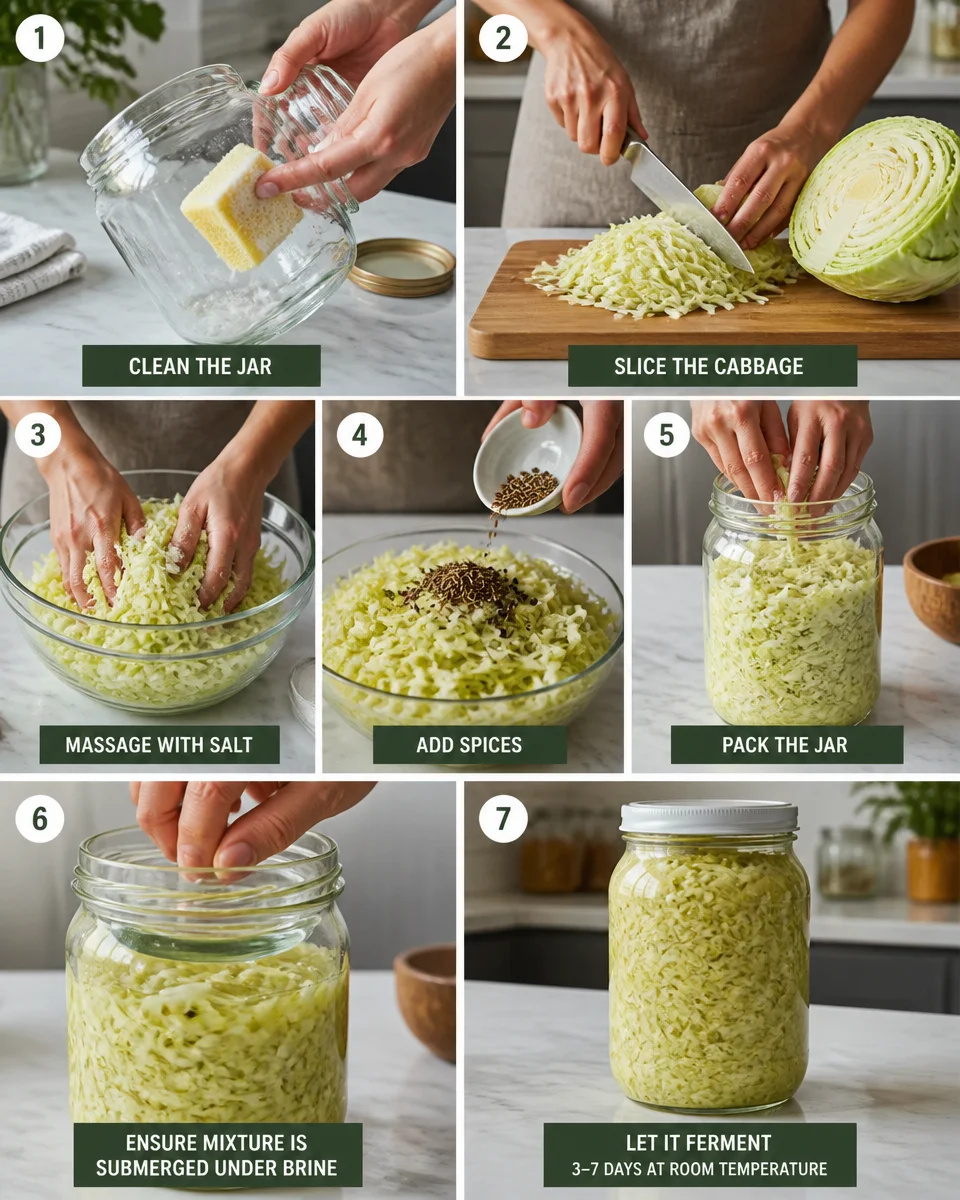
1. Clean your jar. Wash a large jar (or two smaller jars) with hot soapy water and rinse well. I also wash my hands well before handling the cabbage.
2. Slice the cabbage. Remove any limp outer leaves. Cut the cabbage into quarters, cut out the core, then slice it thin. You can go ribbon thin or a little thicker, just keep it fairly consistent.
3. Salt it and massage. Put the cabbage in a big bowl. Sprinkle with salt. Then use your hands to massage and squeeze it for 5 to 8 minutes. At first it feels dry, then suddenly it starts getting wet and glossy. That is exactly what you want.
4. Add any extras. If you are using garlic, caraway, peppercorns, or carrots, mix them in now.
5. Pack the jar. Grab handfuls of cabbage and press them tightly into the jar. Really push it down. Pour in any liquid left in the bowl. The cabbage should be under brine. If it is not, let it sit 10 minutes and press again. If you still need more liquid, top with a little salt water (1 teaspoon salt dissolved in 1 cup water) until covered.
6. Keep it submerged. This part is important. Use a clean fermentation weight, a smaller jar, or even a folded cabbage leaf tucked on top to help keep shreds under the brine line. Anything floating can mold, and we do not want that.
7. Let it ferment. Loosely cover the jar so gases can escape. Put it on a plate (it might bubble over a bit) and leave it at cool room temperature, out of direct sunlight. Start tasting at day 3. Most of the time I like it around day 7 to 10. If your kitchen is warm, it will go faster.
What should you notice? Bubbles, a slightly sour smell, and that fresh cabbage scent shifting into a tangy, pickly aroma. If it smells rotten or truly awful, trust your nose and toss it.
While you are waiting for your jar to do its thing, it is a great time to plan easy meals to pair with it. I love having a simple baked treat around too, like these fluffy 7 up biscuits for quick breakfasts or soup nights.
Pro Tips
I have made every little mistake at least once, so here are the things that genuinely help. These are not fancy chef tips, just real life stuff that keeps your fermented cabbage crunchy and clean tasting.
Tip 1: Weigh your cabbage if you can. The most reliable ratio is salt by weight. Around 2 percent salt is a common sweet spot. If you do not have a scale, stick with about 1.5 to 2 teaspoons fine sea salt per pound and taste as you go. It should taste pleasantly salty, not like seawater.

Tip 2: Keep cabbage under the brine. If bits float up, push them down daily. This is the number one difference between a great jar and a funky jar.
Tip 3: Burp if needed. If you use a tight lid, open it briefly once a day to release pressure. If you use a loose lid, you can usually skip this.
Tip 4: Crunch insurance. Cooler temps help it stay crunchy. If your kitchen is hot, your fermentation will move faster and can get soft. You can also add a grape leaf or a clean cabbage leaf on top, which some people swear helps crunch.
Tip 5: Trust the look and smell. White film on top can happen and is often harmless (kahm yeast). Skim it off and keep going if everything underneath smells pleasantly sour. Fuzzy mold in colors like green, blue, pink, or black is a no, toss it.
“I tried your method with just cabbage and sea salt and I swear it was the first time my sauerkraut actually stayed crunchy. I was nervous about fermenting, but your tips about keeping it under the brine made it easy.”
If you want a fresh and light meal while your jar sits on the counter, I am obsessed with making an acai bowl at home. It is the opposite flavor profile, but it balances out a tangy ferment day nicely.
Serving Suggestions
Once your fermented cabbage tastes how you like it, move it to the fridge. The cold slows fermentation way down, so it stays at that happy level of tang. Then comes the best part: throwing it on everything.
- On sandwiches: piled onto turkey, tuna, or grilled cheese for a punchy crunch.
- With eggs: scrambled eggs, omelets, or even fried eggs on toast.
- On grain bowls: rice, quinoa, lentils, plus roasted veggies and a little fermented cabbage on top.
- Next to rich dinners: anything creamy or meaty loves something tangy on the side.
- In soups: stir in a spoonful right before eating for brightness.
One of my favorite comfort dinners is a hearty bake, and tangy cabbage on the side cuts through it perfectly. If that sounds good, try pairing it with this amish hamburger steak bake recipe. It is cozy, filling, and the contrast is so good.
Common Questions
How long does fermented cabbage last in the fridge?
Usually 1 to 3 months, often longer. As long as it smells pleasantly sour and looks normal, it is generally fine. It may get more tangy over time.
Do I need special fermentation equipment?
Nope. A clean jar, salt, and something to keep cabbage under the brine is enough. Fancy lids and weights are helpful, but not required.
Why is my cabbage not making enough brine?
It often just needs more time and more squeezing. Let it sit after salting, then massage again. If it is still dry, add a little salt water to cover.
What if it tastes too salty?
Let it ferment a bit longer, since flavor changes over time. You can also rinse a small serving right before eating, but do not rinse the whole jar because you will wash away helpful brine.
Can I ferment red cabbage the same way?
Yes, exactly the same. It tends to bleed color and looks bright pinkish purple, which is honestly pretty fun.
A friendly push to try it this week
If you have been wanting a simple kitchen project that pays you back for weeks, this fermented cabbage recipe is it. Once you make one jar, you start imagining all the variations, more garlic, more spice, more crunch. If you want to compare methods and see other home cook approaches, I found these guides helpful too: How to Make Sauerkraut with 2 Ingredients – Pickles & Honey and Fermented Cabbage (Sauerkraut) – Hilda’s Kitchen Blog. Now grab that cabbage hiding in your fridge and start your jar today. Future you is going to be very happy at lunch time. 

Fermented Cabbage
Ingredients
Method
- Clean your jar. Wash a large jar (or two smaller jars) with hot soapy water and rinse well.
- Slice the cabbage. Remove any limp outer leaves, cut the cabbage into quarters, remove the core, and slice it thin.
- Salt and massage the cabbage. Place the cabbage in a big bowl, sprinkle with salt, and massage for 5 to 8 minutes until it becomes wet and glossy.
- Add any optional extras, mixing them in now.
- Pack the jar. Press handfuls of cabbage tightly into the jar, ensuring the cabbage is submerged under the brine.
- Use a clean fermentation weight or a folded cabbage leaf to keep the cabbage submerged.
- Let it ferment. Cover the jar loosely and place it in a cool, dark location. Taste starting from day 3, and continue until you reach your desired flavor (generally around 7 to 10 days).