

French Macarons (Beginner Friendly) are one of those treats that look fancy enough to intimidate you before you even crack an egg. If you have ever stared at a bakery case and thought, I could never make those, you are exactly who I wrote this for. I used to think macarons were only for pros with perfect piping skills and a spotless kitchen. Then I tried them at home, made a few classic mistakes, and realized they are totally doable if you know what to watch for. I am going to walk you through it like a friend in your kitchen, with the little shortcuts and calm expectations I wish I had at the start.
Understanding the Basics of French Macarons (Beginner Friendly)
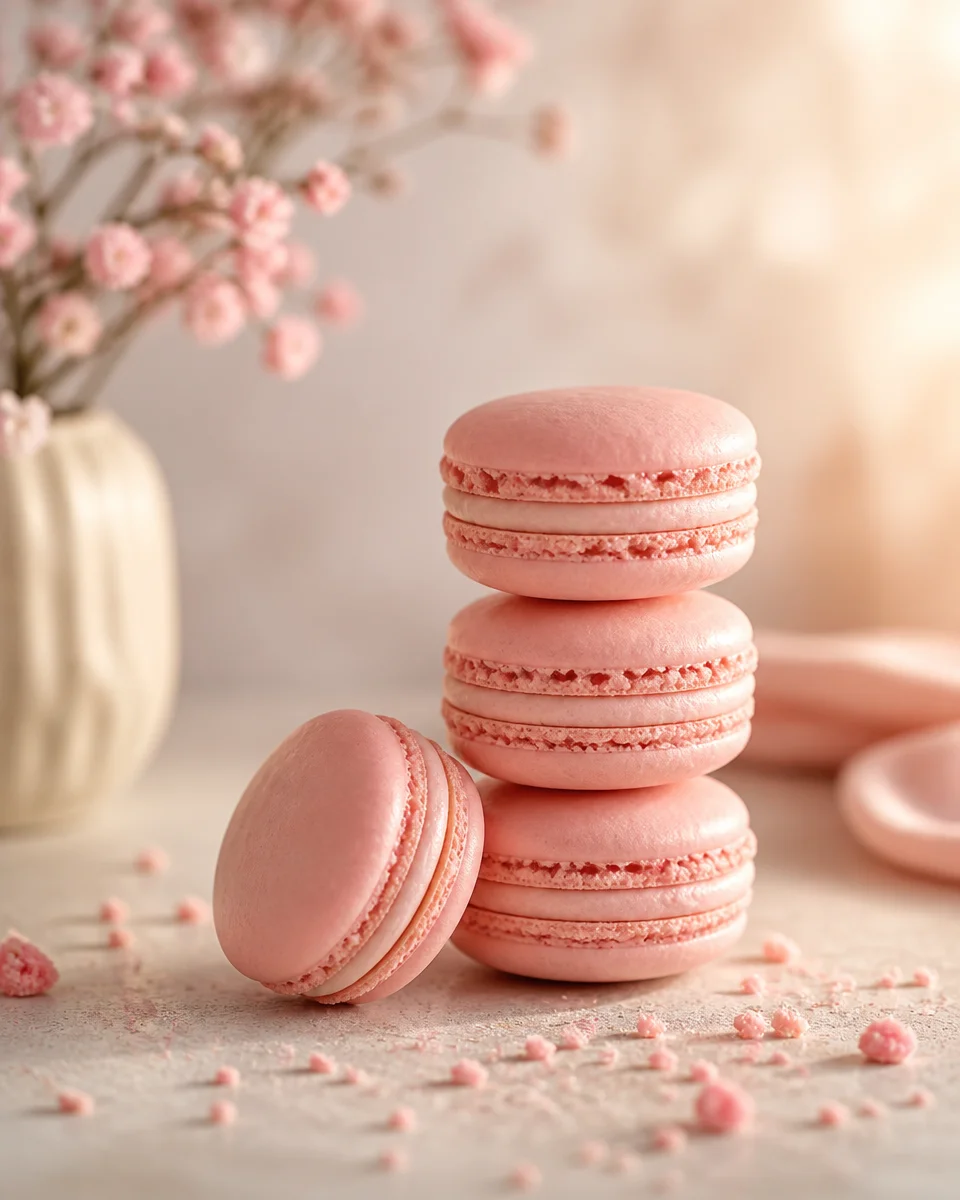
Let us get one thing straight: French macarons are not the same as macaroons. Macaroons are those coconut-y little mounds. Macarons are delicate sandwich cookies made with almond flour and whipped egg whites, with a creamy filling in the middle.
The texture is the whole point. The tops should be smooth and dry, the edges should have those ruffled “feet,” and the inside should be slightly chewy. When they are good, they feel light but also satisfying, like a tiny dessert you actually want to slow down for.
Macarons are basically a meringue plus almond flour plus powdered sugar. That is it. The “hard” part is getting the batter to the right thickness and baking them until they set without cracking. If you can follow a few rules and stay patient, you can absolutely make French Macarons (Beginner Friendly) in your own oven.
Also, if you are in a French mood and want something savory for another day, I am obsessed with this cozy deliciously easy French onion soup recipe. It is the total opposite vibe from macarons, but both hit that French comfort note.
What you will need (simple, but specific)
- Kitchen scale (macarons are picky, measuring by weight matters)
- Fine mesh sieve (for sifting almond flour and powdered sugar)
- Stand mixer or hand mixer
- Piping bag (a zip bag can work in a pinch)
- Round piping tip (optional but helpful)
- Baking sheets and parchment paper or a silicone mat
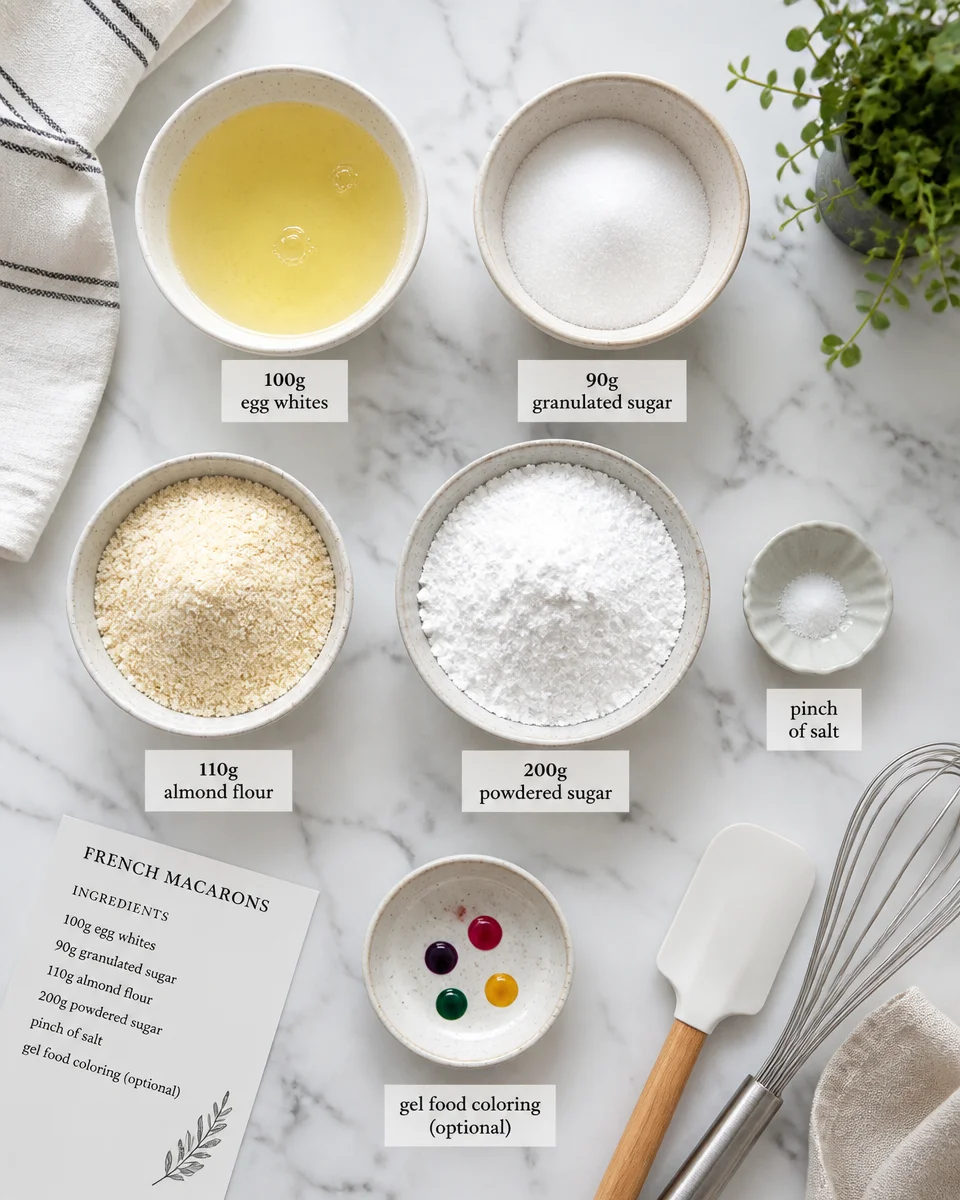
And here is the ingredient list I use for a basic batch. I keep the shells simple and play with fillings later.
- 100g egg whites (from about 3 large eggs), room temperature
- 90g granulated sugar
- 110g almond flour
- 200g powdered sugar
- Pinch of salt
- Optional: gel food coloring (skip liquid coloring)
Key Benefits of French Macarons (Beginner Friendly)
Besides the fact that they are cute and taste amazing, there are a few reasons I keep coming back to French Macarons (Beginner Friendly), even when I have had a long day and my sink is already full of dishes.
First, they are a real confidence booster. The first time you pull a tray out and see feet, you feel like you just won a tiny baking trophy. Second, they are naturally gluten free because they use almond flour instead of regular flour. That makes them a nice option if you are baking for friends who avoid gluten.
Third, they store well. You can make them ahead, refrigerate them, and they actually get better after a day as the filling softens the shells slightly. That makes them great for birthdays, brunches, or those moments when you want to show up somewhere with something that looks like you tried really hard (even if you were still in pajamas while piping them).
And honestly, they are fun. You can do different colors, fillings, and flavors without changing the basic method. If you like having a “project bake” that is not a whole layer cake, macarons are perfect.
I once brought a box of macarons to a casual get together, and they disappeared faster than the chips. Someone asked where I bought them, and I was ridiculously proud to say, I made them.
“I always thought macarons were impossible, but following these beginner steps made my first batch look like something from a bakery. The feet showed up and I actually yelled in my kitchen.”
By the way, if you are planning a full spread and want an easy main, this crockpot French dip sandwich is a lifesaver for feeding people while you focus on baking.
Common Misconceptions about French Macarons (Beginner Friendly)
I hear a lot of myths about macarons, and a few of them stop people before they even try. Let us clear up the big ones.
Misconception 1: You need “aged” egg whites for days. Some bakers swear by aging egg whites. It can help reduce moisture, sure, but you can still make great macarons with fresh egg whites as long as they are room temperature and you weigh them.
Misconception 2: Any almond flour works. Almond flour should be finely ground. If it is coarse, your shells can look bumpy and rustic. Still edible, but not that smooth bakery finish. I sift mine, and if I see a lot of larger bits, I switch brands next time.
Misconception 3: Cracks mean you failed. Cracks are usually a sign of trapped steam, often because the shells did not rest long enough or your oven is too hot. It is a fixable problem, not a personal flaw.
Misconception 4: You must be perfect at piping. Not true. If your circles are a little uneven, they still taste great. And once you sandwich them with filling, you will be surprised how “professional” they look.
If you want a cozy breakfast project instead of a finicky cookie day, this cinnamon roll French toast casserole is my go to when I want something comforting and low stress.
Practical Tips and Strategies for Implementing French Macarons (Beginner Friendly) {video_youtube}
This is the part that actually makes or breaks your batch. I am going to keep it practical and beginner focused, because that is what you need when your batter is sitting in a bowl and you are thinking, is this right?
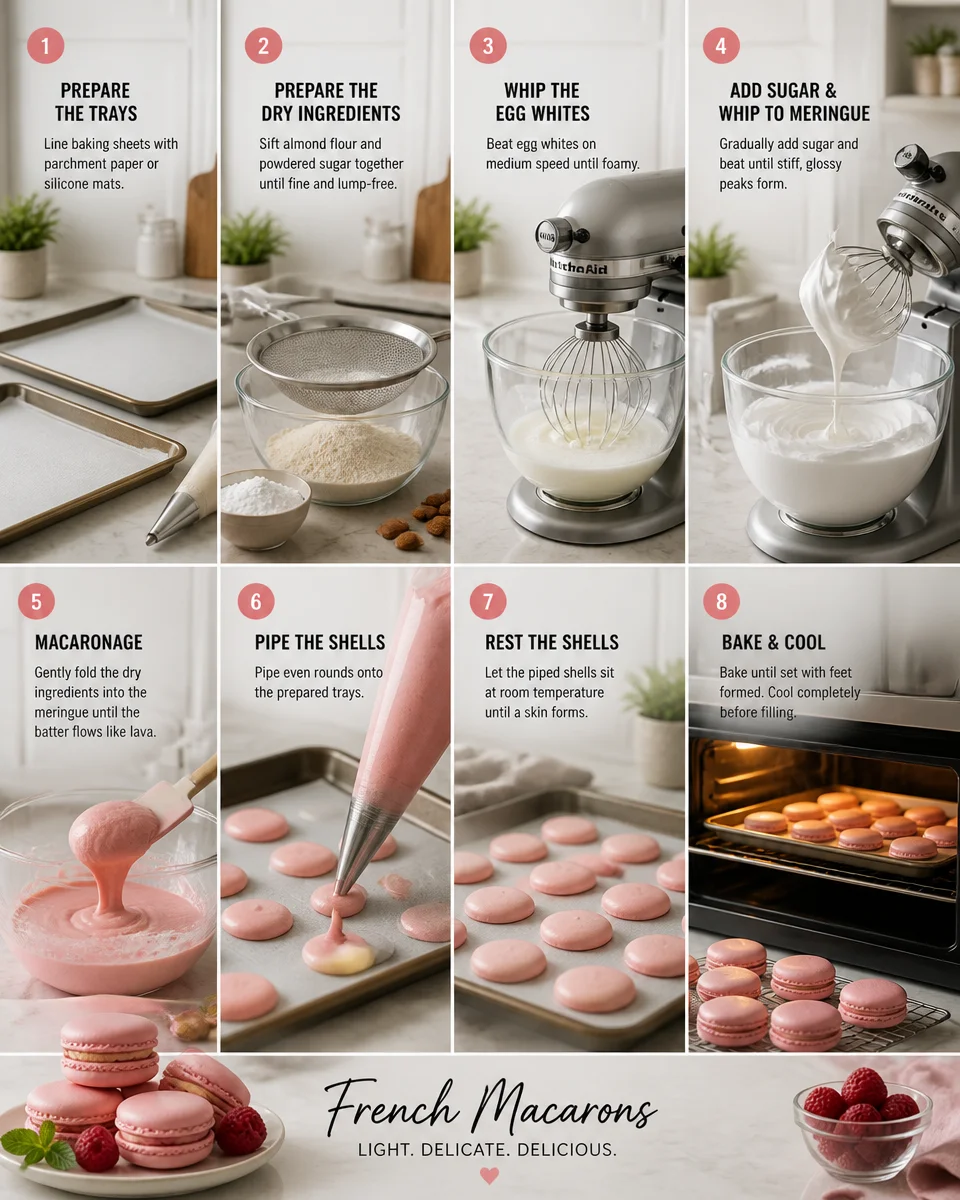
Step 1: Prep your trays
Line baking sheets with parchment or silicone mats. If you want super even circles, trace small circles on the back of the parchment as a guide. Flip it over so the pencil does not touch the batter.
Step 2: Sift the dry ingredients
Sift almond flour and powdered sugar together. Do not skip this. It is the easiest way to avoid lumpy tops.

Step 3: Whip the meringue
Beat egg whites with a pinch of salt until foamy, then slowly add granulated sugar. Whip until you get glossy, stiff peaks. If you lift the whisk, the peak should stand up without drooping much. Add gel coloring now if you are using it.
Step 4: Mix to the right batter texture
This part is called macaronage, but I will not get fancy with terms. You are basically folding the dry mix into the meringue until the batter flows like thick lava. When you lift your spatula, the batter should fall in a ribbon and you should be able to draw a figure 8 without it breaking.
Step 5: Pipe and tap
Pipe small rounds, about 1.5 inches. Then tap the tray firmly on the counter a few times to pop air bubbles. If you see bubbles on top, poke them with a toothpick.
Step 6: Rest the shells
Let them sit until the tops feel dry to the touch. This can take 20 to 45 minutes depending on your kitchen. This rest helps form that skin that leads to feet instead of cracks.
Step 7: Bake with patience
Bake around 300F (150C) for 14 to 18 minutes. Every oven is different. My best tip is to do a test tray and take notes. The shells are done when they do not wobble if you gently nudge the top.
Step 8: Cool before filling
Let them cool completely before peeling off the paper. Warm shells stick and crack.
Now for fillings, I keep it simple for beginners: vanilla buttercream, chocolate ganache, or store bought lemon curd. Once you get the shell down, you can play.
If you want a party friendly sandwich situation while you are baking, these French dip sliders are easy and always a hit. And if you are craving a real comfort dinner, this best French meat pie is the kind of thing you make once and then think about for days.
Resources for Further Learning
If you want to keep improving your French Macarons (Beginner Friendly) skills, the best thing you can do is make them a few times and change only one variable at a time. Like, keep the same recipe but adjust oven temp slightly. Or keep the oven the same but rest the shells longer. That is how you learn what your kitchen likes.
Here are a few extra ways to learn faster without getting overwhelmed:
- Keep a small baking note on your phone with oven temp, bake time, and results
- Take a quick photo of your batter texture before piping
- Practice piping on parchment with a spoonful of batter if you are nervous
- Start with one color and one filling until the shells feel consistent
Common Questions
Why did my macarons crack?
Most often they cracked because the tops did not dry enough before baking or your oven ran hot. Next time, rest longer and consider lowering the temperature slightly.
Why are my shells hollow inside?
Hollows can happen from overmixing, undermixing, or baking issues. For beginners, the most common is over whipping the meringue too stiff and then mixing too aggressively. Aim for stiff peaks, not dry clumps, and fold gently.
Do I really need a scale?
For macarons, yes. A scale is the difference between guessing and repeating results. It is the most beginner friendly tool you can buy for this recipe.
Can I make them on a humid day?
You can, but resting might take longer. If your kitchen is very humid, run the air conditioner or a dehumidifier if you can. Humidity mainly messes with that dry top layer.
How long do macarons last?
Filled macarons keep well in the fridge for about 3 to 5 days. Let them sit at room temperature for 15 minutes before eating so the texture is just right.
A sweet little pep talk before you bake
Macarons are one of those bakes where your second batch is usually way better than your first, so do not judge yourself too hard. Stick to the basics, weigh everything, and focus on the batter texture and resting time. If you want extra guidance, I like comparing notes with reliable tutorials like Beginner’s Guide to French Macarons – Sally’s Baking Addiction and the detailed photos in Foolproof Macaron Recipe (Step by Step!) – Broma Bakery. Try a simple flavor first, keep your expectations realistic, and have fun with it. When you finally bite into a chewy, delicate French Macarons (Beginner Friendly) sandwich cookie that you made yourself, it feels so worth it.

French Macarons
Ingredients
Method
- Line baking sheets with parchment or silicone mats. Use small circles as a guide for even piping if desired.
- Sift almond flour and powdered sugar together to avoid lumpy tops.
- Beat egg whites with a pinch of salt until foamy. Gradually add granulated sugar and whip until glossy, stiff peaks form.
- Fold the dry mixture into the meringue until it flows like thick lava, forming a ribbon when lifted.
- Pipe small rounds, approximately 1.5 inches across, then tap the baking sheets to remove air bubbles.
- Allow shells to rest until the tops feel dry, which can take 20 to 45 minutes.
- Bake in a preheated oven at 300F (150C) for 14 to 18 minutes until no wobble is detected when gently nudged.
- Cool completely before peeling off the parchment.
- Fill cooled shells with a simple filling such as vanilla buttercream, chocolate ganache, or store-bought lemon curd.