
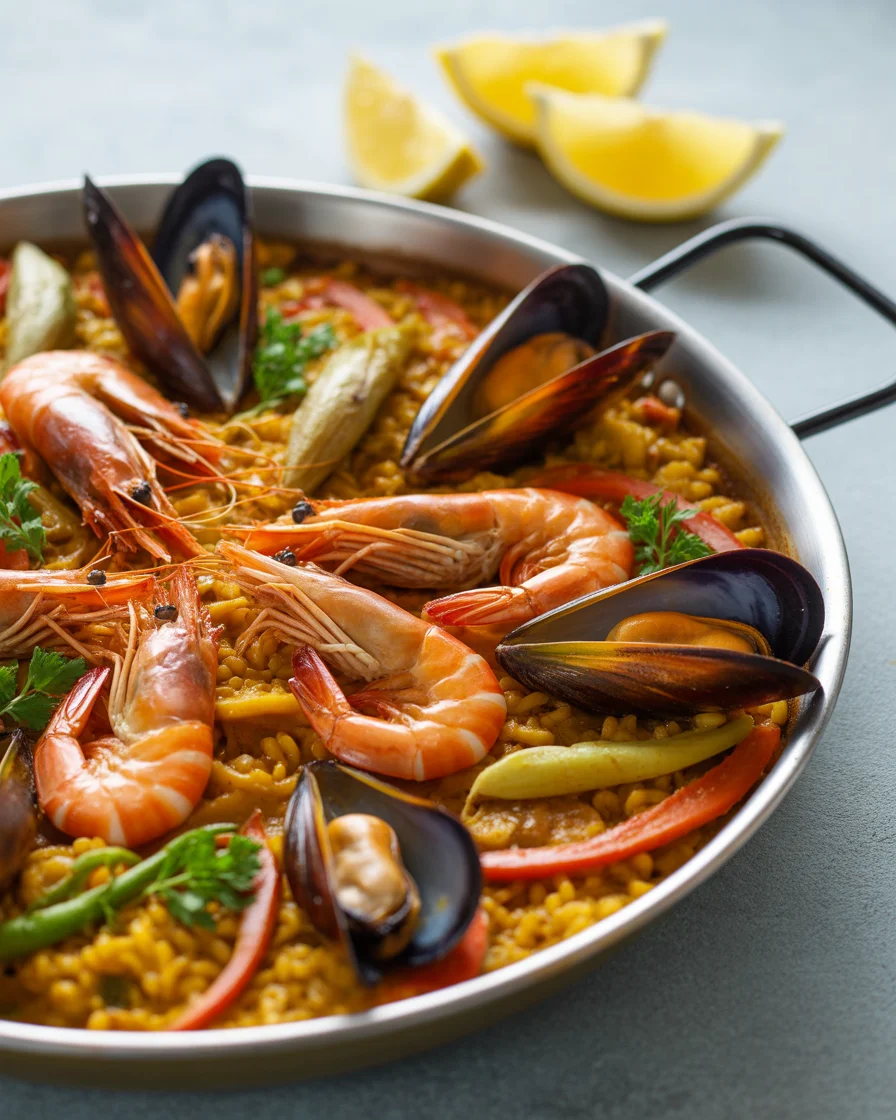
Spanish Seafood Paella can feel a little intimidating the first time, especially if you have guests hovering around the stove waiting for dinner. I get it. You want golden rice, tender seafood, that little crusty layer at the bottom, and zero stress. The good news is you can absolutely nail it at home with simple steps and the right mindset. Grab your biggest skillet, put on some music, and if you want a dunkable side for the shrimp and clams, bookmark this tasty seafood garlic butter dipping sauce. Let me walk you through my favorite way to make it feel like a chill weekend cook instead of a high-pressure performance.
What is Paella?
Paella is a Spanish rice dish built around the idea of gathering, sharing, and letting great ingredients shine. Traditionally from Valencia, it has variations, but the version that wins hearts at my table is packed with seafood. You get saffron-scented rice that’s both cozy and sunny, dotted with shrimp, mussels, clams, maybe squid, and occasionally a few pieces of firm white fish. The key is that the rice is the star and everything else backs it up with flavor.
A quick snapshot of the dish
Think of paella like a one-pan celebration. The rice cooks in a wide, shallow layer so it absorbs flavor from the broth, paprika, saffron, and seafood juices. Unlike risotto, you don’t stir it. You let it sit, gently simmer, and do its thing. That’s how you get a mix of tender grains on top and a toasty, savory base layer called socarrat. I’ll show you exactly how to get that just right in a minute.
If you’re wondering where to start, remember this: great paella depends on good stock, proper rice, and patience. Keep those three in mind, and your Spanish Seafood Paella will taste like a little trip to the coast.

The Secret to a Perfect Seafood Paella with Socarrat
What is socarrat?
Socarrat is the gently toasted layer of rice at the bottom that tastes nutty and a bit caramelized. It’s the part people fight over. Getting it right is about heat control and timing. You want most of the liquid absorbed and the rice almost done before you increase the heat for a short burst at the end. That quick finish builds flavor without burning.
Heat and timing
Start with medium heat to build your base. After adding stock, keep a steady gentle simmer. When the rice is almost tender and the liquid has mostly disappeared, raise the heat for 1 to 2 minutes to toast the bottom. Then turn off the heat and let it rest for about 5 minutes. This is when the steam settles and the grains relax. Resist the urge to stir. If you poke a spoon down and feel a bit of resistance and smell a toasted aroma, you nailed it.
A few more practical secrets I swear by:
Use the right rice. Bomba or Calasparra are best because they absorb flavor without turning mushy.
Warm your stock. Warm broth keeps the simmer steady and prevents the rice from tightening up.
Layer flavors early. Sauté onion, garlic, and paprika first, then deglaze with tomatoes and wine. The rice will drink in all that goodness.
And if you’re serving this for a crowd, I love putting a small bowl of garlic butter seafood dip on the table. It pairs especially well with the shrimp you pull from the pan.
“I was nervous the first time I tried paella, but following the heat cues for socarrat gave me that dreamy crust. My family asked when I was making it again before we even cleared our plates.”
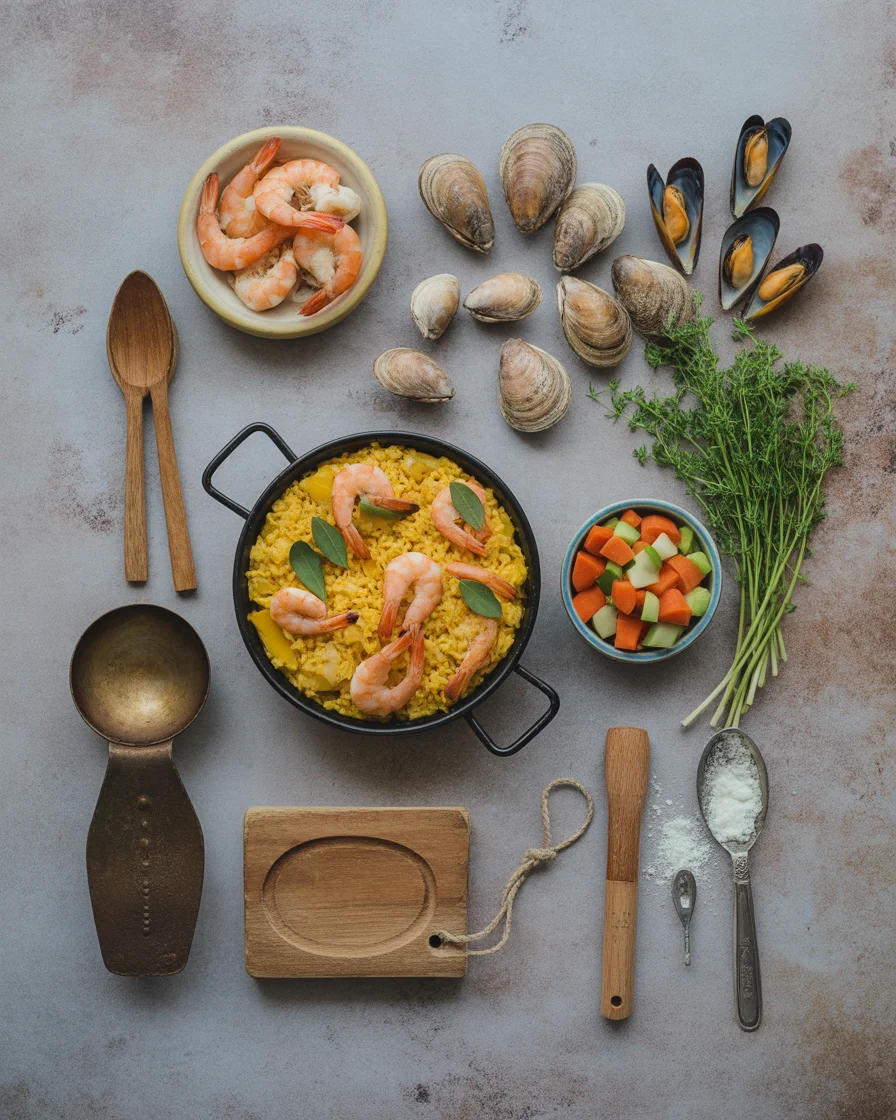
Ingredients for Authentic Spanish Paella
Here’s what I use for a medium pan that serves 4 to 6. Keep it flexible. If your market has beautiful mussels but no clams, swap. If you can only find shrimp, make it a shrimp-focused paella. It’s better to use great seafood in fewer varieties than to force a mix that isn’t fresh.
- Olive oil
- 1 medium onion, finely chopped
- 3 to 4 garlic cloves, minced
- 1 teaspoon sweet smoked paprika
- Pinch of red pepper flakes, optional
- 1 large tomato, grated or crushed
- 1 cup Bomba or Calasparra rice (or 1 cup other short-grain rice if that’s all you have)
- 3 cups warm seafood or chicken stock, plus more as needed
- A good pinch of saffron threads, soaked in a few tablespoons of warm stock
- 12 to 16 large shrimp, peeled and deveined, tails on if you like
- 12 mussels or clams, cleaned
- 1 small squid or 6 to 8 ounces calamari rings, optional
- 6 to 8 ounces firm white fish, cut into chunks, optional
- Salt and black pepper
- Lemon wedges and chopped parsley for serving
If you like a dipping moment for the shellfish, this buttery seafood dipping sauce is a crowd-pleaser. Serve it on the side so it doesn’t overpower the saffron and paprika in the rice.
How to Make Spanish Paella
Set yourself up for success. Have your stock warm, saffron soaking, and seafood cleaned and ready. The actual cooking goes fast once you start.
- Heat the pan: Add a generous splash of olive oil to a wide skillet or paella pan over medium heat. Sauté onion with a pinch of salt until softened. Stir in garlic, paprika, and a tiny pinch of red pepper flakes if you like a little heat.
- Build the base: Add the crushed tomato and cook until slightly thickened and jammy. This is your flavor foundation.
- Coat the rice: Add the rice and stir to coat with the oil and tomato mixture for about 1 minute. This helps the grains keep their structure.
- Add liquid: Pour in warm stock and the saffron with its soaking liquid. Season with salt and pepper. Gently shake the pan to distribute the rice in an even layer. Do not stir again.
- Simmer: Let it bubble gently. Adjust heat so it’s a steady simmer, not a rolling boil. If the liquid evaporates too fast, add a splash more warm stock around the edges.
- Add seafood: When the rice is halfway cooked, nestle in the shrimp, mussels, clams, squid, and fish. Tuck them into the rice so they cook evenly. Keep simmering until the mussels and clams open and shrimp turn pink and firm.
- Create socarrat: Once most of the liquid is absorbed and rice is just tender, increase the heat for 60 to 90 seconds to toast the bottom lightly. Listen for a faint crackle and sniff for a toasty aroma.
- Rest: Turn off the heat. Cover the pan loosely with a clean towel for 5 minutes. This final rest makes a big difference.
- Finish and serve: Sprinkle with chopped parsley and serve with lemon wedges. If your friends love to dip the shrimp, set out a small bowl of garlicky butter sauce on the side.
That’s it. Nothing fancy, just good ingredients and patience. Your Spanish Seafood Paella should look vibrant, with rice that’s tender but not mushy, seafood that’s juicy, and a base that whispers toasty notes without bitterness.
Do I Need a Paella Pan?
Best pan sizes
Short answer: it helps, but you can still make a great paella in a wide skillet. A true paella pan is shallow and wide, which encourages evaporation and even cooking. If you have a 13 to 15 inch skillet, use that. The goal is to keep the rice in a relatively thin layer. Too deep and the bottom overcooks before the top is ready.
What to avoid
Avoid tall pots and small pans. You’ll end up with uneven rice. If your burner is small, rotate the pan a bit during cooking to distribute heat. If the middle cooks faster than the edges, you can move the pan slightly off-center to even it out.
For a crowd, two medium pans are better than one giant one if your stove struggles to heat a larger pan evenly. And for serving? Bring the pan to the table. That’s the charm. Paella is meant to be shared, and it tastes even better when everyone digs in together. When I plan a casual dinner, I pop a small bowl of seafood garlic butter dip next to the lemons and parsley and let people go to town.
Common Questions
What rice should I buy if I can’t find Bomba?
Use another short-grain rice if possible. Arborio can work in a pinch, but watch the liquid and aim for a slightly firmer texture since it tends to get creamy.
How much liquid do I need?
A common ratio is about 3 cups of warm stock per 1 cup of Bomba or Calasparra rice. Start there and add a splash more only if the rice needs it near the end.
Can I use frozen seafood?
Yes, just thaw it well and pat it dry. Overly wet seafood can dilute flavor. Season lightly before adding it to the pan.
How do I prevent overcooked shrimp?
Nestle them into the rice when it’s about halfway done so they poach gently. Pull the pan off the heat as soon as they’re pink and firm.
Any good sauce to serve on the side?
Absolutely. A small dish of seafood garlic butter dipping sauce is perfect for dunking shrimp and clams without masking the saffron and paprika in the rice.

Let’s Get You Cooking With Confidence
Spanish Seafood Paella is simpler than it looks when you set yourself up, use the right rice, and trust the process. Keep the simmer gentle, avoid stirring once the stock goes in, and finish with that quick heat nudge for a light socarrat. If you want more guidance, this friendly walkthrough from Spanish Paella Recipe – Tastes Better from Scratch is super helpful, and this detailed method from Authentic Spanish Seafood Paella Recipe – Spain on a Fork nails the classic flavors. Grab a wide pan, quality stock, and fresh seafood, and you’ll be proud of what comes out of your kitchen tonight. You’ve got this, and your table is about to cheer.
Spanish Seafood Paella
Ingredients
Method
- Heat the pan: Add olive oil to a wide skillet over medium heat. Sauté onion with a pinch of salt until softened.
- Stir in garlic, paprika, and red pepper flakes (if using) for about 1 minute.
- Add the crushed tomato and cook until slightly thickened.
- Add the rice and stir to coat with the mixture for about 1 minute.
- Pour in warm stock and saffron, season with salt and pepper, and gently shake the pan to distribute the rice.
- Simmer: Let it bubble gently without stirring. Adjust heat if the liquid evaporates too fast.
- When the rice is halfway cooked, nestle in the seafood, ensuring they are embedded in the rice.
- Once most of the liquid is absorbed and rice is tender, raise the heat for 60-90 seconds to create socarrat.
- Turn off the heat and cover the pan with a clean towel for 5 minutes.
- Sprinkle with chopped parsley and serve with lemon wedges.