

Hog Head Cheese is one of those foods people whisper about like it is some mysterious old time secret, but honestly, it is just a cozy, practical recipe that turns humble pork into something you can slice and snack on all week. If you have ever stared at a deli case and wondered what that “head cheese” loaf actually is, you are in the right place. The first time I made it, I was mostly trying not to waste anything and I ended up falling in love with the flavor. It is rich, a little peppery, and weirdly satisfying in the most down home way. Also, it is way less scary to cook than the name makes it sound. 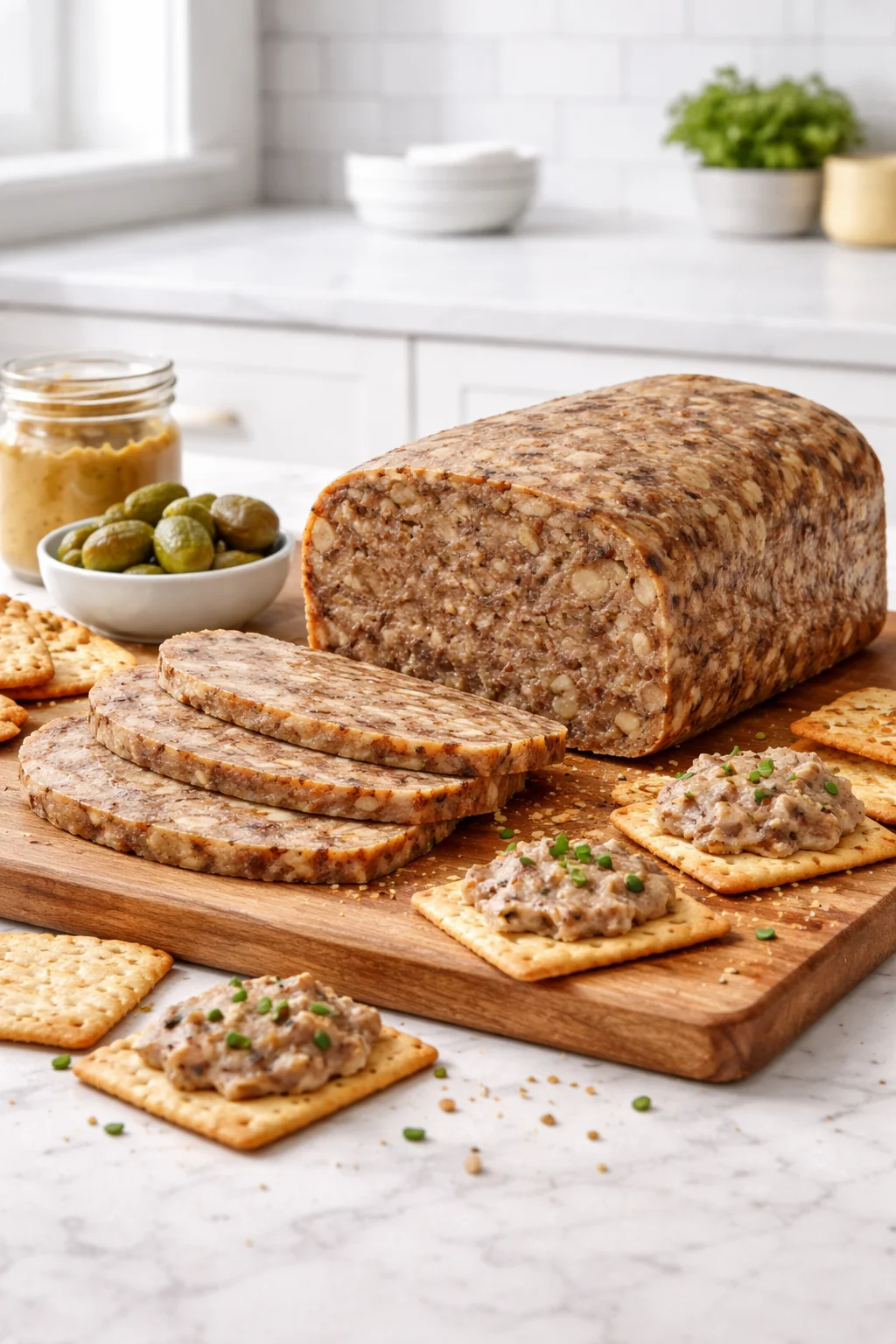

The Story Behind This Recipe
Here’s why I love this Hog Head Cheese: it uses pantry staples and it tastes like home. Hog Head Cheese is one of those foods people whisper about like it is some mysterious old time secret, but honestly, it is just a cozy,…
What is Head Cheese?
Despite the name, there is no cheese involved. Head cheese is basically a meat terrine that sets up firm thanks to natural gelatin from the bones and skin. Traditional versions often use a pig head, sometimes with extra pork like hocks for more meat and more silky texture.
When it is chilled, it slices like a soft deli loaf. The taste is porky, savory, and usually brightened up with vinegar and spices. If you like foods like pate or even a good cold cut, you might be surprised by how familiar it feels.
I like serving it thin sliced with hot sauce and crackers, kind of like a snack board situation. And if you are building a party spread, something gooey and cheesy next to it is fun, like this 3 ingredient chili cheese dip. Different vibe, same “crowd disappears it fast” energy.
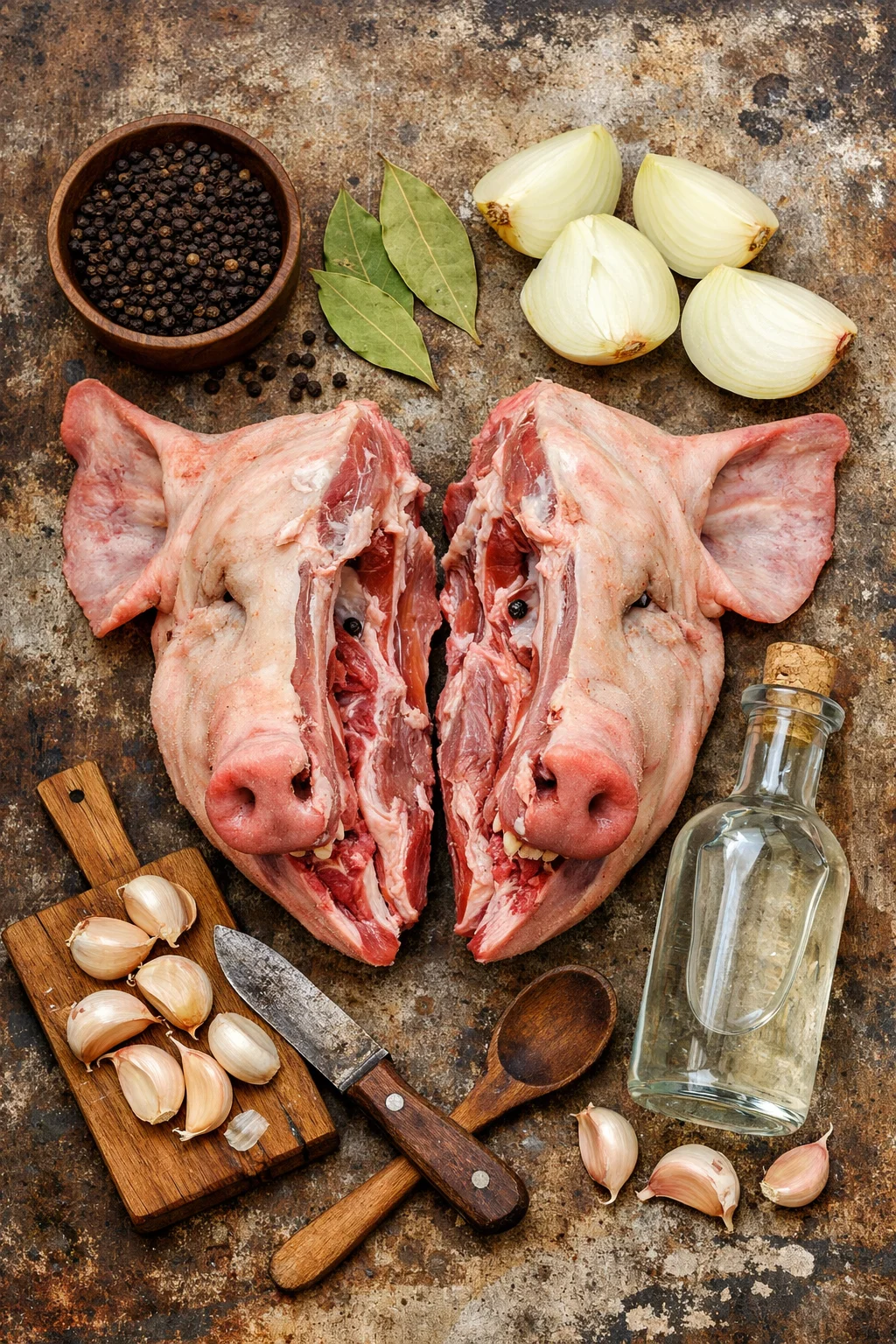
Headcheese Ingredients
This is one of those recipes where the ingredient list looks simple, but each piece matters. You do not need fancy stuff, just the right basics and enough seasoning to make it pop.
What you will need
- Pig head (split if possible for easier handling) or a mix of pig head and pork hocks
- 1 to 2 onions, quartered
- 2 to 3 bay leaves
- 1 tablespoon whole black peppercorns (or 2 teaspoons ground pepper)
- Salt, to taste
- 2 to 3 cloves garlic, smashed
- Vinegar (white or apple cider) for that classic tang
- Optional: crushed red pepper, celery seed, parsley
My personal tip is this: do not be shy with black pepper and a little vinegar. That is what keeps the loaf from tasting flat. If you like your snacks with a sweet finish after a salty bite, I totally get it. I am the same way, and I will often follow something like Hog Head Cheese with a small dessert, like these apple pie cheesecake trifles when I want something easy and fun.
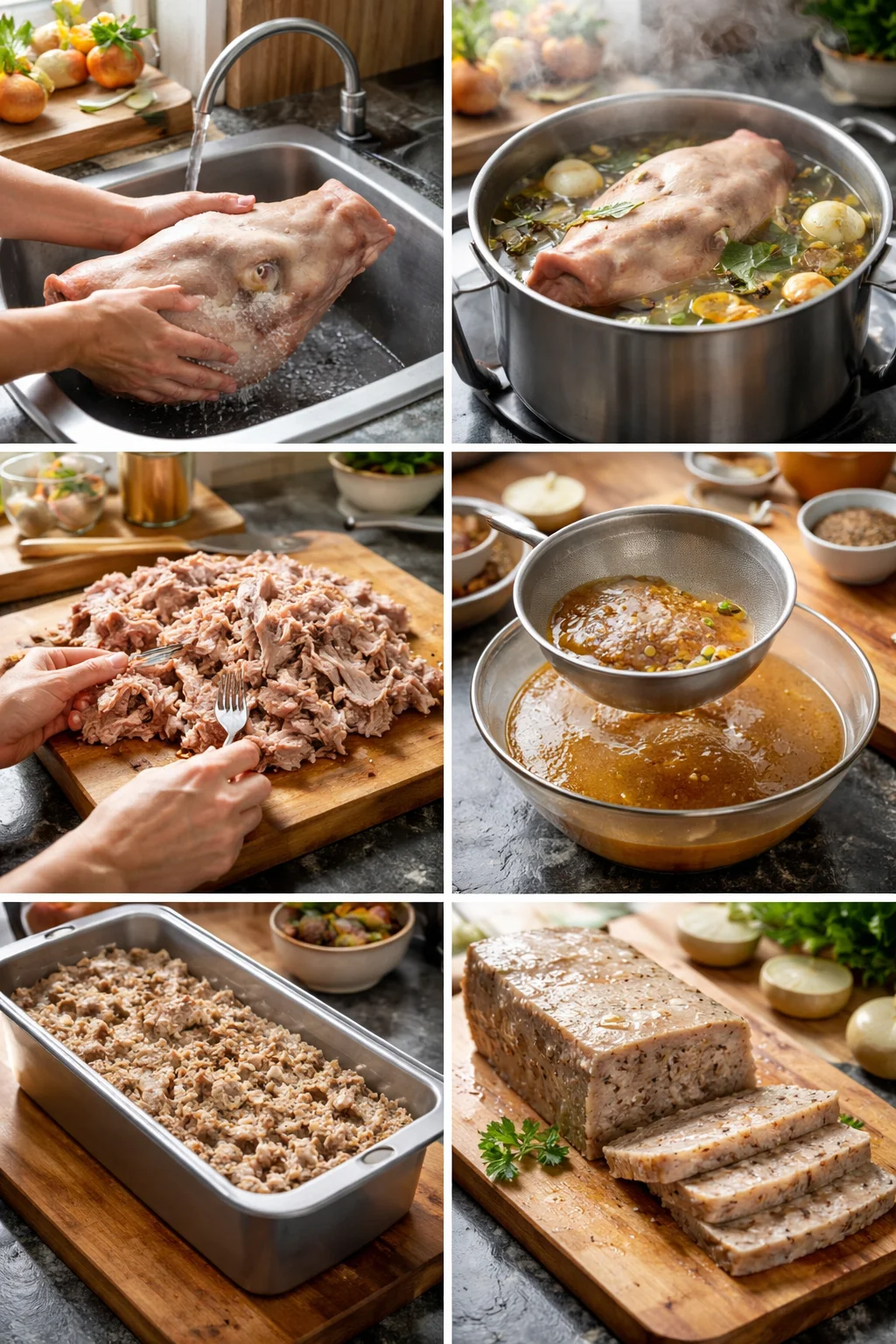
How to Make Headcheese (Step-by-Step)
Let me talk you through how I make Hog Head Cheese at home. You do not need special skills, just patience and a big pot. This is weekend cooking, the kind where the house smells good and you keep checking the pot like you are guarding treasure.
Step 1: Clean and prep.
Rinse the pig head well. If you see stray hairs, singe them off carefully or ask the butcher to clean it. Split heads are easier to fit in a pot. If you are squeamish, gloves help and honestly, you get over it fast because it is just food.
Step 2: Simmer low and slow.
Put the head (and hocks if using) in a large pot. Cover with water by a couple inches. Add onions, bay leaves, garlic, pepper, and a good pinch of salt. Bring it to a boil, then drop it to a gentle simmer. Skim foam if it shows up at the top. Let it go until the meat is falling off the bone. For me, that is usually 3 to 4 hours.
Step 3: Pull the meat.
Carefully lift everything out and let it cool until you can handle it. Pick off the meat and the good soft bits. You can include some skin if you like that traditional texture. Toss bones, and be careful with small bits. Chop the meat into small pieces. Not mushy, just nice and scoopable.
Step 4: Strain and season the broth.
Strain the cooking liquid. This is where the magic is because the gelatin is in there. Taste it and add more salt, plenty of black pepper, and a splash of vinegar. Start small, then add more until it tastes bright. If you want a little heat, a pinch of crushed red pepper is great.
Step 5: Combine and mold.
Put the chopped meat into a loaf pan or bowl. Pour in enough hot broth to just cover it and make it spoonable. Press it down so it sets evenly. Cover and refrigerate overnight.
Step 6: Slice and serve.
Once firm, slice it. If it is too soft, you likely needed to reduce the broth a bit more or use more collagen rich parts like hocks. If it is too firm, you used too little liquid. Either way, it will still taste good, and you will nail it next time.
I like mine with mustard, pickles, and crackers. And if you are an air fryer dessert person (I am, not even ashamed), try making something fun for later like these air fryer cherry cheesecake egg rolls. They are a cute contrast to a salty, savory slice of head cheese.
Reader Interactions and Customer Reviews
Any time I post about Hog Head Cheese, my messages split into two camps. Camp one is people who grew up with it and get instantly nostalgic. Camp two is people who say “I am curious, but I am also slightly scared.” Both are valid.
Here is what I usually tell first timers: start with a thin slice. Put it on a cracker with mustard. Take a bite. The flavor is the gateway, not the idea in your head. Once you taste that peppery pork and the gentle tang, it makes sense.
“I made your version last weekend and my dad said it tasted like his grandma used to make. We ate it with pickles and hot sauce and I already got asked to make it again.”
If you make it, I would love to hear how you season yours. Some folks go heavy on vinegar, some like more garlic, and some keep it mild. There is room for your personality in it, which is half the fun.
Cultural Significance of Head Cheese
Head cheese shows up in a lot of places around the world, not just one cuisine. In parts of the American South, it is a classic deli counter staple. In Louisiana, you will see versions with Cajun seasoning and a little heat. In Europe, especially France and Germany, you will find similar preparations, sometimes called by different names, but the idea is the same: use the whole animal and make something delicious.
That is the part I really respect. Hog Head Cheese is not “trendy,” but it is smart cooking. It comes from families making do, stretching a budget, and still eating well. And to me, that is real food culture.
Common Questions
1) Does head cheese have actual cheese in it?
Nope. It is meat that sets because the broth is naturally gelatin rich.
2) How long does Hog Head Cheese last in the fridge?
Usually about 5 to 7 days if kept covered and cold. If it smells off or gets slimy, toss it.
3) Why did my loaf not set?
Your broth may not have enough gelatin. Next time, simmer longer, add a hock, or reduce the strained broth a bit before mixing.
4) Can I freeze it?
Yes, but the texture can change slightly when thawed. I prefer eating it fresh within the week.
5) What is the best way to serve it?
Thin slices with mustard, pickles, crackers, and maybe a few drops of hot sauce. Simple and perfect.
A good first batch is all you need
If you have been curious about Hog Head Cheese, I hope this makes it feel doable, not intimidating. Once you make it once, the process clicks, and you can tweak the pepper, vinegar, and garlic until it tastes like your house. For extra guidance and a more chef focused deep dive, check out Classic Pork / Hogs Headcheese (Fromage de Tête) – Forager | Chef. And if you would rather try it before committing to a whole pot, you can even buy it from places like HOG HEAD CHEESE (MILD) 0.5 LBS – Mad Butcher Meat Company to get a baseline for the flavor. Either way, give it a shot, invite a friend over, and slice it up like you mean it.
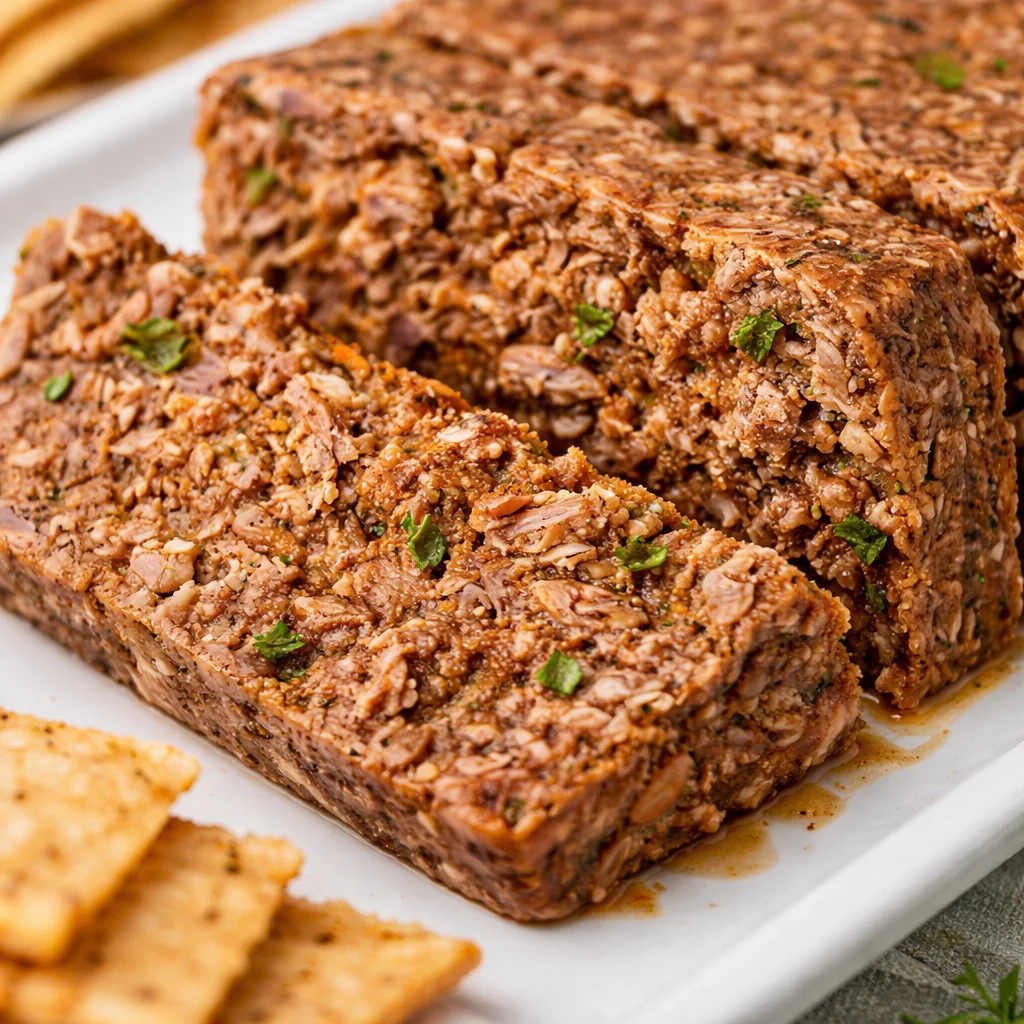
Hog Head Cheese
Ingredients
Method
- Rinse the pig head well. If you see stray hairs, singe them off carefully or ask the butcher to clean it.
- Split heads are easier to fit in a pot. If you are squeamish, gloves help.
- Put the head (and hocks if using) in a large pot. Cover with water by a couple inches.
- Add onions, bay leaves, garlic, pepper, and a good pinch of salt. Bring to a boil, then drop to a gentle simmer.
- Let it cook until the meat is falling off the bone, usually 3 to 4 hours.
- Carefully lift everything out and let it cool until you can handle it. Pick off the meat and the good soft bits.
- Strain the cooking liquid. Taste it and add more salt, plenty of black pepper, and a splash of vinegar. Adjust to taste.
- Put the chopped meat into a loaf pan or bowl. Pour in enough hot broth to just cover it and make it spoonable.
- Press it down so it sets evenly. Cover and refrigerate overnight.
- Once firm, slice and serve with mustard, pickles, and crackers.