
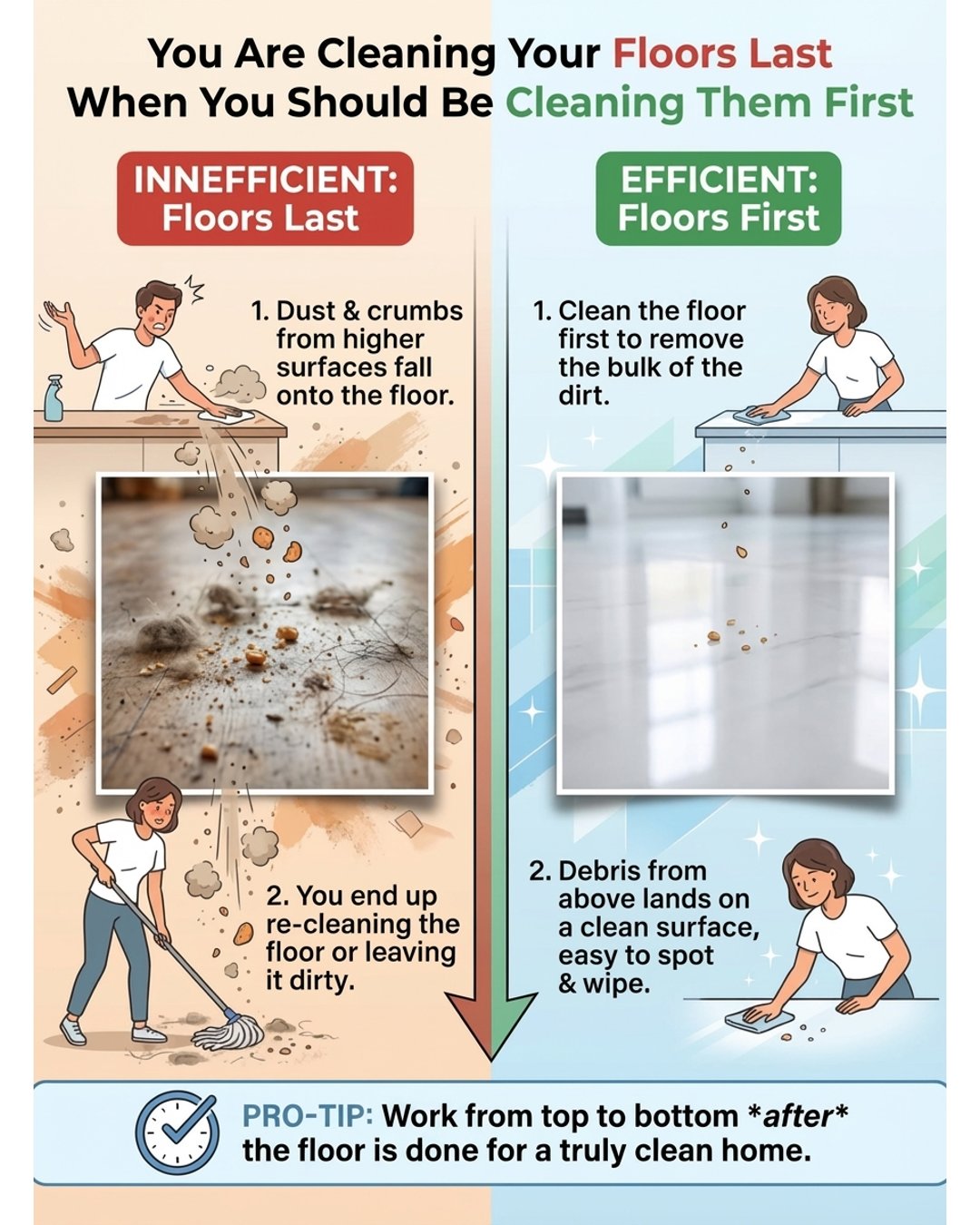
You Are Cleaning Your Floors Last When You Should Be Cleaning Them First, and I used to do it too. I would wipe the counters, rinse a few dishes, light a candle, and then look down at the floor like it was someone else’s problem. But here’s the thing, once you sweep and mop at the end, you’re basically mopping up crumbs that fell during the whole cleaning session. It’s like dressing a salad and then deciding to wash the lettuce after. Today I’m sharing my favorite little cleaning recipe, the one I mix in a bowl like I’m making a quick vinaigrette, plus the exact order I use so the whole kitchen feels fresh fast. 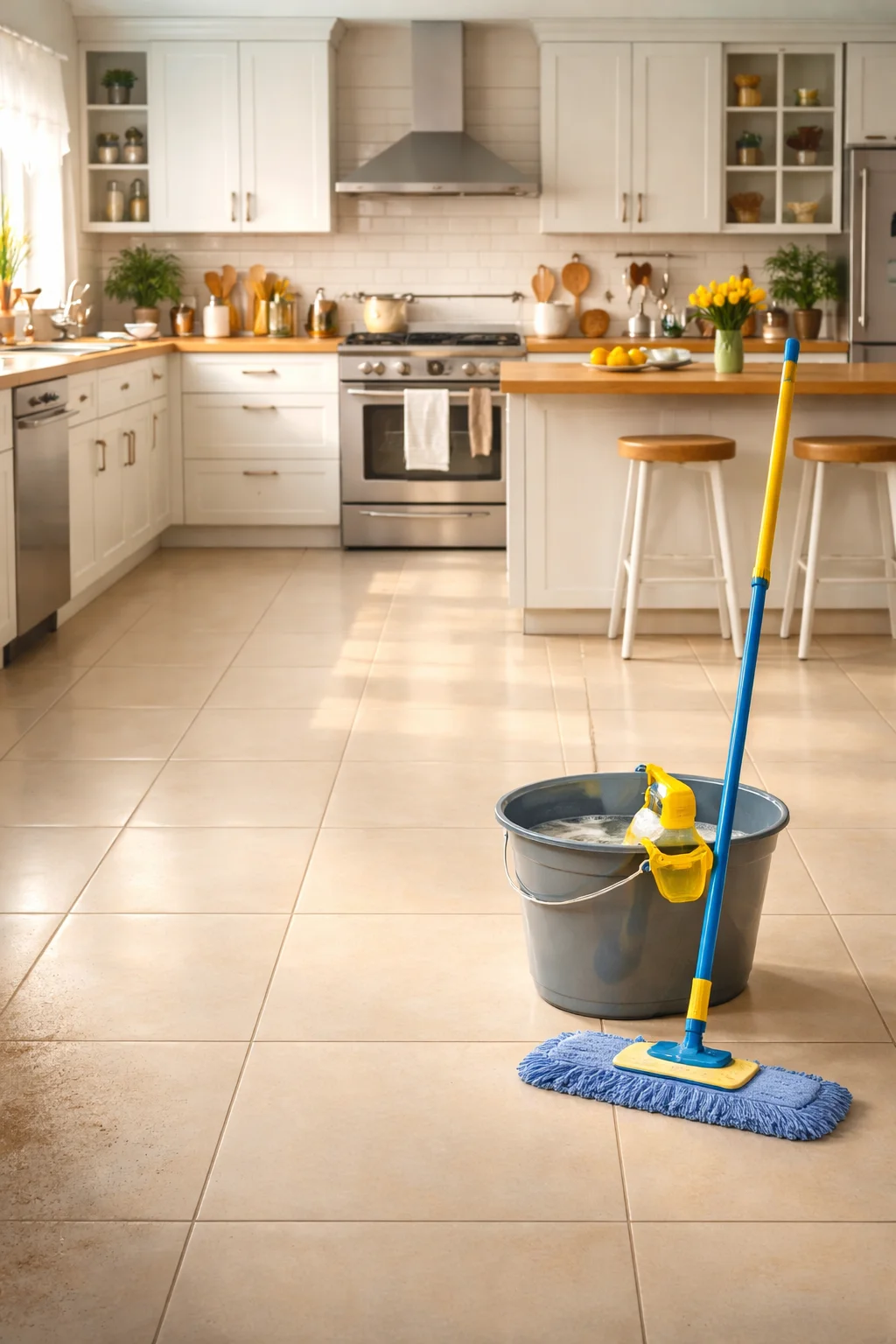
Understanding the Different Types of Flooring
Before we get into the fun part where we mix up a cleaner, we’ve got to talk floors. Because cleaning tile like it’s hardwood is how you end up with weird haze, sticky spots, or boards that start looking tired way too soon.
Here’s the quick cheat sheet I keep in my head while I’m half awake and waiting for my coffee to brew:
- Hardwood: Loves gentle, hates soaking wet mops. Too much water is not your friend.
- Laminate: Looks tough, but the seams can puff up if you overdo moisture.
- Tile: Can handle more water, but grout is a drama queen and holds onto stains.
- Vinyl: Easygoing and usually simple, but can get cloudy if you use the wrong soap.
- Stone: Pretty and picky. Some stones don’t like vinegar or acidic cleaners.
If you’re ever unsure, check a leftover box, the rental paperwork, or the manufacturer site. It’s boring, yes, but it saves money and regret.
Also, if you’ve been running around cleaning all day, take a second to notice how you’re moving. I caught myself shuffling and leaning because my back was tired, and it reminded me of this piece on 10 ways your walk changes as you age. Not directly about floors, but it’s a real reminder that housework is physical.
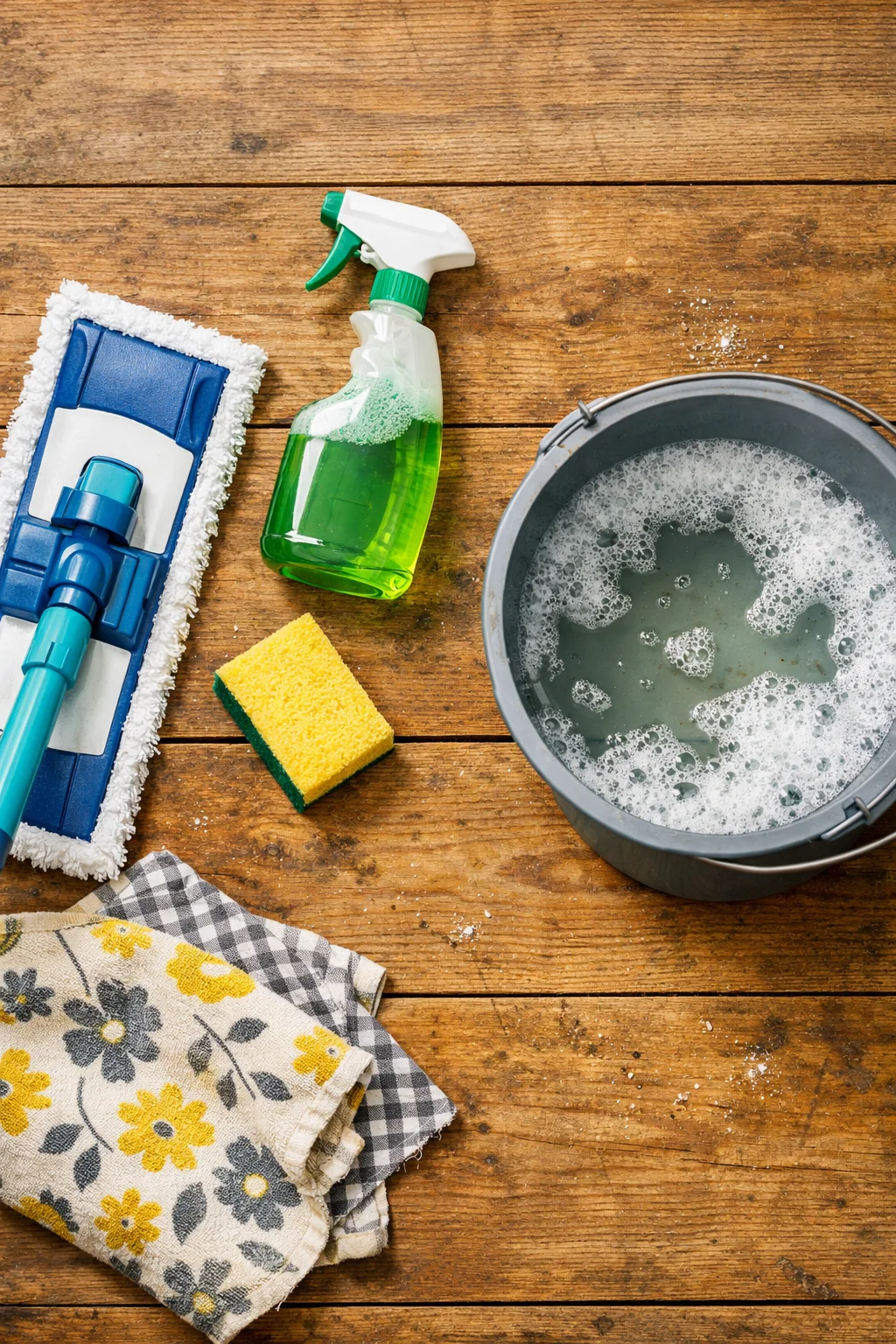
Essential Cleaning Tools and Supplies
My cleaning stash is not fancy. It’s more like a small lineup of reliable pantry staples, plus two or three tools that actually do the work. I approach this like cooking: if the ingredients are simple and you use them right, you get a great result.
What I always keep on hand:
- Microfiber mop pads or a microfiber cloth
- A broom with decent bristles or a vacuum (I swap depending on the mess)
- A bucket or large bowl for mixing
- Warm water
- Dish soap (a tiny amount goes a long way)
- White vinegar (only for surfaces that can handle it)
- Baking soda (for spot scrubs)
- Spray bottle (optional, but nice)
And here’s my little truth: the biggest upgrade is not a pricier mop, it’s having clean mop pads. Washing a floor with a dirty pad is like trying to frost a cake with a knife you dropped in sand.
If you want a fast whole-house rhythm (floors included), this guide on how to clean your entire house in 1 hour is surprisingly motivating. I don’t always hit the one hour mark, but the order-of-operations idea is solid.
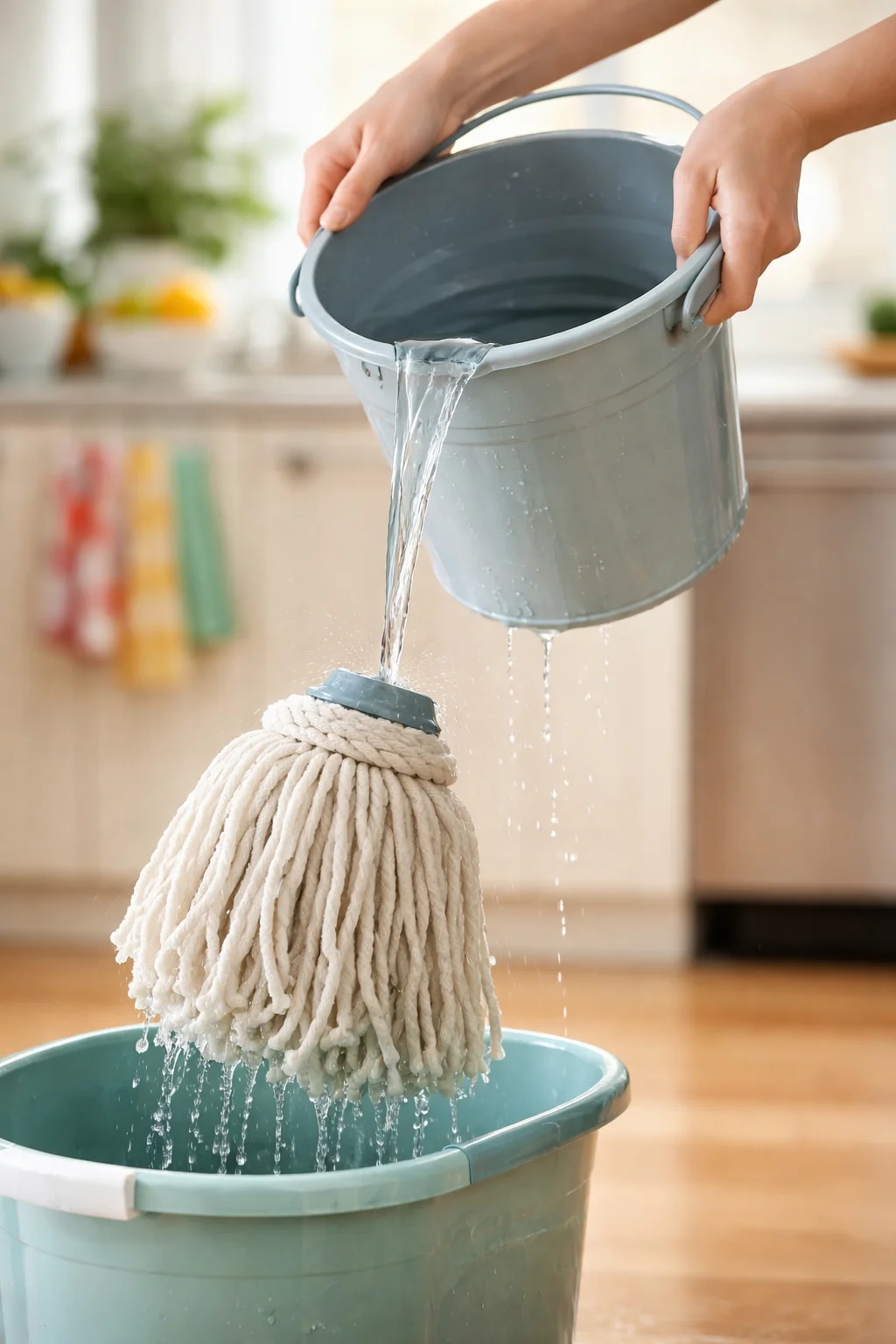
Step-by-Step Guide for Cleaning Different Floors
This is where my casual food blogger brain really kicks in. I think of cleaning solution like a simple recipe: measure lightly, don’t over-salt (in this case, don’t over-soap), and adjust based on what you’re working with.
My favorite everyday floor cleaning recipe
In a bucket or big bowl, mix:
- 1 gallon warm water
- 1 teaspoon dish soap (yes, just a teaspoon)
- Optional: 1 to 2 tablespoons vinegar (only for tile or vinyl, not stone, and be careful with some finished wood)
This makes a gentle cleaner that rinses well and doesn’t leave that sticky feeling. If you’ve ever mopped and your socks started grabbing the floor like tape, that’s usually too much soap.
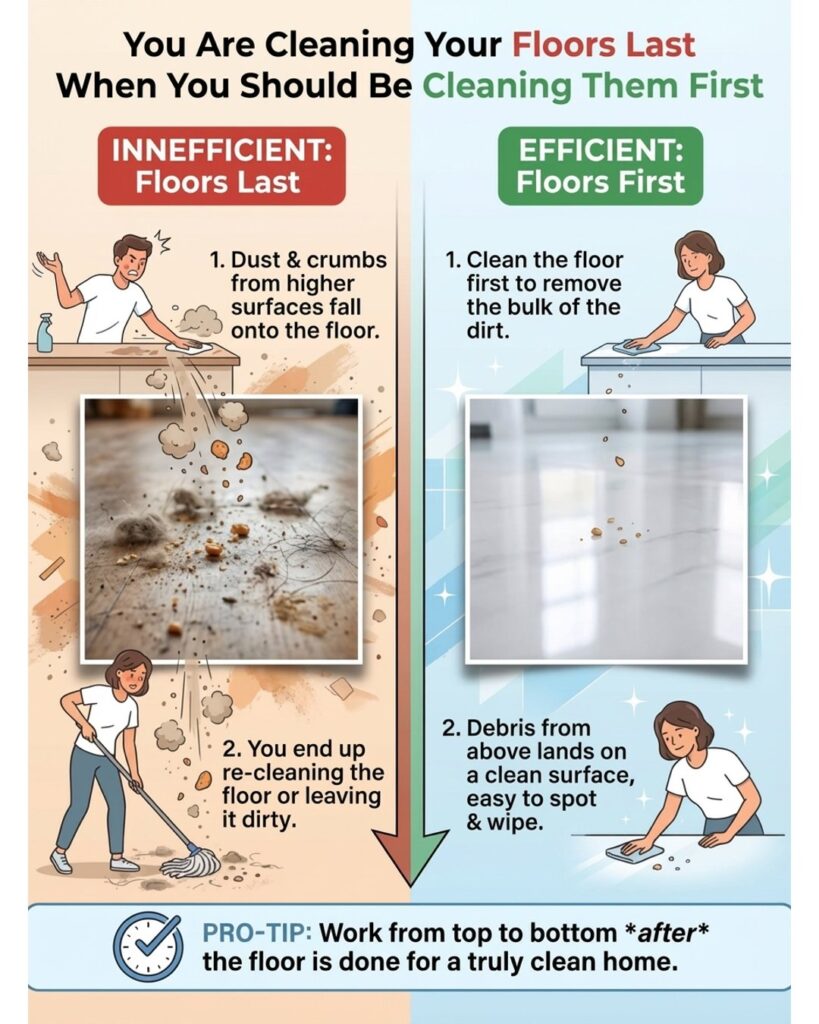
The order that actually works (and why floors should be first)
Here’s the routine that finally stopped me from redoing my work:
- Step 1: Dry clean first. Sweep or vacuum before any wet stuff. This prevents muddy streaks.
- Step 2: Do floors early. This is the big shift. If you start with floors, you’re not constantly grinding crumbs into them while you clean everything else.
- Step 3: Let them dry. While they dry, you can wipe counters, do dishes, and handle the rest without walking through wet areas.
- Step 4: Spot check. Hit sticky spots at the very end with a damp cloth, not a full second mop.
This whole concept is why I keep repeating the phrase You Are Cleaning Your Floors Last When You Should Be Cleaning Them First in my head now. It’s not about perfection. It’s about not creating extra work for yourself.
How I adjust for each floor type
Hardwood: I wring the mop until it feels almost dry. I go with the dish soap and water mix only, no vinegar. Less liquid, more passes.
Laminate: Same as hardwood, and I never let puddles sit. If I see water near seams, I wipe it up immediately.
Tile: I use the full recipe, and I give grout lines a little extra love. For dark grime, I sprinkle baking soda on a damp cloth and scrub just the line, then wipe clean.
Vinyl: Gentle is best. Too much soap makes it hazy, so I keep the mix light and do a quick second pass with plain water if needed.
Stone: No vinegar. If you’re not sure what stone you have, skip acids completely and use just warm water with a drop of dish soap.
If you like clever shortcuts, I’ve grabbed a few from 11 epic house cleaning hacks you will wish you knew sooner. Some are gimmicky, but a couple are actually life savers when you’re tired.
“I started mopping first like you suggested, and it’s honestly the first time my kitchen stayed clean for more than a day. No gritty crumbs stuck to my socks. I thought I was just bad at cleaning, but it was my order the whole time.”
Common Mistakes to Avoid When Cleaning Floors
I’ve made every mistake on this list, usually while multitasking and pretending I could do everything in ten minutes.
The biggest ones:
- Using too much soap. This is the number one reason floors feel sticky after they dry.
- Mopping before sweeping. It turns dust into paste. Not fun.
- Over-wetting wood or laminate. Water sneaks into seams and edges.
- Using vinegar on stone. Some stone surfaces can etch or dull.
- Dirty tools. A funky mop pad spreads funk around.
Another sneaky mistake is ignoring how physical cleaning is. If you’re hunched over, scrubbing, and twisting weirdly, it adds up. I had a week where my back felt cranky after cleaning days, and this article on 5 sitting posture mistakes damage your spine made me rethink how I move during chores too.

Eco-Friendly Cleaning Solutions for Multiple Surfaces
I love a good eco-friendly option because my kitchen is where I cook, and I don’t want strong chemical smells hanging around when I’m trying to enjoy dinner. Plus, if you’ve got pets or kids, gentle stuff just feels better.
Here are my go-to options that work on lots of surfaces, with a few safety notes:
- Warm water + a tiny bit of dish soap: The all-purpose MVP. Great for most floors when used lightly.
- Vinegar + water: Awesome on tile and some vinyl, but skip it on stone and be cautious on finished wood.
- Baking soda paste: Baking soda plus a splash of water makes a paste for spot stains. Don’t use it like an everyday mop ingredient because it can be a little abrasive.
- Rinse pass: If your floor ever feels dull, do a quick second wipe with plain water. It’s like rinsing pasta after boiling, it removes leftover residue.
If you want the house to smell fresher without blasting fragrance, I’ve tried this idea from transform your home salt vinegar air purifier trick. It’s simple, and it helps when cooking smells linger.
And yes, I’m repeating it because it matters: You Are Cleaning Your Floors Last When You Should Be Cleaning Them First. Once you flip that order, you use less product, you re-clean less, and your home feels calmer.
Common Questions
1) How often should I mop?
For most kitchens, once a week is solid, plus quick spot wipes as needed. If you cook a lot like I do, you might do a light mop twice a week.
2) Why do my floors look cloudy after mopping?
Usually it’s too much soap or not enough rinsing. Try using less detergent and do a quick wipe with plain water after.
3) Can I use vinegar on every floor?
No. Avoid vinegar on natural stone, and be careful with some wood finishes. It’s safest on tile and some vinyl.
4) What is the fastest way to get crumbs and hair up?
A vacuum works fast, but a good broom is underrated. I like vacuuming edges and sweeping the middle when I’m in a hurry.
5) Should I mop at night or in the morning?
Morning is easier if you can, because you can let floors dry while you do everything else. But night works if you can stay off the floor until it’s dry.
A cozy little wrap up before you grab the mop
Once you stop treating floors like the final boss, cleaning gets so much easier. I stick to my simple cleaning recipe, I keep the soap light, and I start with dry cleanup before any water hits the floor. And yes, I still repeat You Are Cleaning Your Floors Last When You Should Be Cleaning Them First whenever I’m tempted to do it the old way. If you’re going for a truly fresh home vibe, it’s also worth skimming Should You Have the Air Ducts in Your Home Cleaned? | US EPA, and if your tile is looking dated, this guide on How to Paint Tile Floors (Ceramic Tile DIY Guide) – DIY Playbook is a fun weekend rabbit hole. Now go try the routine, mix your little bucket recipe, and enjoy that clean-floor feeling like it’s a warm batch of cookies coming out of the oven.